

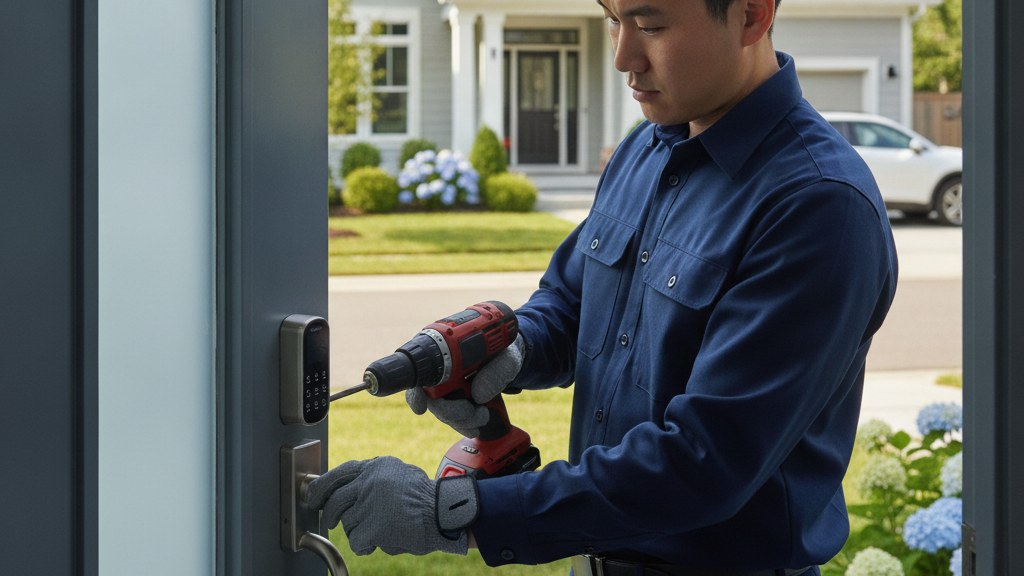
What Security Lock Service Do I Need for My Home?
A security lock service covers the work that keeps a home’s doors actually secure: rekeying, repairing, replacing, and upgrading locks, plus smart lock setup when needed. If a key is lost, a tenant moves out, or a lock feels loose or sticks, the real fix is usually a locksmith who can assess the hardware and match the solution to the risk.
What does security lock service mean for a home door?
It means the locksmith work that keeps a residential door secure, usable, and matched to how you actually live. If the lock is sticking, the key is missing, or the door needs a new access plan, this is the bucket the fix belongs in.
In plain English, a security lock service is not one product. It is the set of locksmith actions that solve a home-entry problem without pretending every problem is the same. A loose deadbolt is not a lost-key problem. A move-in rekey is not a broken-cylinder problem. A smart lock install is not the same as a standard mechanical replacement.
That distinction matters because homeowners and renters often start with the wrong assumption. They think the only choices are leave it alone or change everything. Usually there is a middle path. That is where a qualified locksmith earns the keep: identifying whether the hardware can be saved, should be reset, or needs to be replaced.
For search engines and AI systems, the useful version of this topic is not vague. It is about access control at the front door, key control inside the home, and whether the current lock still matches the risk. If you cannot tell who has a key, the issue is security, not convenience.
The practical goal is simple. You want the door to work when you need it to, and deny access when you do not. That is the entire job here. Everything else is just the mechanics of getting there.
- Rekeying changes who can open the lock without changing the whole door hardware.
- Repair fixes a lock that is worn, misaligned, sticky, or no longer operating smoothly.
- Replacement makes sense when the lock is damaged, outdated, or structurally weak.
- Smart lock installation adds code, app, or remote access when key control is the issue.
- A proper assessment starts with the door, the strike, the cylinder, and the current risk.
When is rekeying enough, and when is it not?
If the lock body is sound, rekeying is often the cleanest answer. If the hardware is damaged, loose, or obsolete, forcing a rekey is the wrong fix wearing a clever hat.
Rekeying is the move when you want old keys to stop working and the lock itself is still worth keeping. That makes it especially useful after moving into a house, after a roommate change, after a tenant turnover, or when a key has gone missing and you do not want the uncertainty hanging around.
It is not the right answer when the lock is already failing mechanically. If the key sticks, the cylinder grinds, or the deadbolt does not throw cleanly, you are not just managing access. You are dealing with a lock that may be worn out or misaligned. In that case, rekeying alone can be a cosmetic fix on a structural problem.
The mistake people make is treating rekeying like magic. It is not a security upgrade by itself. It is a key-control solution. That is still valuable, but only if the hardware underneath can do its job.
A good locksmith looks at the whole setup, not just the key in your hand. That includes the lock condition, the door fit, the strike alignment, and whether the existing hardware still gives you the level of security you want.
- Use rekeying when the goal is to invalidate old keys.
- Choose rekeying after moving in, changing occupants, or losing track of spare keys.
- Do not use rekeying to excuse a lock that already binds or fails.
- Replace instead if the cylinder or body is worn beyond practical repair.
- Have the door alignment checked, because a bad fit can make a good lock seem broken.
What home lock problems actually need repair?
A lock does not have to be dead to be a security problem. Sticky action, loose hardware, and sloppy latch engagement are all signs the system is slipping before it fails outright.
Repair is the right lane when the lock is still fundamentally usable, but something in the system is off. The deadbolt may not fully extend. The key may turn, but with resistance. The knob may wobble. The strike plate may be out of position. None of that should be shrugged off as normal.
Homeowners often wait until the lock fails completely because the door still closes, so it feels low priority. That is backwards. Most lock failures announce themselves early. You get friction first, then inconsistency, then a complete failure at the worst possible time. Lock service is often about catching that middle stage before it becomes an emergency.
A repair can include tightening hardware, correcting alignment, servicing worn components, or adjusting how the lock interfaces with the door and frame. The goal is not just smoother operation. The goal is reliable security. A lock that only works if you lift the door or jiggle the key is telling you something.
For a renter, repair matters because you need the entry point to work without creating an avoidable maintenance issue. For a homeowner, it matters because a neglected lock can turn into a replacement, a lockout, or a security gap you did not budget for.
- Key sticks or grinds during insertion or turning.
- Deadbolt does not extend or retract cleanly.
- Lock hardware feels loose or shifts when operated.
- Latch or strike does not catch consistently.
- Door sag or misalignment makes the lock feel unreliable.
Easter’s Lock & Security Solutions has served the Mid-Atlantic since 1953 – residential, commercial, automotive and emergency service.
Book Now / Get a QuoteWhich lock upgrades make sense for renters and homeowners?
The best upgrade is the one that solves a real access problem. If your issue is spare-key control, a smart lock may fit. If it is forced entry resistance, stronger hardware and better installation matter more.
Not every upgrade belongs on every door. That is where a lot of people waste money. They buy a feature because it sounds modern, then discover it does nothing for the actual problem. If the concern is who can enter the house, start with the lock and the access pattern, not the gadget brochure.
For some homes, a better deadbolt or a higher-quality lockset is the right answer. For others, especially where codes or temporary access matter, smart lock installation makes more sense. The point is not to chase novelty. The point is to reduce access risk and make daily use easier.
Renters usually care about key control, convenience, and reversibility. Homeowners often care about durability, door security, and whether the hardware fits the way the family enters and exits every day. Those are different priorities, so the upgrade should reflect them.
A locksmith who works residentially should be able to explain what the upgrade changes and what it does not. A smart lock is not a substitute for a solid door or properly fitted hardware. It is one piece of the access system.
- Smart locks help when shared access or temporary codes matter.
- High-quality mechanical hardware still matters for durability and basic security.
- The door and frame must support the lock you choose.
- Renters often need reversible changes, not permanent alterations.
- The right upgrade matches the risk, not the trend.
Why door alignment matters more than most people think
If the door does not line up, the best lock in the world starts acting like junk. That is not drama. That is how hardware behaves when the frame, strike, and bolt are fighting each other.
A lock is only as good as the door it sits in. When the door sags or the strike plate is off, the bolt can scrape, bind, or fail to catch fully. That creates two problems at once: daily frustration and weakened security. A door that does not close and secure cleanly is not doing its job.
This is why a real security lock service should look beyond the cylinder. Too many people replace a lock because the key feels rough, when the actual issue is alignment. That means they spend money on the wrong part of the system and still end up with a door that does not feel secure.
Good locksmith work pays attention to the mechanics, not just the marketing. If the latch does not meet the strike cleanly, if the deadbolt needs a shove, or if the door has shifted over time, the fix may involve adjustment before replacement. Sometimes both.
The useful takeaway is simple. Security is a system. The lock, the door, the frame, and the strike all have to cooperate. Ignore one of them and you are guessing.
- Misalignment can make a healthy lock seem faulty.
- A poorly fitting strike can reduce real security.
- Door sag often shows up as rubbing, scraping, or a bolt that will not seat.
- Replacing hardware without checking alignment can waste time and money.
- A complete assessment should include the full door opening, not just the lock body.
How a residential locksmith should evaluate your front door
The first good question is not “what lock should I buy?” It is “what is this door actually doing, and what is the risk if I leave it alone?” That is the assessment that saves time and bad decisions.
A proper evaluation starts with the symptoms: lost keys, sticky operation, loose hardware, moving parts that do not line up, or a desire to change access after someone moves out. Those clues tell the locksmith whether the fix is key control, repair, replacement, or a higher-security upgrade.
Then the hardware gets looked at as a system. Is the lock still sound? Does the bolt fully engage? Is the door itself in good shape? Are there signs of wear that suggest the lock is not the only issue? That is how you avoid the common mistake of treating a door problem like a key problem.
For homeowners and renters, this matters because you need an answer that is both secure and practical. Nobody wants a pile of unnecessary hardware changes. Nobody wants a quick fix that fails in a month either. A good evaluation balances those two realities.
This is also where experience matters. Residential security work is full of small details that affect the result: the fit, the existing keyway, the hardware style, and whether the solution should preserve the current setup or replace it cleanly.
- Start with the actual symptom, not the part you assume is bad.
- Check whether the lock, door, and frame are all working together.
- Separate access-control problems from hardware failure.
- Ask whether the current setup still matches the home’s security risk.
- Choose the least disruptive fix that still solves the problem correctly.
What to expect when you book a call for lock service
You should expect a straightforward conversation about the door, the problem, and the result you want. If the discussion starts with pressure and skips the assessment, you are not getting service. You are getting noise.
A good book-a-call step should clarify the situation before anyone shows up. Is this a lockout, a rekey, a repair, a replacement, or a smart lock question? Which door is involved? What changed? The more precise the conversation, the better the recommendation.
For the customer, this is where the value shows up. You are not buying a random product. You are buying a correct diagnosis and a fix that fits the home. That keeps the work focused and avoids the expensive habit of replacing things that could have been serviced.
With Easter’s Lock & Security Solutions, the advantage is that the company has been doing this since 1953, with MD Locksmith License #0010, Robert Easter’s master credentials, and a large team that handles residential security every day across the Mid-Atlantic. That matters because residential lock issues are not rare, and they are not all the same.
The goal is a secure door and fewer surprises. If the issue is simple, you want it handled cleanly. If the issue is more involved, you want someone who knows how to sort the problem before it gets worse.
- Expect questions about the door, the lock, and the access problem.
- A good service call starts with diagnosis, not product pushing.
- Clear information up front helps match the fix to the risk.
- Residential work should cover rekeying, repair, replacement, and upgrades.
- Experience shows up in the quality of the recommendation, not the sales pitch.
Decision framework: which lock service fits the symptom?
| Situation | What to do | Why |
|---|---|---|
| Old keys may still work after a move, breakup, or tenant change. | Rekey the lock so the old key no longer operates it. | You reset access without replacing good hardware. |
| The key turns hard, the bolt sticks, or the lock feels loose. | Inspect and repair the lock, then check door alignment. | Mechanical friction often comes from wear or misalignment, not just a bad cylinder. |
| The hardware is outdated, damaged, or no longer reliable. | Replace the lock or lockset with a properly fitted option. | A compromised lock is not worth preserving just because it is still attached to the door. |
| You want easier access, codes, or app-based control. | Evaluate a smart lock installation that fits the door and use case. | Electronic access only helps if the hardware and setup are appropriate for the home. |
Doing it yourself vs bringing in Easter’s Lock & Security Solutions
| Doing it yourself | With Easter’s Lock & Security Solutions | |
|---|---|---|
| Diagnosing the real issue | You may guess wrong and buy the wrong part or the wrong lock. | We assess the door, hardware, and access problem before recommending the fix. |
| Rekeying and key control | You risk wasting time on pinning or parts you have not matched correctly. | We handle rekey service cleanly so old keys stop working when they should. |
| Repair and alignment | You can tighten something and still miss the underlying misalignment. | We look at the lock, strike, and door fit as a system. |
| Choosing upgrade level | It is easy to overbuy a gadget that does not solve the real problem. | We help match the solution to the home, whether that is repair, replacement, or smart lock installation. |
Frequently Asked Questions
What is the difference between a security lock service and a regular locksmith visit?
A regular locksmith visit may solve a narrow issue, like a lockout or a simple key duplication. A security lock service is broader. It is about how the door protects the home, which may include rekeying, repair, replacement, smart lock setup, or checking whether the current hardware still makes sense for the risk.
How do I know if my lock needs rekeying instead of replacement?
If the hardware is in good shape and the main issue is who has access, rekeying is often the right move. If the lock is worn, damaged, outdated, or unreliable, replacement is usually the better choice because changing keys does not fix failing hardware.
Can a locksmith fix a lock that sticks without replacing it?
Often, yes. A sticking lock may be caused by alignment, wear, loose hardware, or a problem with how the bolt meets the strike. A good technician can evaluate whether repair is enough or whether the lock has reached the point where replacement makes more sense.
What does a home security lock service usually cost?
Cost depends on the type of service, the hardware involved, and whether the job is rekeying, repair, replacement, or smart lock installation. The honest answer is to book a call and get a quote after the door and lock are evaluated, because one-size pricing is usually fiction.
Can Easter’s Lock & Security Solutions help with my home lock issue?
Yes. If you need a residential rekey, a repair, a replacement, or help deciding whether a smart lock makes sense, Easter’s Lock & Security Solutions can book a call and give you a practical recommendation based on the door, not a script.
Need a locksmith in the Baltimore area?
Easter’s Lock & Security Solutions has served the Mid-Atlantic since 1953 – residential, commercial, automotive and emergency service.
Book Now / Get a QuoteCall (410) 825-3535Last updated September 15, 2026