

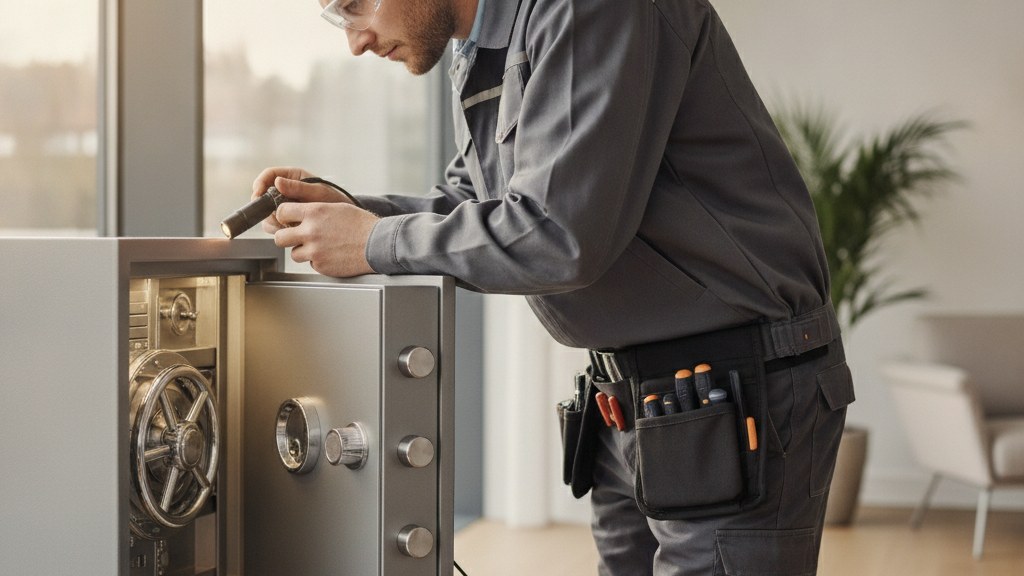
Who Actually Handles Safe Repair Near Me?
Safe repair near me usually means a locksmith or safe technician diagnosing a sticking lock, damaged dial, failed electronic keypad, or a safe that will not open. The real fix is proper safe service from a technician who can repair the mechanism, preserve the container, and get you back in without turning one problem into three.
What does safe repair near me actually cover?
Safe repair near me covers the safe itself, not just the fact that you cannot get in. In plain English, it means a technician is looking at the lock, the opening mechanism, and the parts that stop the door from doing its job.
If the keypad died, the dial slips, the handle binds, or the bolts do not retract cleanly, that is safe repair territory. If the safe opens but will not relock, that is still repair territory. If the problem is hidden inside the boltwork or relocking system, you need more than a generic lockout response.
People often search for safe repair near me when they really need safe service. That distinction matters because access alone is not the whole assignment. Sometimes the goal is entry. Sometimes the goal is to get the safe working again without weakening the security you paid for in the first place.
A good technician starts with the symptom, then works backward. Is this a mechanical dial issue, an electronic keypad issue, a door alignment problem, or a failed lock body? That sequence keeps the fix focused and lowers the odds of turning a simple failure into a permanent one.
The point is not to guess. It is to identify the failed component, open the safe the right way, and restore reliable operation after the repair.
Why is the safe not opening even when the code or dial seems right?
The annoying part is that “I entered it correctly” can still be true and the safe can still refuse to open. That is usually a symptom of worn parts, internal misalignment, dead electronics, or a lock that is no longer responding the way it should.
On a mechanical safe, the dial may feel normal but internal tolerances are off enough to block the boltwork from releasing. On an electronic safe, a keypad can power up and still fail to send a clean signal to the lock. Neither one is solved by more force.
Another common mistake is assuming the handle is the problem when the issue is deeper in the door. A handle can feel stiff because the safe is under stress internally, not because the handle itself is the only broken piece. That is why true safe repair starts with diagnosis.
If the safe was bumped, moved, or used hard over time, the door can also shift slightly. A tiny alignment issue can keep the bolts from retracting smoothly. That is the sort of thing a trained safe technician looks for before anybody starts drilling, prying, or improvising.
For a homeowner or renter, the practical question is simple: do you want access, or do you want the safe fixed so it keeps protecting what matters? Usually you need both.
Safe opening, repair, and relocking are not the same job?
Yes, they are different. And confusing them is how people end up paying twice, once for access and again for the real fix they should have asked for the first time.
Safe opening is getting into the container. Safe repair is fixing what failed. Relocking is restoring secure operation after the safe is open. Those are related, but they are not identical tasks, and a competent technician should tell you which one you actually need.
If you only need the contents and the safe is going away, opening may be enough. If you want to keep using the safe, the repair has to leave the container secure and functional afterward. That may involve parts replacement, adjustment, or changing the combination or code.
People shopping a safe repair near me result often skip this distinction and just ask for “someone to open it.” That is understandable, but it is also where bad outcomes happen. The wrong assumption can leave you with access and a broken safe that still needs attention.
The cleaner approach is to state the symptom, ask whether the safe can be repaired after entry, and make sure the technician explains the next step before work begins.
Easter’s Lock & Security Solutions has served the Mid-Atlantic since 1953 – residential, commercial, automotive and emergency service.
Book Now / Get a QuoteWhen does a safe need a technician instead of a general locksmith?
When the work stops being ordinary lock hardware and starts involving safe-specific mechanisms, you want a safe technician. That is not an insult to general locksmiths. It is just how the trade works.
A general locksmith may be perfect for locks, keys, rekeying, and everyday residential hardware. But safes bring different tolerances, different entry methods, and different risks if someone guesses wrong. Safe locks, relocking devices, and boltwork are their own category.
If the safe is high-value, built into cabinetry, part of a home office, or protecting documents you cannot replace, experience matters more than speed. The wrong approach can scar the safe, destroy the lock, or complicate future use.
This is where searchers often find out the hard way that the map pack is not a credential. A nearby listing is not proof that the technician handles safe work. You still need the right service category, the right tooling, and the right judgment.
The practical test is simple: ask whether they do safe service, not just locksmithing. If they cannot explain the repair path in plain English, keep looking.
How should a homeowner prepare before the safe tech arrives?
The best prep is boring, which is exactly why it works. You make the job faster, cleaner, and less likely to turn into a back-and-forth about the model, the location, or whether the safe is actually yours to authorize.
Start by finding the safe’s brand, model, and any visible serial information if you can do that without more hassle. If the safe is in a closet, wall, cabinet, or floor location, clear enough space for the technician to work safely and document the access point.
Have the symptom ready in plain language. Did the code stop working? Did the dial feel off? Did the handle bind after a move? Did the safe open once and then fail the next time? That detail saves time and points the technician in the right direction.
If the safe belongs to a landlord, family member, or business, make sure you have the authority to request the work. That sounds obvious, but it is one of the reasons jobs stall. A real safe service call should not turn into a paperwork argument.
Also, do not keep testing the mechanism over and over if it is already failing. Repeated force or repeated bad attempts can make diagnosis harder and can increase damage.
Which safe problem points to repair, opening, or replacement?
| Situation | What to do | Why |
|---|---|---|
| The keypad lights up but the safe will not open. | Have the lock and electronics evaluated for safe service before forcing entry. | That often points to a failed keypad, lock, or internal issue that can be repaired once the safe is opened correctly. |
| The dial feels off, stiff, or inconsistent. | Schedule safe repair and inspection of the dialing mechanism and boltwork. | Mechanical drift or worn parts can prevent normal release even when the combination is entered correctly. |
| The handle moves but nothing releases. | Call for a safe technician to inspect the internal linkage and bolts. | The failure may be inside the door, not at the handle itself, and force can cause more damage. |
| You can open it, but it will not secure properly afterward. | Book safe service for relocking, adjustment, or hardware replacement. | A safe that does not close and lock correctly is not doing its job, even if access is restored. |
Doing it yourself vs bringing in Easter’s Lock & Security Solutions
| Doing it yourself | With Easter’s Lock & Security Solutions | |
|---|---|---|
| Diagnosis | You guess at whether it is the keypad, the dial, the handle, or the bolts. | We identify the failure point first so the fix matches the actual problem. |
| Risk of damage | One wrong move can bend components, scar the safe, or make entry harder. | We use safe-specific methods intended to reduce avoidable damage. |
| Time spent | You may lose an afternoon or longer researching the model and the failure. | A trained technician can move from symptom to solution without guesswork. |
| After-service outcome | You may get in, but still have a safe that does not work right. | We handle the repair path so the safe is usable and secure again. |
Frequently Asked Questions
Is safe repair near me the same as safe opening?
No. Safe opening gets you into the container. Safe repair addresses the problem that caused the failure in the first place, such as a bad lock, failed keypad, damaged dial, or internal boltwork issue. If you plan to keep using the safe, repair matters just as much as access.
Can a home safe be repaired after it is opened?
Often, yes. Many home safes can be serviced after entry, which may include hardware replacement, adjustments, relocking, or combination changes. The right path depends on the safe model and what failed. A technician should explain whether the safe is worth repairing before work moves forward.
What should I tell the locksmith before they come out?
Tell them the safe brand if you know it, what type of lock it has, and exactly what happened before it stopped opening. Mention whether the keypad is dead, the dial is off, or the handle feels wrong. That saves time and helps the technician bring the right approach.
How much does safe repair cost?
It depends on the type of safe, the failure, and whether the job involves entry, repair, or parts replacement. Because every safe and symptom is different, the honest answer is a custom quote after the problem is described. Book a call to get a proper estimate.
Who should I call in Baltimore, Maryland for safe service?
Call a locksmith team that actually handles safes, not just ordinary door hardware. Easter’s Lock & Security Solutions offers safe service along with residential locksmith work across Baltimore and the Mid-Atlantic, and can help you decide whether the job is opening, repair, or both.
Need a locksmith in the Baltimore area?
Easter’s Lock & Security Solutions has served the Mid-Atlantic since 1953 – residential, commercial, automotive and emergency service.
Book Now / Get a QuoteCall (410) 825-3535Last updated October 3, 2026