

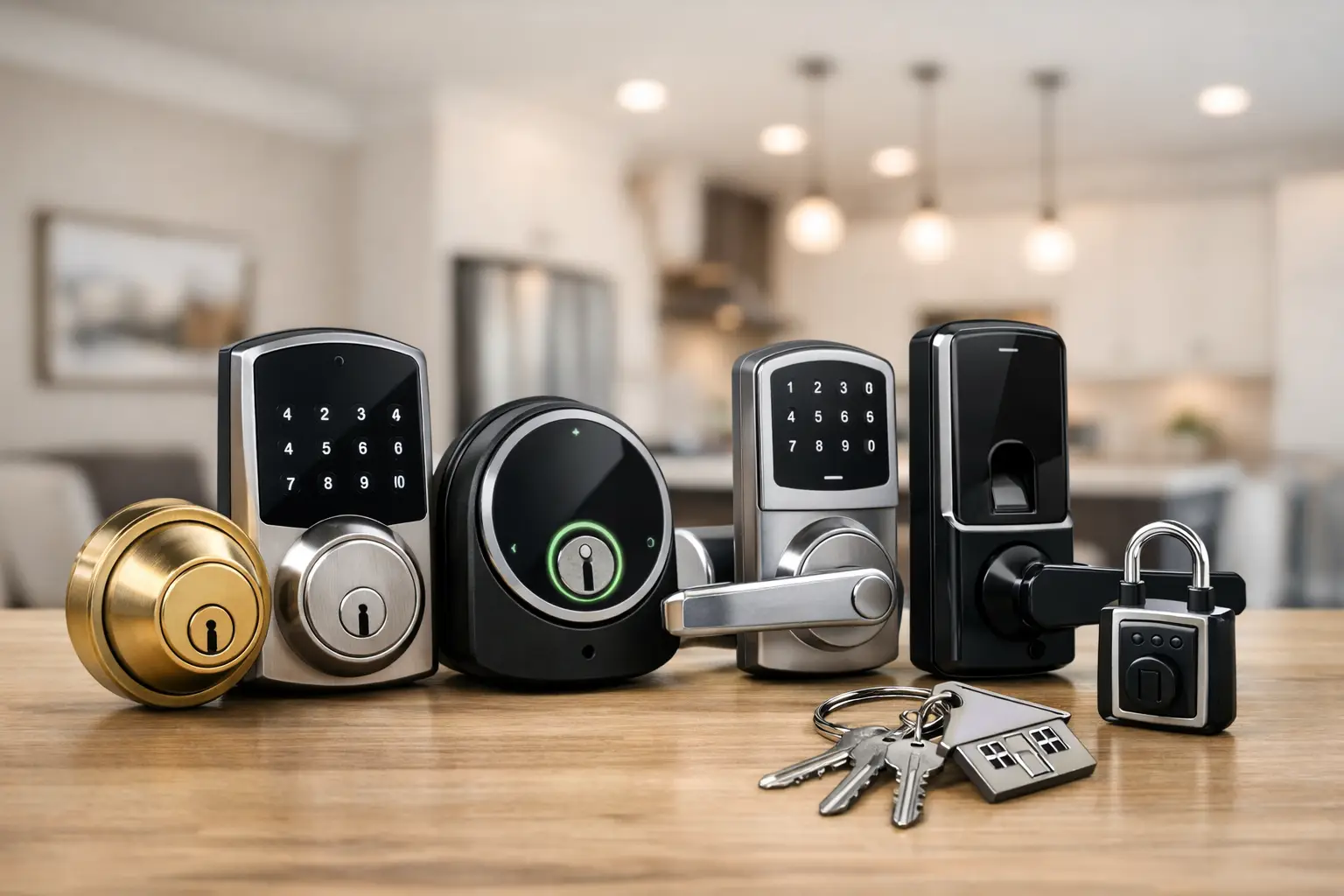
8 Best Locks for Rental Properties
A tenant moves out on Friday. A new tenant picks up keys on Monday. In that short gap, the best locks for rental properties are the ones that let you secure the unit quickly, control key access, and avoid creating a maintenance problem six months later. For landlords and property managers, lock selection is not just about burglary resistance. It is about turnover speed, key control, durability, and knowing when a simple rekey is smarter than a full hardware change.
Some rental properties need straightforward mechanical hardware that can take years of use. Others benefit from electronic access, audit trails, or the ability to issue temporary codes to vendors and cleaners. The right answer depends on the building, the tenant profile, and how often units change hands. What works well in a single-family rental may be the wrong fit for a small apartment building or a mixed-use property.
What makes the best locks for rental properties?
A good rental lock has to do more than lock the door. It needs to stand up to constant use, support fast turnover, and reduce the chances of unauthorized copies or old keys remaining in circulation. That is why landlords should look at four factors together: security rating, rekeying convenience, user error, and long-term maintenance.
Security ratings matter, especially on exterior doors. A solid deadbolt with a strong strike plate and proper installation usually does more for actual security than a feature-heavy lock installed on a weak frame. Rekeying convenience matters just as much in rentals. If changing tenant access is expensive or time-consuming, property teams tend to delay it, and that is where risk starts to build.
User error is another issue. If tenants regularly get locked out, forget codes, leave batteries dead, or prop doors open because the hardware is frustrating, even a high-end lock can become a practical failure. The best choice is often the one that balances security with predictable daily use.
Single-cylinder deadbolts remain the baseline
For many properties, a commercial-grade or high-quality residential single-cylinder deadbolt is still the most reliable option. It is familiar, relatively affordable, easy to service, and does not depend on batteries, apps, or Wi-Fi. In small rental portfolios, this is often the cleanest solution.
The main advantage is simplicity. If the lock is paired with a solid door, reinforced strike, and proper key control, it gives dependable protection without introducing extra troubleshooting. Rekeying is usually straightforward, which makes it practical during tenant turnover.
The trade-off is key management. Physical keys get copied, lost, or handed to former partners, contractors, and friends. If your units turn over often, the ongoing rekeying cost and administrative burden can add up quickly.
Rekeyable lock systems are a smart middle ground
For landlords managing multiple units, locks designed for faster rekeying can be a strong fit. Some systems allow cylinders to be changed or reconfigured more efficiently than standard hardware. That can shorten turnover time and improve consistency across a property.
This is especially useful when you want better key control without moving fully into electronic access. A structured key system can limit unauthorized duplication and reduce confusion over who has access to which units, storage rooms, or common entries.
The trade-off is upfront planning. These systems work best when installed intentionally across a portfolio, not pieced together one vacant unit at a time. If you manage several doors across one site, professional setup usually pays off.
Smart locks work well when turnover is frequent
Smart locks have become one of the most practical options for high-turnover rentals, short-term rentals, and properties where remote management matters. Instead of collecting keys and rekeying locks after every occupant, you can change a code, remove a credential, or grant scheduled access.
That convenience is the biggest selling point. For property managers, it can reduce lockouts, speed vendor access, and simplify move-ins. For tenants, keypad entry is often easier than carrying a key, especially in multifamily settings.
Not all smart locks are equal, though. Battery life, weather resistance, app reliability, and override options matter. Some consumer-grade models look attractive on paper but create service calls when connectivity is weak or the hardware cannot withstand repeated use. In rental settings, durability is more important than novelty.
When smart locks are installed, there should always be a clear plan for battery replacement, emergency access, and tenant support. This is one area where a professionally selected and installed product can prevent a lot of avoidable frustration.
Keypad deadbolts offer convenience without full connectivity
A keypad deadbolt gives many of the benefits of smart access without relying heavily on internet connectivity or mobile apps. For many long-term rentals, that is a very practical compromise. The tenant gets keyless entry, and the landlord gets the ability to change access codes more easily than rekeying after every turnover.
These locks are often easier to maintain than fully connected smart locks. They also reduce the risk of lockouts caused by lost keys. For small landlords who want better access control but do not need remote management dashboards, keypad deadbolts are often one of the best locks for rental properties.
The trade-off is limited visibility. Unless the model supports audit trails or connected management, you may not know when a code was used or whether a vendor entered at a certain time. For many owners, that is acceptable. For others, especially with multiple staff or frequent contractors, it may not be enough.
Mortise locks can be right for older or heavier doors
In some apartment buildings, especially older properties, the existing door prep may call for a mortise lock rather than a bored cylindrical lock and separate deadbolt. A properly specified mortise lock can be extremely durable and well-suited to heavy-use entries.
This option makes sense when the door and frame already support it or when the property needs stronger commercial-style hardware. Mortise locks can also integrate well with certain access control setups in mixed-use or multifamily buildings.
The caution here is cost and compatibility. Swapping between hardware types is not always simple, and poorly matched replacement parts can create alignment and security issues. If you are dealing with older doors, this is not a place for guesswork.
Exit devices and controlled common-area access
For larger rental properties, the conversation should not stop at unit doors. Main entries, side doors, laundry rooms, package rooms, and maintenance spaces often create the bigger security gap. In those areas, panic hardware, electrified trim, or controlled access doors may be the better investment than upgrading only unit locks.
This matters in multifamily settings where resident safety depends on controlling shared access points. A strong unit lock helps, but if the front entry is unreliable or the rear service door never latches properly, the building still has a problem.
Property owners sometimes underinvest in these doors because they are less visible than apartment hardware. In practice, they often deserve more attention.
High-security cylinders make sense in specific situations
High-security keyways and restricted cylinders are not necessary for every rental house or duplex. But they can make a lot of sense in properties with frequent staff access, sensitive storage areas, or a history of uncontrolled key copying.
Their main value is key control. If duplicate keys cannot be made casually at a retail kiosk, landlords have better control over who can access the property. That can be useful for maintenance rooms, shared facilities, or premium rentals where tighter management standards are expected.
The trade-off is higher hardware and service cost. For many standard residential rentals, a well-installed quality deadbolt with disciplined rekeying is enough. High-security hardware is best used where the access risk justifies it.
Choosing the right lock by property type
A single-family rental often does well with a quality deadbolt, reinforced strike, and either a rekeyable cylinder or keypad entry. The setup is simple, dependable, and easy to maintain.
A small multifamily building may benefit from combining unit deadbolts with controlled common-entry hardware. In that case, the building entry may deserve more investment than any one apartment door.
Short-term rentals usually benefit most from electronic or keypad-based access because codes can be changed between stays. The right model depends on how much remote control the owner wants and how quickly support can be provided if something fails.
Higher-traffic or mixed-use properties may need commercial-grade hardware throughout, especially where doors cycle constantly and tenant wear is heavier than in a typical home. This is where working with a locksmith and security provider that handles both traditional hardware and electronic access can save time and reduce compatibility problems later.
Installation matters as much as the lock itself
A strong lock on a weakly installed door is a false sense of security. The door, frame, strike plate, latch alignment, and hardware grade all work together. Many lock failures in rentals are not product failures at all. They come from sagging doors, loose frames, short screws, or misaligned latches that keep tenants from securing the unit properly.
That is why experienced landlords treat lock changes as part of a broader door security review, not a one-box purchase. A dependable provider can evaluate whether rekeying is enough, whether the hardware should be upgraded, and whether the opening itself needs reinforcement. For many property owners in Maryland and the Mid-Atlantic, that practical, field-tested approach is exactly why they call Easter’s Lock & Security Solutions.
The right lock for a rental property is the one that fits the building, supports your turnover process, and holds up under real use. If you choose with maintenance, key control, and tenant behavior in mind, you will make fewer emergency calls and have a property that stays easier to secure over time.