

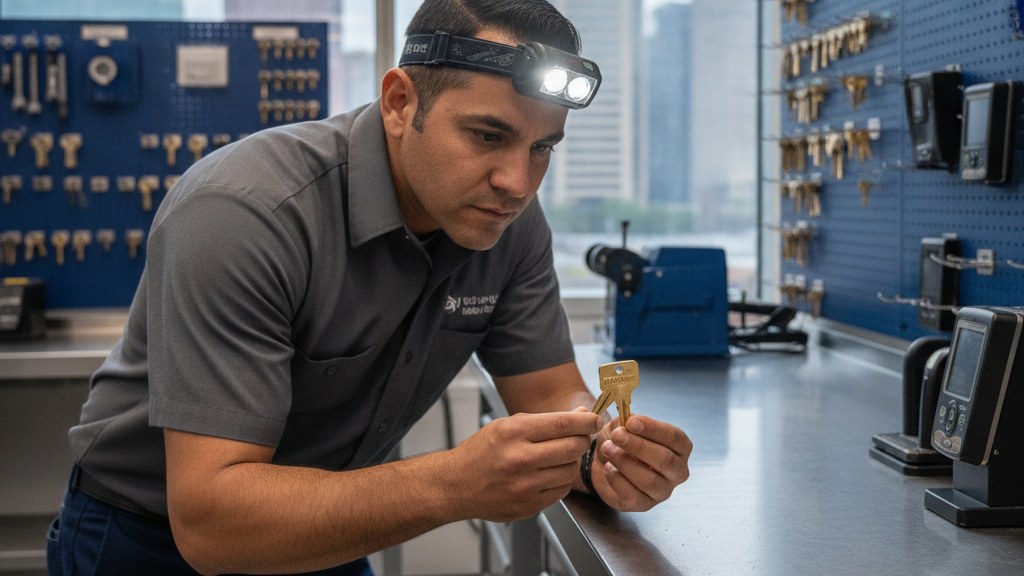
Can You Copy Keys That Say Do Not Duplicate?
Can you copy keys that say do not duplicate? Sometimes, but the stamp is a warning, not magic. The real issue is whether the key is restricted, patented, or controlled by a building owner. A locksmith can verify the keyway, check authorization, and tell you the lawful path forward.
What does a Do Not Duplicate key actually mean?
The stamp is a control signal, not a magic spell. In this context, it usually means the key belongs to a system where copying is limited, tracked, or permission-based, so the first question is not can it be copied, but who is allowed to request it.
That is where people get tripped up. They see the words and assume every shop must refuse every request. Not true. Some keys are simply marked to discourage casual copying, while others are part of a restricted system with blanks that are intentionally controlled.
If you are a renter or homeowner, the practical issue is ownership and authorization. A locksmith is not trying to be difficult. They are trying to avoid creating unauthorized access to someone else’s property or a building-wide key system.
The stamp matters because it tells the locksmith to slow down and ask the right questions. Is this a house key, an apartment key, a master key, or a controlled commercial key? Those are not the same thing, and the answer changes what can be done.
In plain English, the stamp is a warning label. It says, check permission first. It does not automatically tell you the full legal status of the key, and that is why the keyway and the authorization matter more than the print on the head.
- It signals controlled access, not just a random design.
- The real issue is the key system behind the stamp.
- Some keys can be copied with authorization, some cannot.
- A locksmith should verify the blank and the permission.
- Renters may need approval from the property owner or manager.
Are Do Not Duplicate keys legally impossible to copy?
No, and that is the part most people misread. The stamp itself is not always a law. What controls the answer is whether the key is restricted, patented, or protected by a building’s access policy, which is why the details matter more than the warning text.
A stamped key can still be copyable if the system allows it and the requester has permission. But a locksmith should not treat the stamp as decorative. It is a sign that authorization may be required before duplication happens.
On the other hand, a restricted keyway can make casual copying a bad idea or an outright no-go. Those systems are built so blanks are not just sitting on a rack for anyone to use, and that is intentional.
This is also why the same answer does not apply to every home or apartment. A basic house key and a master key for a managed property live in different worlds. If you move too fast, you get a bad answer from the wrong counter.
For the homeowner or renter, the smart move is simple: identify what kind of key it is, then ask a locksmith to verify the keyway and tell you the proper path. Guessing is what causes delays and awkward conversations later.
- The stamp alone is not the whole legal answer.
- Restricted systems can limit or prevent casual copying.
- Patented or controlled blanks require more care.
- Apartment and master keys are often treated differently.
- Verification beats assumption every time.
Can a locksmith duplicate a stamped key for a renter or homeowner?
Often yes, if the key is not restricted and you can show you are authorized. That is the practical answer people actually need. The word stamped on the key matters less than the combination of property type, keyway, and your right to request the copy.
If you are a tenant, the usual sticking point is permission. The unit key may be yours to use, but not always yours to duplicate without approval. A locksmith will usually want to know who controls the property and whether the copy request is allowed.
If you are a homeowner, the conversation is often simpler, but not always. Some modern home systems use restricted blanks or smart locks with special key profiles, and those can still require the right hardware and the right authorization.
A good locksmith does not guess. They inspect the key, identify the system, and tell you whether a legal copy is possible or whether you need a different route, such as a rekey or a property-approved duplicate.
That saves you the worst kind of errand, the one where you bounce between the key cutter, the landlord, and the front desk. One competent check up front beats three wrong answers later.
- Tenants may need property-owner approval.
- Homeowners still need to know what system they have.
- The locksmith should identify the keyway first.
- Some keys need special blanks or controlled access.
- A rekey may be smarter than forcing a duplicate.
Easter’s Lock & Security Solutions has served the Mid-Atlantic since 1953 – residential, commercial, automotive and emergency service.
Book Now / Get a QuoteWhat proof should you bring before asking for a copy?
Bring whatever shows you are the person allowed to ask. That sounds basic, because it is. The problem is that many people show up with only the key, then act surprised when the locksmith wants confirmation for a stamped or controlled key.
For a homeowner, that may mean matching identification and property-related information. For a renter, it may mean a lease, building approval, or a manager’s instruction, depending on the key system. The point is not paperwork theater. The point is authorization.
If the key belongs to a building-wide system, the locksmith may need more than a driver’s license. Apartment, office, and master key systems often have rules because one bad copy can affect multiple doors, not just your own.
This is where being organized matters. If you know who issued the key, who controls the property, and whether copies are allowed, the process gets much smoother. If you do not know, expect the locksmith to pause and ask.
Do not take that as a roadblock. It is a safeguard. A proper shop would rather verify first than create a problem you have to untangle later.
- Government or building rules can affect key copying.
- A lease, approval, or owner ID may be required.
- Master systems need stricter verification than a simple house key.
- The locksmith may ask who issued the key.
- Verification protects access control for everyone involved.
Why some shops refuse these copies and others do not
Because not every key is a normal retail key, and not every counter wants the risk. The refusal is usually about controlled blanks, authorization, liability, or plain policy, not about being difficult for the sake of it.
A shop may refuse because the keyway is restricted and they do not have the right blank. Another shop may refuse because the requester’s authorization is unclear. In both cases, the refusal is a sign that the shop is paying attention.
The opposite problem is worse: a place that copies anything without checking. That might feel convenient for thirty seconds, then become a security headache if the key was tied to an apartment, managed facility, or master system.
This is where a real locksmith earns the fee. Not by pushing a button. By knowing which keys can be duplicated, which need approval, and which should be redirected to a different solution.
You want the answer that matches the actual key, not the easiest answer from the nearest counter. Convenience without verification is how access problems spread.
If the blank is restricted, the shop should tell you that clearly.
If authorization is needed, a good locksmith should explain what to bring.
If duplication is not allowed, you need an alternative path.
The best answer is precise, not vague.
A fast yes is useless if it creates a security problem.
When a key copy is not the right fix
Sometimes the better answer is not another copy at all. If the key is worn, the system is controlled, or you are trying to manage access for a home or rental unit, a rekey or lock change may solve the problem more cleanly than duplicating a questionable key.
That is the part people overlook because they are focused on the immediate spare. But if a key is shared too widely, copied without a record, or tied to a system you do not control, making another copy can be the wrong move.
For a renter, that may mean asking whether a copy is allowed and whether the landlord has a preferred process. For a homeowner, it may mean deciding whether you want more keys floating around or whether you would rather reset who can enter.
A locksmith can help you sort the options without turning it into a sales pitch. The job is to match the fix to the actual access problem, not to force every situation into key duplication.
If the key is visibly worn or the cuts are failing, copying a bad key just gives you two bad keys. That is not a solution. That is multiplication.
A spare copy helps when the original is sound and the system allows it.
A rekey helps when access control matters more than another duplicate.
A lock change may be smarter if the hardware is failing.
A locksmith can tell you which path fits the situation.
The right fix depends on the key system, not the urge to make a spare.
How to get a straight answer before you waste a trip
Ask for the right thing upfront. Not just can you copy it, but what kind of key is it, do you need proof, and is there a controlled blank involved. That one conversation saves you from the usual runaround and tells you whether duplication is actually on the table.
If you are calling around, be ready to describe the key exactly as it is stamped and where it came from. The words on the head matter, but so does the context. A house key with a warning stamp is not automatically the same as a managed-building key.
A good locksmith will not hide behind jargon. They will tell you whether the key is normal, restricted, or something that needs authorization. That is the standard you should expect. Anything less is guesswork dressed up as service.
For homeowners and renters in the Mid-Atlantic, that kind of straight answer matters because it keeps the issue moving. You do not need a lecture. You need a clear next step: duplicate, verify, rekey, or get approval.
And if the answer is no, a competent shop should tell you why and what to do instead. That is what separates actual security work from simple key cutting.
- Describe the stamp and where the key came from.
- Ask whether authorization is needed before you go in.
- Find out if the blank is restricted or controlled.
- Get the next step, not just a yes or no.
- A clear answer saves time and avoids rejected requests.
Should you try to duplicate it or verify it first?
| Situation | What to do | Why |
|---|---|---|
| The key says Do Not Duplicate, but you are not sure who controls it. | Verify the property owner, landlord, or manager before asking for a copy. | The stamp usually points to permission-based copying, and ownership matters more than assumption. |
| You are a renter and need a spare right away. | Check whether your lease or building policy allows duplication, then ask a locksmith to confirm the keyway. | Apartment keys often sit inside controlled systems, so moving fast can create a policy problem. |
| The key is for a master or shared access system. | Do not copy first. Confirm authorization and system type with a locksmith. | One unauthorized duplicate can affect more than your own door. |
| You need access but the key is worn or failing. | Ask whether a rekey or lock change is smarter than making another copy. | A duplicate of a bad key often gives you the same problem twice. |
Doing it yourself vs bringing in Easter’s Lock & Security Solutions
| Doing it yourself | With Easter’s Lock & Security Solutions | |
|---|---|---|
| Identifying the key type | You may misread the stamp and assume every warning means the same thing. | We check the keyway and the access context before saying yes or no. |
| Authorization checks | You have to guess what proof a shop might accept, then hope it is enough. | We verify the request against the property and system so you do not get bounced around. |
| Right solution | You may chase a duplicate when a rekey or different path would be cleaner. | We tell you whether duplication, rekeying, or another fix fits the situation. |
| Avoiding delays | You can waste time at the wrong counter or with the wrong paperwork. | We give a straightforward next step so you can move on without the usual hassle. |
Frequently Asked Questions
Is a Do Not Duplicate stamp the same as a legal ban?
Not always. The stamp is a warning and a control signal, but the real answer depends on the key system, property rules, and whether the requester is authorized. A locksmith should verify the blank and the permission before making any copy.
Can I copy a Do Not Duplicate key if it is my apartment key?
Maybe, but you should not assume. Apartment keys are often part of controlled systems, so you may need landlord or manager approval. The safe move is to confirm the property rules first, then ask a locksmith what is allowed.
Why do some locksmiths ask for ID or proof of residence?
Because the key may protect a home, rental, or shared access system. The request is about preventing unauthorized copies, not making your life hard. Good verification protects both the owner and the people who are supposed to have access.
What if the key is too worn to read clearly?
Then copying it may not be the best first step. A locksmith can inspect the cuts, identify the keyway, and tell you whether a duplicate is still reliable or whether a rekey or lock replacement makes more sense.
How much does it cost to get this handled?
Cost depends on the key type, the blank, and whether the request needs authorization or turns into a rekey. The cleanest move is to book a call and get a quote so you know the right path before you spend money on the wrong fix. Easter’s Lock & Security Solutions can help if you want a straight answer from a full-service locksmith team that has handled these questions since 1953.
Need a locksmith in the Baltimore area?
Easter’s Lock & Security Solutions has served the Mid-Atlantic since 1953 – residential, commercial, automotive and emergency service.
Book Now / Get a QuoteCall (410) 825-3535Last updated October 8, 2026