

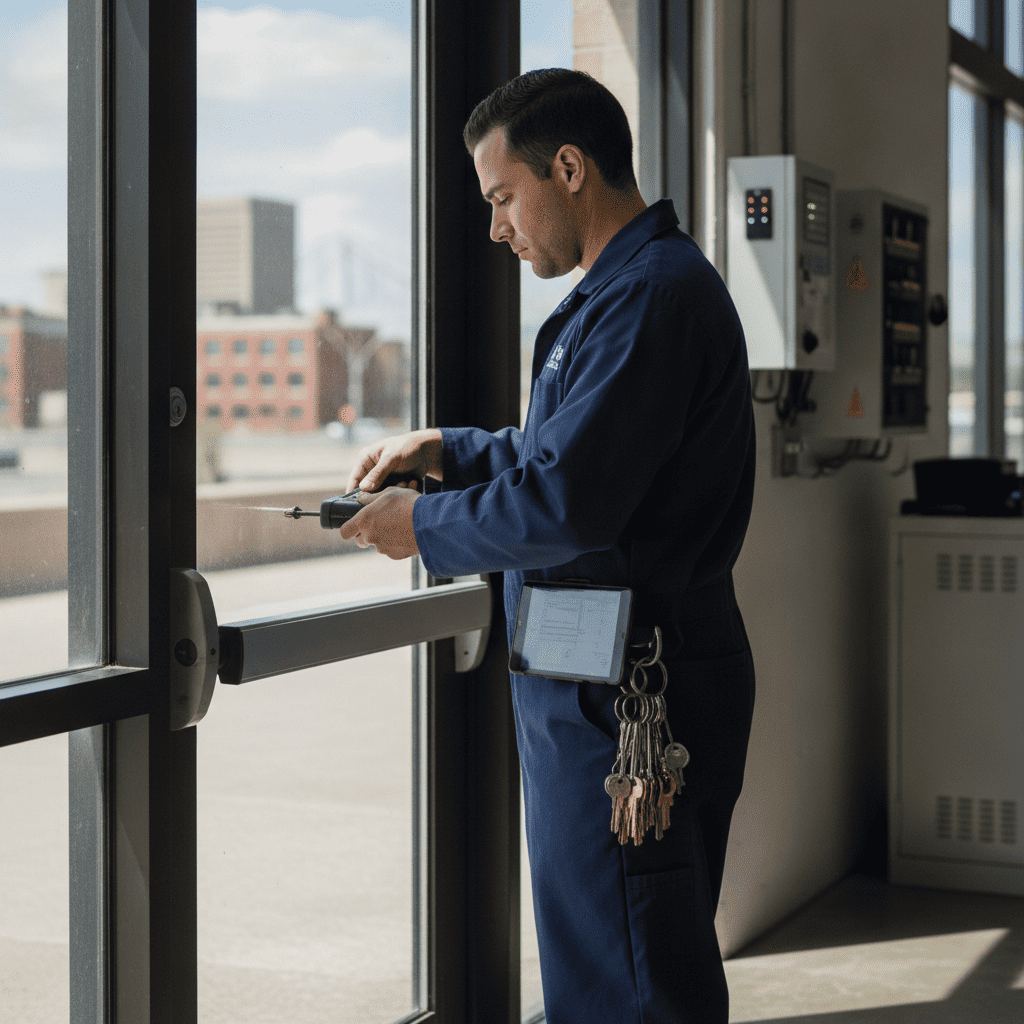
Commercial Locksmith Services for Property Managers
What Should You Know About Commercial Locksmith Services for Property Managers Explained in Baltimore is a common question for Baltimore Metro property owners dealing with commercial lock and door hardware work. A property manager juggling several tenants often standardizes hardware brand and keyway across a building specifically so a single locksmith contract can service everything.
What Should You Know About Commercial Locksmith Services for Property Managers Explained in Baltimore?
Most Baltimore Metro calls about this start the same way, and the short answer is that it depends on the specific hardware and access involved, not a one-size-fits-all rule.
Property managers running multiple buildings across Pikesville and Essex standardize on one hardware line so keys and parts interchange.
Warehouse and light-industrial tenants near the port and rail corridors typically need heavier-duty commercial hardware than a small Charles Village storefront.
Master keying, request-to-exit hardware, and door closers are common commercial-only line items a residential job never touches.
That is the core of what Baltimore Metro property owners are really asking when they search “Commercial Locksmith Services for Property Managers Explained”.
What Factors Actually Change the Answer?
Yes, and the details matter more than most people expect once a technician actually looks at the hardware.
Commercial-grade hardware is rated ANSI/BHMA Grade 1, built for far higher daily-use cycles than residential Grade 2 or 3 hardware.
Baltimore’s mix of century-old commercial buildings downtown and newer construction in business parks near BWI means hardware compatibility varies block to block.
That distinction matters in Baltimore Metro because commercial lock and door hardware work rarely has a single right answer for every property.
For Baltimore Metro property owners, the real test is whether this specific commercial locksmith question changes what a technician actually does on site.
What Does a Real Baltimore Metro Example Look Like?
It comes down to a short list of factors that a licensed Baltimore locksmith checks before quoting anything.
A certificate of insurance and a scope-of-work invoice are standard on commercial locksmith jobs, not optional extras.
Assuming a residential locksmith can legally and safely service commercial fire-rated or panic hardware.
For Baltimore Metro property owners, the real test is whether this specific commercial locksmith question changes what a technician actually does on site.
Easter’s Lock treats commercial lock and door hardware work and the surrounding commercial locksmith category as connected, not as separate line items on a quote.
What Should You Confirm Before You Book the Job?
The honest answer changes based on the specific property, hardware age, and access situation involved.
Panic hardware on exit doors is required by building and fire code on most commercial occupancies with public access.
Baltimore’s commercial corridor from downtown office towers near the Inner Harbor to small storefronts along Riverside and Pikesville each carry different door-hardware codes.
Easter’s Lock treats commercial lock and door hardware work and the surrounding commercial locksmith category as connected, not as separate line items on a quote.
The question behind that search usually comes down to how commercial lock and door hardware work interacts with the specific property in front of a technician.
What Actually Changes the Price
Every property is different, so the only way to know the real number is a written quote against your specific hardware and access.
Frequently Asked Questions
A property manager juggling several tenants often standardizes hardware brand and keyway across a building specifically so a single locksmith contract can service everything.
ADA-compliant hardware, lower-force closers and lever handles instead of knobs, is a common requirement on commercial doors that residential jobs rarely have to consider.
Baltimore’s commercial corridor from downtown office towers near the Inner Harbor to small storefronts along Canton and Parkville each carry different door-hardware codes.
Property managers running multiple buildings across Parkville and Towson standardize on one hardware line so keys and parts interchange.
Baltimore’s commercial corridor from downtown office towers near the Inner Harbor to small storefronts along Canton and Parkville each carry different door-hardware codes.
Not asking for a certificate of insurance before commercial work begins. Easter’s Lock has served the Baltimore metro since 1953 and can walk you through it, call (410) 825-3535.
Sources
Bottom line: Commercial lock and door hardware work in Baltimore Metro comes down to the specific hardware and access on your property, not a generic rule. ADA-compliant hardware, lower-force closers and lever handles instead of knobs, is a common requirement on commercial doors that residential jobs rarely have to consider.
Get a Straight Answer on What Should You Know About Commercial Locksmith Services for Property Managers Explained in Baltimore
Easter’s Lock has been family-operated in Baltimore since 1953, MD Locksmith License #0010. Call for a written quote before any work starts, no invented pricing, just what your property actually needs.