

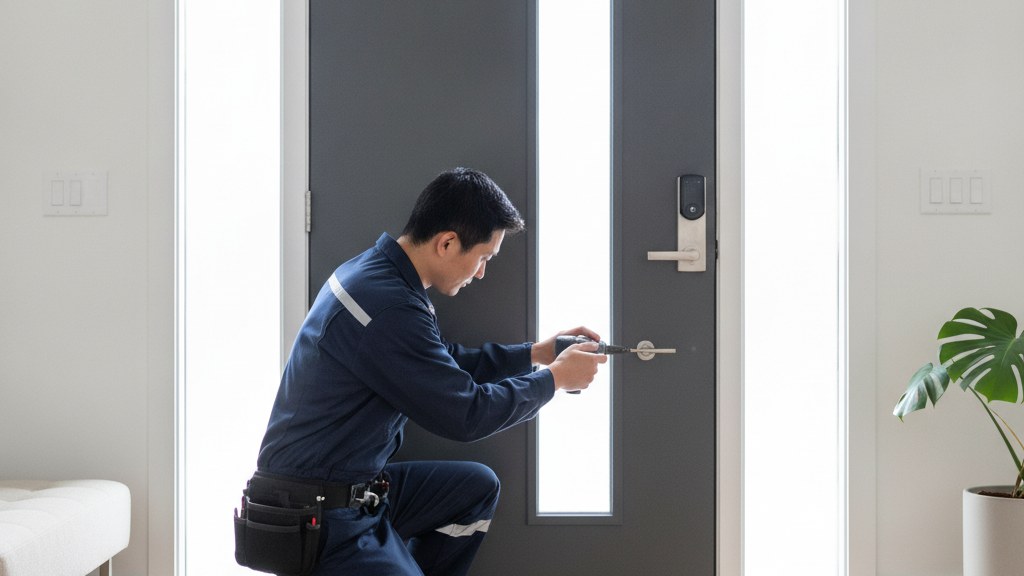
How Do Dormakaba Locksets Fit a Home Security Upgrade?
dormakaba locksets are lock hardware systems, not just a single knob or deadbolt. For a homeowner or renter, the real fix is matching the right lockset type, backset, door prep, and keying plan before you buy or install anything, then booking a qualified locksmith if fit, function, or rekeying is unclear.
What does dormakaba locksets mean on a residential door?
It means a complete door hardware system, not a loose replacement part. That is the first mistake people make: they shop by brand name alone and ignore the door prep, function, and keying they actually need.
In a home or rental, a dormakaba lockset usually covers the lever or knob, the latch, the strike interface, and the keyed or non-keyed function that makes the door work. If one piece is mismatched, the whole setup feels wrong even if the box looked correct.
The real question is not whether the brand is familiar. It is whether the lockset matches the door thickness, bore pattern, handing, and latch position already in the slab. Residential buyers run into trouble when they assume every modern lockset is interchangeable. It is not.
That is why this keyword matters. People search for dormakaba locksets because they want a specific product family, but the job is usually broader than buying hardware. You are solving fit, function, and key control at the same time.
For a renter, the calculation is slightly different. You may need a reversible or easily rekeyed option, or you may need landlord approval before swapping anything. For a homeowner, the decision often centers on security, convenience, and whether the existing door hardware is worth salvaging.
- Lockset means the full hardware set, not just the visible handle
- Residential fit depends on bore holes, latch position, and door thickness
- The keying plan matters as much as the finish or style
- A renter and a homeowner may need different lock functions
- A mismatched lockset can look right and still perform badly
Which dormakaba lockset function fits your front, side, or interior door?
Pick the function first, because style is the easy part and function is what keeps you from buying the wrong hardware twice. The door location tells you what the lockset should actually do.
Front and back doors usually need keyed entry function. That means the lockset can be secured from the outside with a key while still opening from the inside as intended. Side entries often need the same thing if they are exposed or access-controlled.
Interior bedroom or bath doors are different. Those commonly use passage or privacy function, and buyers often confuse the two. Passage hardware does not lock. Privacy hardware locks from inside for personal space, not exterior security.
If you are replacing a worn lockset, check whether the existing hardware is a knob, lever, or deadbolt combination. A dormakaba product may match the opening, but the function still has to match the door’s role in the home.
This is where people waste time. They shop finish first, then realize the latch function, handing, or keyway does not fit the actual door. The door does not care what looked good online. It cares about function and geometry.
- Keyed entry belongs on exterior access doors
- Privacy function is for bathrooms and similar rooms
- Passage function is for hallways and rooms that stay open
- Check whether the door needs a lever, knob, or deadbolt-style setup
- Do not choose finish before you choose function
How do bore size, backset, and door thickness affect the fit?
They are the measurements that decide whether the hardware installs cleanly or turns into a return trip. If you skip them, you are guessing, and guessing on door prep is expensive in time and aggravation.
Backset is the one most homeowners overlook. If the latch opening sits wrong relative to the bore, the lockset may bind or fail to latch firmly. That can create the classic problem where the door nearly closes, but never feels solid.
Door thickness matters too. Some locksets are made to work across a range, but not all. If the door is unusual, older, or has been altered over time, the trim and spindle length may not line up the way the product listing suggests.
Bore size and prep style are just as important. A lockset can be a quality product and still be the wrong choice if the door has been drilled for a different format. Residential doors also accumulate old hardware scars, so the previous install often reveals more than the product photo does.
Measure before you buy, and if the measurements are not straightforward, stop there. This is exactly where a competent locksmith beats another round of trial and error at the store.
- Backset controls latch alignment
- Door thickness affects spindle and trim fit
- Bore size must match the hardware prep
- Old doors may have modified holes or patchwork repairs
- Measure first, buy second
Easter’s Lock & Security Solutions has served the Mid-Atlantic since 1953 – residential, commercial, automotive and emergency service.
Book Now / Get a QuoteCan dormakaba locksets be rekeyed for a move, tenant change, or lost key?
Yes, often they can, but the exact answer depends on the cylinder and the hardware already on the door. This is the part people discover after the new keys are already in the mailbox.
Rekeying is the practical fix when you want the hardware to stay but the keys to change. A move, a lost key, or a tenant turnover are the obvious triggers. The lockset may remain in place while the cylinder is reset to accept new keys.
For a homeowner, that can be cleaner than replacing the entire setup. For a renter or landlord, it may be the fastest way to reset access without changing the whole look of the door. But not every cylinder is equally convenient to rekey, and some situations make replacement the smarter move.
The key question is whether the hardware is worth keeping. If the lockset is worn, sticky, or misaligned, rekeying alone just preserves the problem. You want the door to operate correctly first, then control who has a working key.
This is also where key duplication gets messy. A fresh keying plan should reflect who actually needs access, not who still has an old copy in a drawer.
- Rekeying changes access without necessarily changing the hardware
- Move-ins and tenant changes are common rekey triggers
- A worn or sticking lock may need replacement, not just rekeying
- Existing key copies matter more than people think
- The right keying plan should match real access needs
What should you check before replacing worn dormakaba hardware?
Check the door, not just the dead hardware. Most replacement problems start because the door, strike, or prep is already out of line before the new set ever goes on.
Look for latch rubbing, loose trim, misaligned strikes, stripped screws, and worn cylinders. Those clues tell you whether the issue is hardware age, door movement, or an install problem that got worse over time.
If the door swells, sags, or drags, a new lockset will not magically fix the closure problem. The lock has to meet the strike cleanly. If it does not, the issue may be hinge movement or frame alignment rather than the brand of lockset itself.
Also check whether the finish and style you want are compatible with the existing prep. A lot of residential buyers replace one broken unit and later realize the other door hardware no longer matches, either visually or functionally.
A careful pre-check saves money and frustration. It also keeps you from replacing good hardware just because one part was annoying enough to make the whole door feel bad.
- Inspect latch, strike, screws, and cylinder wear
- Door sag or swelling can mimic lock failure
- The frame and hinges affect lock performance
- Match style only after fit is confirmed
- Do not replace what is not actually the problem
How a clean dormakaba lockset install avoids the usual door headaches
A clean install is not about making the hardware look straight. It is about making the door latch, lock, and key function the way the product was meant to work.
The install has to start with correct prep. That means confirming the existing openings, checking handedness, and setting the latch depth so the door closes without forcing it. If those steps are rushed, the hardware may operate, but it will not feel right.
Then comes alignment. The strike has to meet the latch, the trim has to sit flush, and the cylinder or lever action needs to move smoothly. If the lockset is even slightly off, the complaint shows up later as sticking, rattle, or the need to shoulder the door shut.
Keying is the last step many people treat like an afterthought. It should not be. A residential lockset only solves the problem if the keys are correct, the duplicates are controlled, and the door works for the people who need access.
This is why a good install feels boring. No sticking, no unexpected resistance, no second visit for a part that should have been checked the first time.
Often the difference is not the brand. It is whether the installer checked the door as a system instead of treating the lockset as the only variable.
- Confirm prep, handing, and latch depth first
- Strike alignment matters as much as the hardware itself
- Smooth action is the sign of a correct install
- Keying should be finalized, not improvised
- A good install removes friction from daily use
When should you repair, rekey, or replace dormakaba locksets?
| Situation | What to do | Why |
|---|---|---|
| The keys still work but you want to control who has access | Rekey the cylinder and keep the hardware if it is in good shape | You change access without replacing a door set that still functions properly |
| The door sticks, the latch drags, or the hardware feels loose | Inspect the door prep and likely replace worn components or the full lockset | Mechanical wear or misalignment usually means the problem is bigger than the key |
| The lockset no longer matches the door opening or bore pattern | Replace with a compatible dormakaba unit or a better-fitting hardware setup | A poor fit causes repeated install problems and unreliable operation |
| You moved in, lost keys, or had a tenant turnover | Rekey promptly and review who still has working copies | Access control matters more than the age of the hardware |
Doing it yourself vs bringing in Easter’s Lock & Security Solutions
| Doing it yourself | With Easter’s Lock & Security Solutions | |
|---|---|---|
| Measuring fit and door prep | You measure, guess at compatibility, and hope the box matches the door | We verify the door conditions, fit, and function before the work starts |
| Rekeying and key control | You may end up with extra key copies or an incomplete reset | We handle the keying plan so the final access matches the real situation |
| Diagnosing a sticking door | You may replace a good lock and miss the actual alignment issue | We check the full door setup so the fix addresses the cause, not just the symptom |
| Time and frustration | You own the trip, the research, the install, and the return visit if it goes sideways | You book a call and get a qualified locksmith who does this work every day |
Frequently Asked Questions
What is the main benefit of dormakaba locksets for a home?
The main benefit is having dependable door hardware that can be matched to the door function you need. For a home, that usually means a keyed entry option for exterior doors or the right passage or privacy function for interior spaces.
What does a dormakaba lockset mean if I am replacing old hardware?
It means you are replacing the working hardware assembly, not just the visible handle or deadbolt face. That matters because the latch, trim, and keying all have to fit the existing door prep for the replacement to work correctly.
Can I just buy the same finish and assume it will fit?
No. Finish is the easy part. The real checks are backset, bore size, door thickness, handedness, and the lock function. If any of those are off, the hardware may not install or operate correctly.
How much does it cost to fix or replace a dormakaba lockset?
It depends on the hardware, the condition of the door, and whether the job is a simple rekey, a repair, or a full replacement. The honest move is to book a call for a quote after the door and hardware are reviewed.
Who should I call if the lockset is hard to turn or does not latch right?
Call a locksmith who can check both the hardware and the door alignment. Easter’s Lock & Security Solutions can help with residential lock repair, rekeying, and replacement when the door setup needs a proper diagnosis first.
Need a locksmith in the Baltimore area?
Easter’s Lock & Security Solutions has served the Mid-Atlantic since 1953 – residential, commercial, automotive and emergency service.
Book Now / Get a QuoteCall (410) 825-3535Last updated September 24, 2026