

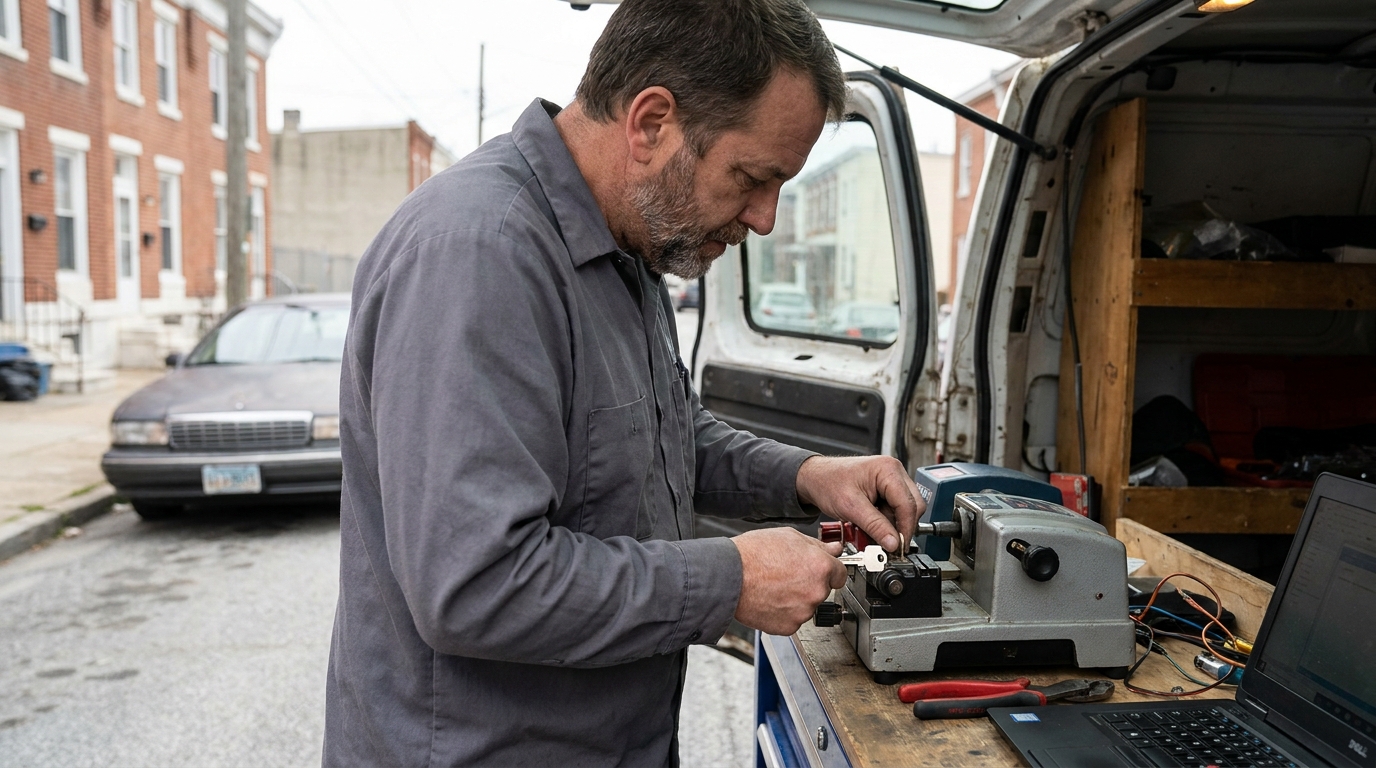
How Do I Get Locksmith Automotive Keys When I Lost Mine?
Locksmith automotive keys usually means a car key, transponder key, or fob that has to be cut and programmed to your vehicle, not just copied like an old house key. The real fix is matching the correct key type, cutting it accurately, and programming it to the car so it starts and opens the doors.
What counts as locksmith automotive keys on a modern car?
In this context, locksmith automotive keys covers more than a metal blade. It includes traditional keys, transponder keys, flip keys, smart keys, and remotes that have to match the vehicle’s security system before the car will start or respond.
If you are shopping for a replacement, the first mistake is treating every car key like a house key. Older cars were simple. Many newer vehicles are not. The blade, the chip, the remote buttons, and the ignition system can all matter at once.
That is why a buyer can bring in a key that looks right and still end up with a car that will not start. The mechanical cut is only one part of the job. The electronic pairing is the other part, and on many vehicles it is the part that matters most.
For a homeowner or renter, this usually shows up as a lost key, a dead fob, a broken shell, or a spare that was never made. The problem is not just inconvenience. It is access, transportation, and the ability to get back to normal without a towing headache.
The smarter move is to identify the key type first, then choose the replacement path that fits the vehicle. That is where real automotive locksmith work saves time, because the right answer depends on the car, not on a guess.
Common automotive key types include these:
A basic cut metal key for older vehicles
A transponder key with a chip in the head
A flip key that combines a blade and buttons
A smart key or proximity fob for push-to-start vehicles
A remote shell or fob case that may need internal parts transferred or replaced
Why does one replacement key work and another fail?
Because the cut and the programming have to line up with the vehicle. If either part is wrong, the key may turn in the lock but fail at the ignition, or it may unlock the door while still refusing to start the car.
This is where people burn time. They assume the issue is the blade shape, order something that looks close, and then discover the vehicle also expects a coded signal. Or the reverse happens: the chip is correct, but the cut is off by a small amount and the lock does not cooperate.
The vehicle does not care what the key looks like in a photo. It cares about the exact blank, the correct transponder or remote platform, and whether the programming sequence matches the security system. That is the real standard.
With automotive keys, one wrong assumption can turn a simple replacement into a second problem. You may end up with a key that fits nothing, a fob that needs additional setup, or a car that has to be revisited because the first attempt was incomplete.
The practical takeaway is simple. Match the vehicle by make, model, year, and key system before you buy anything. The more modern the security, the less forgiving the margin for error.
What usually causes a failure:
Wrong key blank or blade profile
Incorrect transponder chip type
Fob that is not compatible with the vehicle
Programming steps that do not match the car’s security system
Trying to copy a worn original without checking the actual code
Can a mobile locksmith make a car key at your driveway?
Yes, in many cases a mobile automotive locksmith can cut and program the replacement where the car is parked. That is the whole point: fewer delays, less towing, and a faster path from no key to usable key.
For a renter or homeowner, mobile service matters because a missing car key rarely happens at a convenient time. You are at home, in a lot, or stuck after work, and the vehicle is not the problem. The key is.
A mobile locksmith can often bring the cutting equipment, programming tools, and the right blanks or fobs to the site. That means the vehicle stays put while the key work happens around it, which is much easier than dragging the car somewhere first.
There are limits, of course. Some vehicles have more complex security systems, and some situations need specific verification or additional steps. But for many everyday replacement jobs, on-site service is the cleanest path.
If you need a spare or a replacement for a dead fob, the mobile model also helps you avoid turning a routine issue into a day-long errand. That is the part buyers usually want, even if they do not say it that way.
What mobile service typically handles:
Lost key replacement at home or work
Duplicate keys and spare fobs
Lockout situations with no functioning key
Broken or damaged key shells and remotes
Many common key cutting and programming jobs on site
Easter’s Lock & Security Solutions has served the Mid-Atlantic since 1953 – residential, commercial, automotive and emergency service.
Book Now / Get a QuoteWhat details should you have before you request a replacement?
Have the vehicle information ready, because the correct automotive key depends on the exact car. Make, model, year, and the type of key system are the basics, and they can change the answer completely.
People often call with only the symptom: lost key, dead fob, or broken remote. That is a start, but it is not enough. The key system on a 2010 vehicle can be totally different from a 2010 vehicle in another trim or package.
If you can, look for the VIN, the vehicle’s year, make, and model, and whether it uses a traditional insert key, flip key, push-to-start fob, or separate remote. Those details help narrow the correct blank and programming path before anyone wastes time.
You should also know whether you still have a working spare. If one key remains, that changes the strategy. If none remain, the job may require a different approach to cutting and programming.
The goal is not to sound technical. The goal is to avoid the all-too-common back-and-forth where the wrong part gets ordered because the caller did not have enough vehicle detail. One careful minute up front beats a second service call later.
Bring these details if you can:
Vehicle year, make, and model
VIN if available
Whether the car uses insert key, flip key, or smart fob
Whether any spare key still works
What the current key still does, if anything
When is a duplicate enough, and when do you need a full replacement?
A duplicate works when you still have a functioning original or spare and want a backup. A full replacement is different: no working key, damaged electronics, or a lost key situation usually calls for a more complete solution.
This distinction saves money and confusion. If you still have one working key, a duplicate can often be made from that key, which is simpler than rebuilding everything from scratch. But if the original is gone, worn out, or only partially functional, duplication is not the right word.
A full replacement may involve cutting a new blade, replacing the shell, transferring electronics, or pairing a new fob to the vehicle. The exact mix depends on what the car uses and what still works today.
For homeowners and renters, the real question is not whether the key is old or new. It is whether the vehicle can still be referenced from a working key. If yes, the process is usually more straightforward. If no, the security system has to be treated as a fresh problem.
That is also why buying a random spare online can go sideways. You might get a part that seems close enough, then discover it is missing the right chip, remote frequency, or cut profile. Cheap can become expensive fast.
A duplicate is usually enough when:
You have one functioning original key
The blade and electronics are still reliable
You want a spare for emergencies
The vehicle accepts straightforward duplication
A full replacement is usually needed when:
The only key is lost
The fob is broken or unresponsive
The chip or remote is not working
You need a new programmed key for a modern ignition system
How to avoid the usual automotive key mistakes
The biggest mistake is buying the part before identifying the system. After that come the rushed cuts, the wrong chip, and the assumption that all programming is the same. It is not.
This topic has a strange way of making people overconfident. A key looks like a key, so the buyer thinks the answer is obvious. Then the car refuses it, and the real work begins. That is how a small issue becomes a larger one.
Another common error is using the wrong search terms. A person looks for a generic replacement, but what they actually need is a specific transponder key, a particular fob platform, or a mobile programming job. Search intent matters here because the purchase is tied to the vehicle’s security.
There is also the temptation to wait until the last possible moment. That usually means more stress, less flexibility, and a higher chance of being stuck with only one bad option. If you still have a working spare, that is the time to fix the gap, not after the last key disappears.
The cleanest path is to identify the key type first, confirm compatibility second, and only then move to cutting and programming. That sequence avoids most of the pain buyers complain about later.
Avoid these mistakes:
Ordering by appearance instead of vehicle compatibility
Assuming a copied blade will start a transponder car
Ignoring the need for programming
Waiting until every key is lost before making a spare
Skipping verification on the exact vehicle system
What kind of help do you need when the car will not start?
If the key turns the lock but the engine still will not start, you are past simple copying. That usually points to a transponder or programming issue, which is exactly where automotive locksmith work earns its keep.
This is the moment many people misread. They think the car battery failed, or the ignition is broken, or the replacement key is defective. Sometimes the problem is one of those things. Often, though, the vehicle is rejecting the key electronically.
That is why a good automotive locksmith looks at the whole system, not just the blade. The door lock, ignition, chip, and remote functions all tell a story. If the key cuts fine but the vehicle stays silent, the next step is diagnosis, not guessing.
For a homeowner or renter, the objective is simple: get a working key or fob that restores access and starts the car without adding another layer of delay. The path to that result is much faster when the person doing the work understands both the mechanical and electronic sides.
If you need that kind of help, Easter’s Lock & Security Solutions is set up for it with automotive key and fob duplication, mobile locksmith service, and the kind of field experience that helps separate a dead fob from a real programming problem.
Signs you need more than a simple copy:
The blade fits but the car will not start
The remote buttons work inconsistently
The fob is dead even after battery replacement
The vehicle reports no key detected
You lost the only working key
What symptom points to which automotive key fix?
| Situation | What to do | Why |
|---|---|---|
| Door unlocks, but the engine will not start | Check whether the key has a transponder chip and whether it is programmed to the vehicle. | The mechanical cut may be fine, but the car still needs to recognize the chip before starting. |
| Remote buttons do nothing after battery replacement | Verify the fob compatibility and whether the remote needs reprogramming or replacement. | A dead battery is only one possibility. The fob may be the wrong type or no longer paired. |
| No working key remains | Use vehicle details to source, cut, and program a replacement from the current lock or code. | Without a reference key, the job shifts from duplication to full replacement. |
| A spare was bought online but will not work | Confirm blank type, chip type, and frequency before ordering another part. | Appearance is not compatibility, and the wrong part can fail in more than one way. |
DIY vs bringing in Easter’s Lock & Security Solutions
| Doing it yourself | With Easter’s Lock & Security Solutions | |
|---|---|---|
| Identifying the right key type | You have to sort through blanks, chips, remotes, and model variations on your own. | We identify the vehicle system first so the replacement matches the car, not just the picture. |
| Cutting and programming | A guessed part may fit badly or refuse to start the car, which sends you back to square one. | We handle the cut and programming together so the key works as a complete solution. |
| Time and disruption | You may spend hours ordering, waiting, and trying the wrong part before the car is usable. | Mobile service keeps the vehicle where it is and reduces the back-and-forth. |
| Confidence in the result | You are hoping the spare, remote, or replacement will finally do the job. | You get a documented automotive locksmith process from a company that has been doing this work since 1953. |
Frequently Asked Questions
How much do locksmith automotive keys cost?
It depends on the vehicle, the key type, and whether the job is a duplicate or a full replacement. A basic cut key is different from a transponder or smart fob. The right next step is to get a quote based on your specific car, then book a call so the replacement matches the vehicle.
Can you make a car key if I do not have the original?
Often yes. A locksmith can work from the vehicle information, the lock, or the code path available for that make and model. If you have no working key, the job usually becomes a full replacement rather than a simple duplicate.
Is a car fob the same as a transponder key?
Not always. Some vehicles combine the remote and the transponder in one unit, while others separate them. That distinction matters because the car may need both the correct blade and the correct electronic pairing before it will start.
What should I do first if my only car key is lost?
Confirm the vehicle details, check whether you have a VIN or spare, and stop buying random replacements. The sooner the key type is identified, the faster you get back to a working vehicle without extra delays.
Can Easter’s Lock & Security Solutions help with automotive key work?
Yes. If you need a duplicate, a replacement fob, or a no-key-left solution, Easter’s Lock & Security Solutions can help with automotive key and fob work as part of its mobile locksmith service. The practical move is to request a quote and book a call.
Need a locksmith in the Baltimore area?
Easter’s Lock & Security Solutions has served the Mid-Atlantic since 1953 – residential, commercial, automotive and emergency service.
Book Now / Get a QuoteCall (410) 825-3535Last updated September 15, 2026