

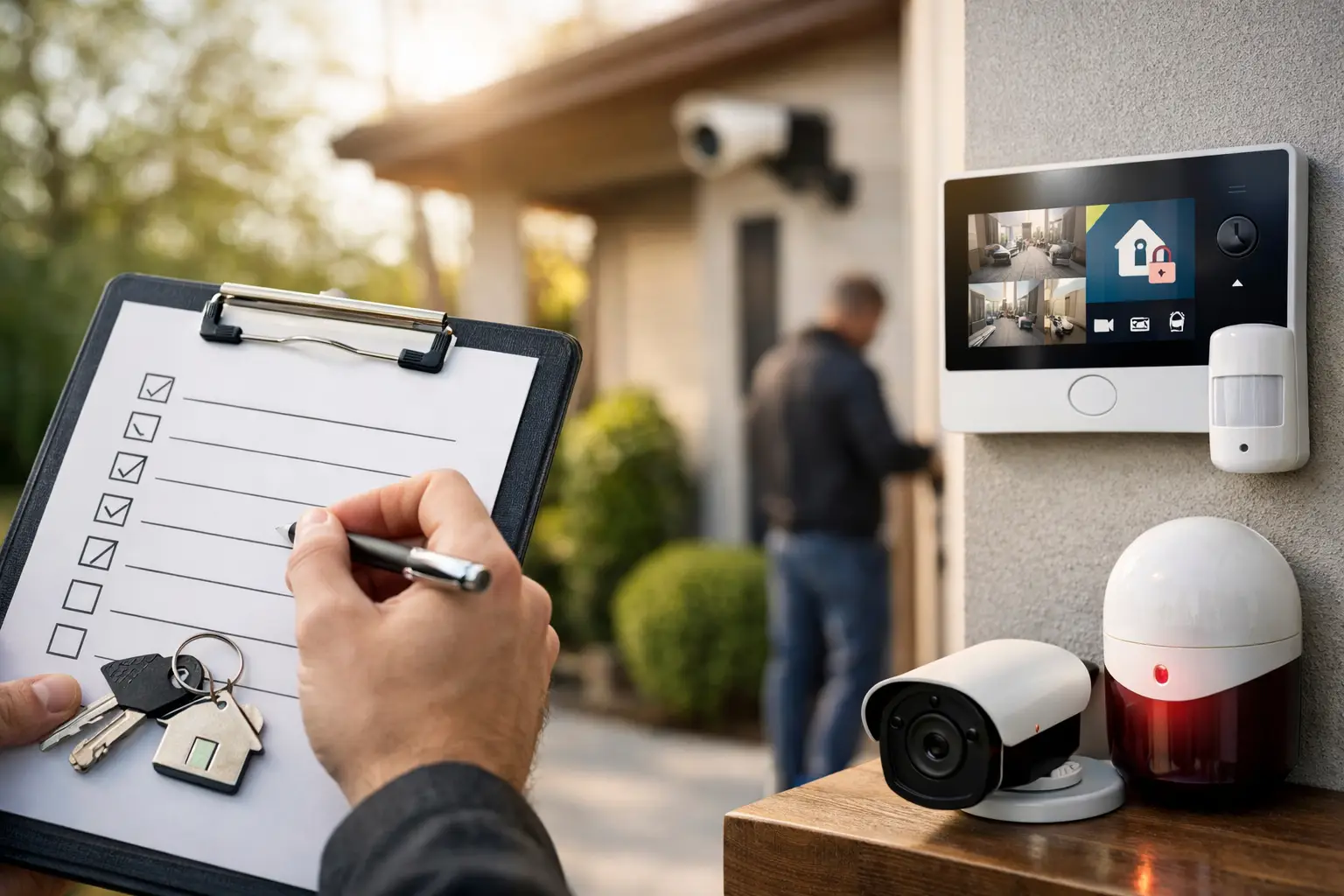
Residential Security Checklist for Homeowners
A front door with a good deadbolt can still be the weak point if the strike plate is loose, the frame is split, or a spare key is sitting under the mat. That is why a residential security checklist works best when it looks at the whole property, not just the lock on the door. For homeowners in Baltimore, Annapolis, Washington, and across the Mid-Atlantic, the real goal is simple – make the house harder to enter, easier to monitor, and faster to secure when something changes.
Most residential break-ins are not high-tech events. They happen because an entry point was easy, a routine was predictable, or an older piece of hardware was never upgraded. A practical review of your home should focus on delay, detection, and control. Delay gives an intruder less opportunity. Detection gives you awareness. Control means you know who has access and when that access should end.
Start Your Residential Security Checklist at the Perimeter
Good home security begins before anyone touches a door. Walk the property the way a stranger would. Look for dark approach paths, low-visibility corners, overgrown shrubs near windows, and gates that do not latch properly. A house does not need to look fortified, but it should not offer easy concealment.
Exterior lighting matters more than many homeowners expect. The question is not whether you have lights, but whether they cover the right areas. Driveways, side yards, rear entries, basement stairwells, and detached garages should all be visible after dark. Motion-activated lighting can help, although constant low-level lighting near key entries can be more useful in some layouts. It depends on the property and whether frequent motion triggers would become background noise.
House numbers should also be visible from the street. This is a safety issue as much as a security issue. If police, fire, or emergency service needs to find the home quickly, clear numbering helps.
Doors, Frames, and Hardware
When homeowners think about security, they usually think about locks first. That makes sense, but the lock is only one part of the opening. A quality deadbolt installed in a weak frame gives a false sense of security.
Start with the main entry door. Solid-core or metal-clad exterior doors are generally preferable to hollow-core doors, which do not belong on exterior openings. Check the frame for movement, cracks, or soft wood around the latch area. If the door shifts when pressure is applied, the problem may be installation, wear, or frame failure rather than the lock itself.
Then inspect the hardware. A residential security checklist should include deadbolt condition, latch alignment, hinge security, strike plate length, and screw length. Short screws into trim do very little. Longer screws anchored into framing provide far better resistance. Also check whether secondary doors, such as side entries, garage service doors, and basement doors, are secured to the same standard as the front door. In many homes, they are not.
Sliding glass doors deserve special attention. Many are more vulnerable than owners realize. The factory latch may not be enough on its own, especially on older units. Track integrity, anti-lift protection, and supplemental locking options all matter here.
Rekeying and Key Control
One of the most overlooked parts of a residential security checklist is key control. Homeowners often upgrade locks but forget to ask a more basic question: who still has a working key?
If you moved into the home and did not rekey it, do not assume every old key is gone. Previous owners, contractors, cleaning services, dog walkers, family members, and neighbors may still have access. Rekeying is often the fastest and most cost-effective way to regain control without replacing every lock.
This also applies after a divorce, roommate change, lost key, employee dispute at a home office, or renovation project. The trade-off is straightforward. Rekeying keeps existing hardware if the hardware is worth keeping. Full replacement makes more sense when locks are worn, low quality, mismatched, or no longer fit the level of security you want.
Spare keys should be stored intentionally, not hidden in predictable places. Fake rocks, flowerpots, and doorframe ledges are familiar to everyone, including intruders.
Windows and Secondary Entry Points
Windows often receive less attention because they do not feel like primary access points. That assumption creates risk. Ground-floor windows, first-story rear windows, basement windows, and garage-side windows should all be checked for working locks and signs of wear.
A window that technically locks but does not sit square in the frame is not secure. The same is true for windows with damaged latches, failing sash components, or nearby landscaping that hides tampering. In some cases, security film, reinforced glass options, or sensor integration may be worth considering. In others, basic repairs and improved visibility solve most of the problem. The right answer depends on the home, the neighborhood, and whether the concern is opportunistic entry or a more deliberate threat.
Do not forget the garage. Attached garages are common weak points because they connect convenience with lower security expectations. Check the overhead door, opener, emergency release protection, interior door to the home, and any side or rear service door. If the interior garage door uses minimal hardware while the front door has premium hardware, the security plan is out of balance.
Smart Locks, Cameras, and Alarm Devices
Technology can improve home security, but only when it is installed and used correctly. Smart locks can be an excellent option for homeowners who want audit trails, temporary codes, or easier control over family and service access. They are especially useful for busy households, property managers, and owners who travel often.
That said, smart hardware should not be treated as a substitute for sound mechanical security. A connected lock on a poorly secured door still leaves a weak opening. Battery management, user code hygiene, and proper setup also matter. If app permissions are loose or old codes stay active, convenience becomes a liability.
Cameras can add strong deterrence and useful evidence, but placement is everything. A doorbell camera alone does not cover a side gate, rear patio, detached garage, or basement entrance. Look for blind spots and think in terms of approach paths, not just door views. Better coverage is not always more coverage. A few well-positioned cameras are usually more effective than a scattered collection with inconsistent visibility.
Intrusion detection devices, glass-break sensors, and monitored systems can add another layer. Whether they are necessary depends on the property and the homeowner’s expectations. Some households want basic notification. Others want full integration with cameras, mobile alerts, and emergency response.
Habits That Strengthen or Undermine Security
Even a well-equipped home can be undermined by routine behavior. Security is partly a hardware issue and partly a habit issue.
Check whether doors are routinely left unlocked during short errands, whether garage doors stay open longer than necessary, and whether packages sit exposed for hours. Review how access is shared with teenagers, guests, pet sitters, and contractors. Temporary access should actually be temporary.
It is also worth reviewing how visible your daily routine is from the outside. Consistent absence patterns, overflowing deliveries, and dark front entries can all signal opportunity. Small adjustments help. Light timers, package planning, and controlled access schedules create fewer openings for someone watching the property.
When a Professional Review Makes Sense
A homeowner can identify many issues with a careful walk-through, but some problems are easier to spot when you know what failure points to look for. Door alignment, hardware grade, strike reinforcement, code-compliant egress, and proper smart lock installation are not always obvious from the surface.
That is where an experienced locksmith and physical security provider can add real value. A professional review should not be about selling unnecessary hardware. It should identify weak points, explain options clearly, and match the solution to the house. A rowhome, a suburban single-family home, and a multi-unit residential property do not have the same risks or priorities.
For homeowners who want both traditional lock service and more advanced security support, that range matters. Easter’s Lock & Security Solutions has worked across residential and institutional environments since 1953, which means the conversation can go beyond replacing a lock and into how the entire opening performs under real use.
A good residential security checklist is not about turning your home into a fortress. It is about removing easy opportunities, tightening control, and making sure the basics are handled before a problem forces the issue.