

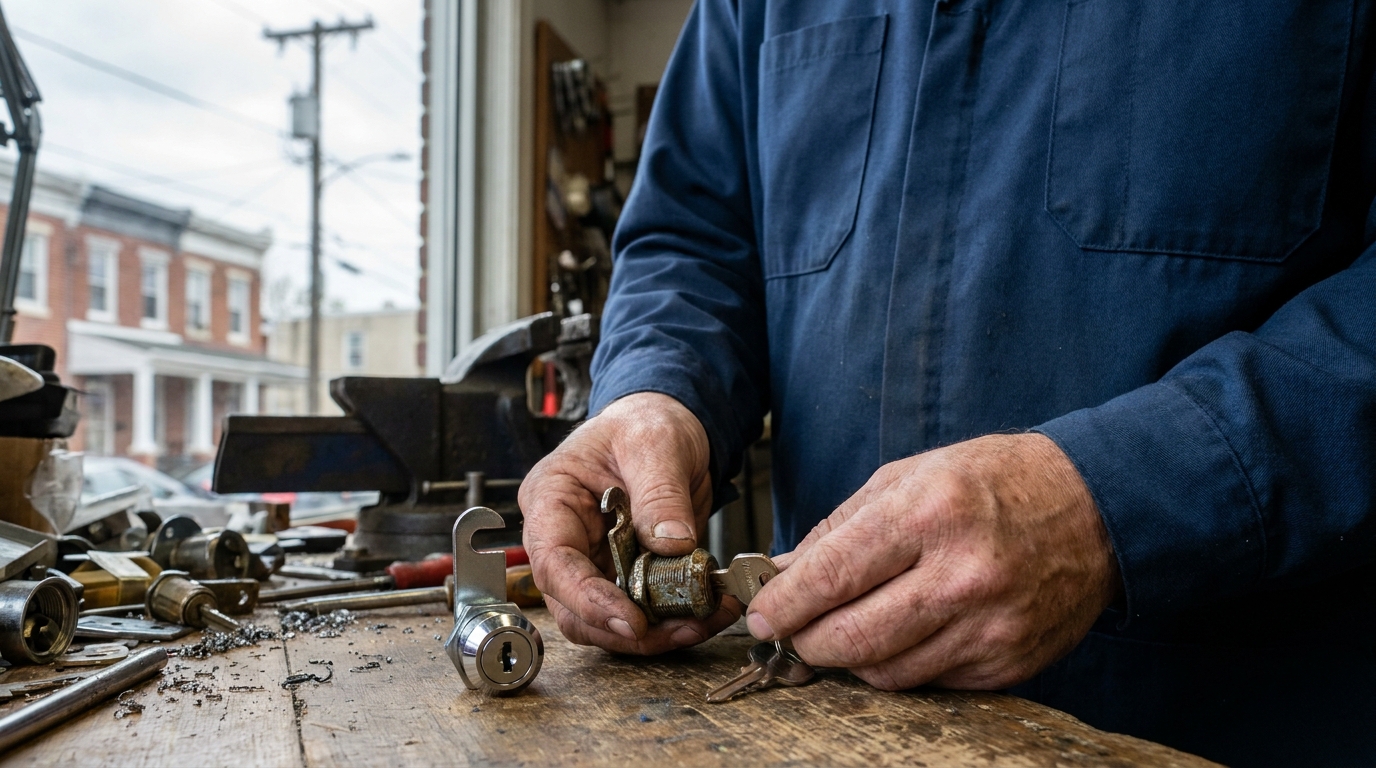
What Are Cam Lock Locks, and When Should You Replace Them?
Cam lock locks are small keyed locks that turn a cam to secure cabinets, mailboxes, drawers, and other light-duty enclosures. If the lock spins, sticks, or the key no longer turns cleanly, the real fix is usually rekeying, repair, or replacement matched to the door thickness and hardware, not guesswork.
What does a cam lock actually secure?
A cam lock secures a small access point by turning a metal cam behind the surface. That is the whole trick. It is common on cabinets, mailboxes, desks, utility panels, and other light-duty enclosures where you need controlled access, not a full deadbolt.
The name gets used loosely online, which is how people end up comparing the wrong parts and buying the wrong hardware. A cam lock is the lock body, the cam is the rotating arm, and the enclosure determines whether the whole setup works or binds.
If you are dealing with small doors or panels, fit matters more than brand chatter. Door thickness, hole diameter, cam offset, and the way the latch engages are the details that decide whether the lock feels solid or sloppy.
This is also where people overestimate what a basic replacement can solve. If the opening is damaged, the strike is misaligned, or the cam is wrong for the enclosure, swapping the cylinder alone will not fix the problem.
For homeowners and renters, the practical goal is simple: keep the right people in and the wrong people out, without turning a cabinet or mailbox into a project.
cam lock locks is the phrase buyers use when they are trying to name the part, the hardware family, or the replacement they need. The job is to identify the exact version, then match it cleanly.
- Used on cabinets, mailboxes, drawers, panels, and similar enclosures
- Works by rotating a cam behind the surface
- Requires matching hole size and door thickness
- May need rekeying, repair, or full replacement
- Wrong cam shape can make a good lock feel broken
How do you tell when the key, cylinder, or cam is the real problem?
You diagnose this by symptoms, not by hoping. A key that inserts but will not turn points to a cylinder issue. A key that turns but does not secure the door often points to the cam or mounting hardware. Different failure, different fix.
A worn key can fool you. So can a bent cam. The lock may look fine from the front while the back side is doing the actual damage, slipping past the catch or hitting the enclosure at the wrong angle.
If the lock spins in place, the retainer or nut may be loose. If the key requires force, the cylinder may be worn or contaminated. If the cam hits too early, too late, or not at all, the length or offset is wrong.
People often call these car locksmiths or auto car locksmiths by mistake because they think any lock problem is the same problem. It is not. Small enclosure hardware needs different parts, different tolerances, and different tools than vehicle locks.
A good locksmith will inspect the whole assembly, not just sell the obvious part. That matters because the cheapest-looking fix is often the one you pay for twice.
If your question is how to use combination locks instead, that is a separate hardware category. Cam locks rely on mechanical keying, not a dial or code, so the failure points are different.
- Key sticks or grinds = cylinder wear or debris
- Key turns but door stays loose = cam or mount problem
- Lock body spins = retainer or nut failure
- Bent cam can mimic a bad cylinder
- Misalignment is often the hidden issue
Which cam lock style fits cabinets, mailboxes, and storage panels?
The right style depends on the enclosure, not on whatever is cheapest online. Cabinet locks, mailbox locks, and utility panel locks all use different cam shapes, lengths, and body styles. Pick the wrong one and the hardware will fit poorly or fail early.
This is where buyers waste time. They search by lock name, not by application, and end up with a part that looks close but does not actually secure the door. Close enough is not enough when the point is access control.
Cabinet and furniture hardware usually needs a compact body with a cam that lines up behind a thin panel. Mailbox-style applications tend to have tighter constraints and more specific replacement parts. Enclosures and specialty panels may need stronger retention or a particular offset.
If you are dealing with safes and locksmiths terms, keep the categories straight. Safe hardware is its own world. A small cam lock on a cabinet is not the same thing as a safe lock, even if both are keyed and mechanical.
Material matters too. A thin, loose, or poorly matched lock can wear faster, rattle, or fail to keep the door closed under normal use. That is not a mystery. It is just bad fit.
For renters, the smarter path is often to keep the original opening intact and replace the lock with a compatible version rather than altering the furniture or enclosure.
- Cabinet, mailbox, and panel locks are not interchangeable by default
- Cam length and offset must match the enclosure
- Thin panels need compact bodies and proper retention
- Safe hardware is a different category entirely
- Fit is more important than the cheapest listing
Easter’s Lock & Security Solutions has served the Mid-Atlantic since 1953 – residential, commercial, automotive and emergency service.
Book Now / Get a QuoteWhy do small enclosure locks fail more often than people expect?
Because they get used casually, then ignored. The hardware looks simple, so people assume it can take abuse. It cannot. Repeated key pressure, loose mounting, cheap alloy parts, and bad alignment all add up until the lock stops engaging cleanly.
A small lock has less room to hide wear. That is the problem. Once the cylinder starts to fatigue or the cam loosens, every turn makes the condition worse. You notice it only after the door stops feeling secure.
Another common failure is user force. If the key does not turn easily, people push harder. That can bend the cam, damage the cylinder, or strip the retention hardware. The lock was already telling you something. You just did not want to hear it.
There is also the environment. Dust, moisture, and repeated vibration can affect enclosure hardware more than people think. That is why a lock that worked fine indoors may become unreliable on a utility door or high-use panel.
If your security concern has expanded beyond one lock, that is the point to think broader. Home security is a system, and video surveillance or access control may make more sense than trying to defend every weak point with a better key.
The fix is usually straightforward once the actual failure is identified. The mistake is treating every symptom like the same problem and buying random parts.
- Wear shows up fast because the hardware is small
- Forcing a sticky key can bend or strip parts
- Dust and vibration can affect the mechanism
- Bad alignment causes repeated failure
- Sometimes the real answer is system-level security, not just a new lock
What locksmith tools matter when a cam lock needs repair or replacement?
The useful locksmith tools are the ones that let you diagnose and match parts cleanly, not just tear something apart. For cam hardware, that means measuring, inspecting the cylinder, checking the cam orientation, and confirming the enclosure fit before anything gets swapped.
This is where a lot of DIY confidence falls apart. Without the right tools, you can remove the lock and still not know whether the issue was the cylinder, the cam, the retainer, or the door itself.
A locksmith working on this type of hardware will focus on the lock body, retention, keyway, cam style, and mounting conditions. That is the difference between a fix and a repeat visit to the hardware aisle.
For homeowners, the upside of proper tooling is simple: less guesswork and less damage. You do not want to enlarge the hole, scratch the finish, or install a replacement that only half engages.
If the opening is part of a broader access plan, the right replacement can also support rekey service or a cleaner keying setup. That matters when the same key should not be floating around with prior tenants, vendors, or family members.
A trained technician also knows when the lock is not the real problem. Sometimes the enclosure is out of square or the strike is worn. Tools help you see that before you buy the wrong part.
- Measuring tools matter as much as removal tools
- Cam orientation must match the enclosure
- Retainers and mounts need inspection before replacement
- Bad DIY removal can damage the finish or opening
- Proper diagnosis avoids buying the wrong part twice
How much does a replacement usually involve, and what changes the cost?
For cam hardware, the cost question is not a single number. It depends on the lock type, the condition of the opening, the keying need, and whether the part can be repaired or should be replaced. That is why a real quote starts with the hardware, not a guess.
People want a quick number because they are comparing options fast. Fair enough. But a price without context is usually useless. The same opening may need a simple rekey, a new cylinder, or a full hardware replacement, and those are not the same job.
The other variable is access. If the lock is easy to reach and the problem is straightforward, the work is simpler. If the enclosure is damaged, the cam is custom-shaped, or the old hardware has been installed poorly, the job becomes more involved.
This is also where homeowners sometimes discover they need broader support from car locksmiths or a mobile car key locksmith for a separate issue at the same time. Different problem, different solution. Bundling them mentally does not make them cheaper.
The smart move is to get a quote that reflects the actual condition of the lock and opening. That saves time and keeps you from buying a part that does not solve the failure.
If you want the cleanest result, book a call and describe the hardware, the symptoms, and the access point. That is enough for a proper estimate to start.
- Cost depends on hardware type and condition
- Rekey, repair, and replacement are different jobs
- Access and installation quality affect labor
- A quote should be based on the actual opening
- Bundling unrelated lock problems usually wastes time
When should you repair, rekey, or replace the cam lock?
| Situation | What to do | Why |
|---|---|---|
| Key goes in but turns rough or inconsistent | Inspect the cylinder, clean the mechanism if appropriate, and consider rekeying or replacement | That usually points to wear inside the core rather than a problem with the enclosure itself. |
| Key turns but the door does not stay secured | Check the cam, retainer, and mounting; replace the cam or full lock if needed | The front of the lock may be fine while the back-end hardware is failing to catch. |
| Lock spins or feels loose in the hole | Tighten or replace the retainer and verify the opening size | A loose body cannot hold alignment, so the lock cannot engage reliably. |
| Old key control is a concern after a move or turnover | Rekey or replace the lock and standardize the keying plan | You do not know how many copies exist, and access control starts with controlled keys. |
Doing it yourself vs bringing in Easter’s Lock & Security Solutions
| Doing it yourself | With Easter’s Lock & Security Solutions | |
|---|---|---|
| Part matching | You compare specs online and hope the cam, body, and thickness line up | We assess the opening, hardware, and fit before recommending the right replacement |
| Diagnosis | You may replace the obvious part and miss the actual failure point | We look at the cylinder, cam, retention, and enclosure together |
| Time and frustration | You spend time removing, measuring, returning, and reinstalling | We bring the experience and mobile capability to solve it efficiently |
| Result quality | The lock may work, but wobble, bind, or fail again | You get a clean, functional fix that matches the real use case |
Frequently Asked Questions
What is the simplest definition of cam lock locks?
It is the phrase buyers use for small keyed lock assemblies that secure cabinets, mailboxes, drawers, and similar enclosures with a rotating cam. In practice, the key turns the cam behind the surface, so fit and alignment matter as much as the lock body itself.
What does a cam lock need to function properly?
It needs the right lock body, a cam that matches the opening, a secure retainer, and a cylinder that turns smoothly. If any one of those parts is off, the lock can feel broken even when only one piece is actually worn or misaligned.
Can a locksmith help with locks and doors if the problem is not a main entry door?
Yes. Small enclosure hardware is still a locksmith job when the issue is access, keying, repair, or replacement. The fact that it is not a front door does not make the failure less real or less annoying.
Do I need a locksmith for car key work if I am dealing with a cabinet lock?
No, not usually. Car locksmiths and a locksmith for car key problems work on vehicle systems. A cabinet or mailbox cam lock is different hardware, so the right technician is the one who understands the enclosure and the lock style.
How do I get a quote for this kind of lock problem?
Book a call and describe the hardware, the symptom, and the access point. If you want a clean answer on repair, rekey, or replacement, Easter’s Lock & Security Solutions can help identify the right fix and give you a quote without the guesswork.
Need a locksmith in the Baltimore area?
Easter’s Lock & Security Solutions has served the Mid-Atlantic since 1953 – residential, commercial, automotive and emergency service.
Book Now / Get a QuoteCall (410) 825-3535Last updated September 16, 2026