

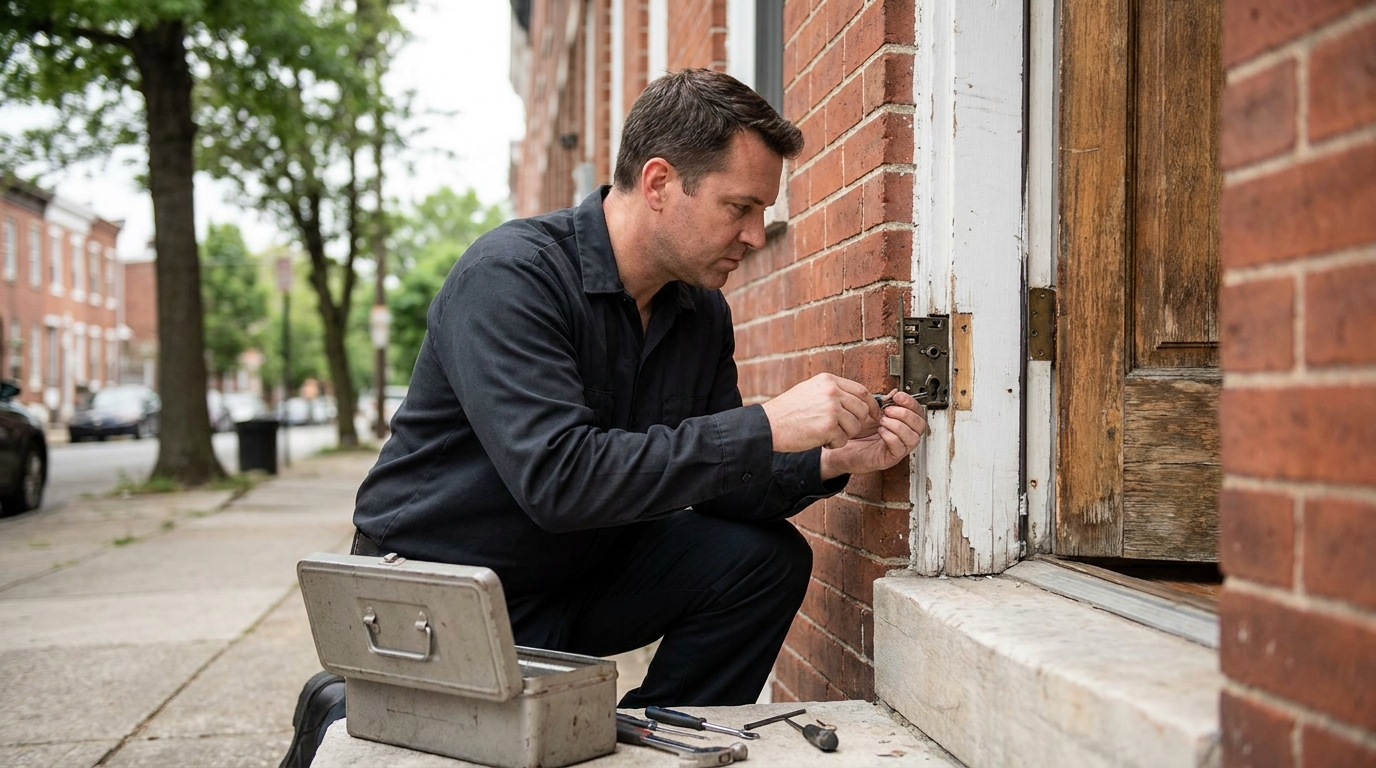
What Should I Do About a Lock and Door Problem Right Now?
Lock and door problems are usually a stuck mechanism, a damaged cylinder, a misaligned door, or a key issue. The real fix is to identify whether the problem is the lock, the door, or both, then have a locksmith repair, rekey, or replace the right hardware without making the damage worse.
What is the difference between the lock, the door, and the frame?
A lock and door issue is rarely just the lock. In practice, you are dealing with a small system: the lockset, the latch, the strike plate, the door slab, and the frame all have to meet cleanly or the whole thing acts up.
If the key turns but the door will not open, people blame the cylinder. Sometimes that is right. Just as often, the door has shifted, the latch is not fully retracting, or the strike is worn enough that the bolt catches on the edge.
That is why the phrase “how to open a locked door” can be a trap. Opening a door safely depends on what is actually failing. A deadbolt jam, a warped slab, and a broken knob are three different problems, even if they look the same from the hallway.
For a homeowner or renter, the practical question is simple: do you need entry, repair, rekeying, or replacement? Each one solves a different part of the system. If you pick the wrong fix, you waste time and usually make the hardware worse.
This is also where “locks and doors” as a search term gets muddy. Search engines see the broad topic, but the buyer needs a precise answer. The fix starts by naming the component that failed, not by guessing at the whole assembly.
How to open a locked door without key usually means one thing online and another thing in real life. Online, people want a trick. In real life, you want clean entry, no extra damage, and a door that still works after you get inside.
- Lockset: the hardware you turn or press to operate the latch or bolt.
- Cylinder: the keyed part that accepts the key and controls the lock.
- Latch and strike: the pieces that hold the door closed and must meet correctly.
- Frame and hinges: the parts that determine whether the door hangs true.
- Damage pattern: a clue that tells you whether the fault is mechanical, alignment, or key related.
How do you tell a key problem from a door problem?
If the key feels wrong, do not assume the whole lock is dead. A lot of lock and door complaints start with a key issue, then get worse because someone keeps forcing the turn.
A bent key, worn key cuts, or a key that was copied badly can make a healthy lock feel stiff. On the other side, a misaligned door can make a perfect key feel useless because the bolt is binding before it can fully move.
The fast test is observation. Does the key struggle before the lock starts turning, or does it turn but the door still resists? That distinction matters. One points to key or cylinder trouble. The other points to alignment, latch, or strike problems.
This is where “how to unlock a door without a key” gets messy. If the door is not actually locked and the problem is friction or misalignment, a locksmith may repair the fit instead of bypassing the lock. That is the better outcome, because the hardware survives.
If the key is broken, missing, or the only copy is worn out, a rekey or key replacement may be smarter than swapping every piece of hardware. If the door itself is sagging, no key service can fix that. The door has to close straight before the lock can do its job.
For renters, the common mistake is chasing the symptom. You do not want three temporary fixes when one correct service would restore the entry and stop the headache from coming back.
- If the key binds before turning, inspect the key and cylinder first.
- If the key turns but the door sticks, suspect the latch, strike, or alignment.
- If the door only closes when pushed hard, the frame or hinges may be off.
- If the key is worn, a fresh copy or rekey can be the cleaner fix.
- If the hardware is damaged, forcing it usually makes the repair bigger.
When is a door repair smarter than replacing the lock?
Not every sticky entry needs new hardware. Sometimes the smarter move is to repair the door, adjust the strike, or service the latch so the existing lock can keep doing its job.
People often ask for replacement because it sounds decisive. But a lock and door system is not a fashion accessory. If the lock is structurally sound and the issue is alignment, you are usually better off fixing the fit than throwing away good hardware.
Commercial locksets for doors follow the same logic, just with more traffic and more wear. If the set is still serviceable, targeted repair preserves the hardware and avoids unnecessary disruption. On a house, that can mean a quick adjustment. On a busier entry, it can mean saving a much larger job.
A locksmith looks at how the latch meets the strike, whether the bolt throws fully, whether the hinges are pulling the slab off plane, and whether the door itself has swollen, settled, or been forced. That is not overkill. That is the difference between a one-time fix and a repeat call.
If the lock body is cracked, the keyway is trashed, or the mechanism no longer holds up under use, replacement makes sense. If the door is fine and the problem is the hardware, repair may be the cleaner call. Good judgment saves the homeowner from buying the wrong thing twice.
This is also the point where people searching for commercial locksets for doors should slow down and assess the opening first. Matching the hardware to the door condition matters more than buying the fanciest set on the shelf.
- Repair when the lock still functions and the failure is mechanical or alignment based.
- Replace when the lock body, cylinder, or latch is worn beyond reliable use.
- Adjust the strike when the bolt hits the plate instead of seating cleanly.
- Check hinges and door sag before blaming the lock.
- Preserve usable hardware when a small correction will restore normal operation.
Easter’s Lock & Security Solutions has served the Mid-Atlantic since 1953 – residential, commercial, automotive and emergency service.
Book Now / Get a QuoteWhat should you do when you are locked out at the door?
A lockout is urgent, but urgency is exactly why you should not start prying, drilling, or improvising. If you need how to open a locked door without key advice, the safe answer is to get controlled entry first.
Homeowners and renters lose time when they try to outsmart a lockout. People wedge cards, twist screwdrivers, or call a neighbor with a toolbox. That rarely ends cleanly. You can break the latch, damage the frame, or leave the door no more secure than before.
The best first move is to confirm the obvious: do you have another legal entry, is someone inside, and is there any sign the lock or door has actually failed? If not, the correct response is locksmith service, not an escalating experiment.
How to open a locked door is a different question from how to open a locked door without a key. The first may involve a simple latch issue. The second may mean you need professional entry, especially if the deadbolt is engaged or the hardware is damaged.
If the key is inside, lost, or snapped, the locksmith can choose the least destructive method for that door and that lock. That matters. The point is not to “beat” the hardware. The point is to get in and keep the entry usable afterward.
For a renter, this is especially important because door damage can create a second problem with a landlord. Controlled entry is cleaner than a DIY rescue that turns into a repair bill.
- Do not force a jammed deadbolt or latch.
- Confirm whether another legal entry exists before escalating.
- Avoid drilling unless a professional has determined it is the right method.
- Call for controlled entry when the lockout involves a lost, broken, or inaccessible key.
- If the door is already damaged, treat it as both an access and repair issue.
Which commercial doors locks and commercial door locksmith issues show up at home?
You do not need a warehouse to run into commercial-style hardware. Some apartments, condos, mixed-use buildings, and home offices use heavier-duty entry parts that behave more like commercial doors locks than simple residential knobs.
That matters because the lock logic changes. A standard home hardware approach may not fit a reinforced door, a panic-style exit device, a storefront-style entry, or a building where access control is part of the setup.
When people search commercial door locksmith, they are usually really asking whether the entry has special hardware, unusual mounting, or higher traffic than a basic house lock. If so, the fix needs someone who understands both the lock and the door as a system.
At home, you may see closer-grade hardware on a rental building door, a basement entry, a side door, or a shared entrance. Those openings can suffer from the same problems as commercial entries: wear, misalignment, and parts that were installed for durability, not convenience.
This is why a general hardware swap can go sideways. Commercial locksets for doors often have different dimensions, different cylinder types, and different expectations for how the latch engages. If you do not identify the hardware first, you can end up buying the wrong replacement.
The buyer takeaway is simple. If the entry looks heavier, smarter, or more controlled than a basic front door, assume the hardware needs a more careful diagnosis.
- Heavier doors put more stress on hinges, strikes, and latches.
- Shared or rental entries often use more durable hardware.
- Commercial-style hardware may not match standard residential parts.
- Access control and key control can change the repair path.
- A correct diagnosis prevents buying the wrong set of parts.
How can you keep the next lock and door failure from coming back?
Once the entry works again, the next mistake is ignoring the warning signs. A lock and door system usually gives you clues before it fails, and those clues are worth paying attention to.
A sticky latch, a key that suddenly needs more force, or a door that no longer closes with a soft push are early indicators. That is your cue to get ahead of the problem, not wait until you are stranded outside or unable to secure the house.
Routine attention is plain boring, which is exactly why it works. Tighten loose hardware, keep keys in good shape, and pay attention when the door starts rubbing the frame. Small changes often point to bigger issues in the hinges, strike, or lock body.
For renters, prevention also means thinking about rekey service after a move, a turnover, or a key concern. For homeowners, it may mean checking whether the front door or side entry is still lining up the way it should. Security starts with a door that closes correctly.
Search behavior matters here too. Near-me queries tend to happen after the failure. Smart owners act before the panic stage. That is how you avoid the emergency call that could have been a simple service visit.
The practical goal is not to baby the hardware. It is to notice when the system changes and fix it while the fix is still simple.
- Watch for rubbing, sticking, or a latch that does not seat cleanly.
- Replace worn keys before they start damaging the cylinder.
- Rekey after a move, turnover, or lost-key situation.
- Inspect hinges and strike plates when the door begins to sag.
- Act on small changes before they become a lockout.
Should you repair, rekey, or replace the entry hardware?
| Situation | What to do | Why |
|---|---|---|
| The key works but the door sticks or needs force. | Repair the door alignment, latch, or strike before replacing the lock. | The lock may be fine. The problem is often the way the door and frame meet. |
| Old keys still work after a move or key concern. | Use rekey service. | You keep usable hardware and stop old keys from opening the door. |
| The cylinder is worn, broken, or inconsistent. | Replace the affected lock component or the full lockset. | A damaged core will keep failing even if the door itself is straight. |
| The entry is heavy-duty, shared, or high-traffic. | Have a commercial door locksmith assess the hardware and fit. | Commercial doors locks need the right dimensions, function, and durability for the opening. |
Doing it yourself vs bringing in Easter’s Lock & Security Solutions
| Doing it yourself | With Easter’s Lock & Security Solutions | |
|---|---|---|
| Entry method | You may try cards, tools, drilling, or random online tricks, which can make the damage worse. | We assess the lock and door first and choose the least destructive path for that specific opening. |
| Diagnosis | You can mistake a sagging door for a bad lock or a worn key for a failed cylinder. | We separate key, lock, latch, hinge, and frame issues so the fix matches the problem. |
| Hardware fit | Buying parts blindly can mean wrong sizes, wrong finishes, or the wrong function for the door. | We match the hardware to the door, the use case, and the existing setup before work starts. |
| After-the-fix result | You may get inside but still have a sticky, insecure door afterward. | We aim for clean entry, working hardware, and a door that closes and latches properly when we leave. |
Frequently Asked Questions
What is the quickest first step for a lock and door problem?
Check whether the issue is key, lock, or door alignment before you force anything. If the key turns but the door will not move, the problem may be the latch, strike plate, hinges, or frame rather than the lock itself.
What does commercial door locksmith mean on this page?
It means a locksmith who understands heavier-duty entries, commercial doors locks, and the way hardware functions under more traffic. On a home or rental, that can still matter if the entry uses commercial-style parts.
How do I know if I need how to unlock a door without a key help?
If you are locked out and you cannot use a legal spare entry, you need professional controlled entry rather than a DIY trick. Forcing the door can damage the lock, frame, or latch and make the repair more expensive.
How much does lock and door service cost?
It depends on the problem, the hardware, and whether the fix is entry, rekeying, repair, or replacement. The clean answer is to book a call for a custom quote so you are not guessing from generic online pricing.
Can Easter’s Lock & Security Solutions help if I am not sure whether it is the lock or the door?
Yes. That is exactly the kind of judgment call they handle, and it is where a real technician saves you time. If you need the right fix instead of a random parts swap, book a call / get a quote.
Need a locksmith in the Baltimore area?
Easter’s Lock & Security Solutions has served the Mid-Atlantic since 1953 – residential, commercial, automotive and emergency service.
Book Now / Get a QuoteCall (410) 825-3535Last updated September 17, 2026