

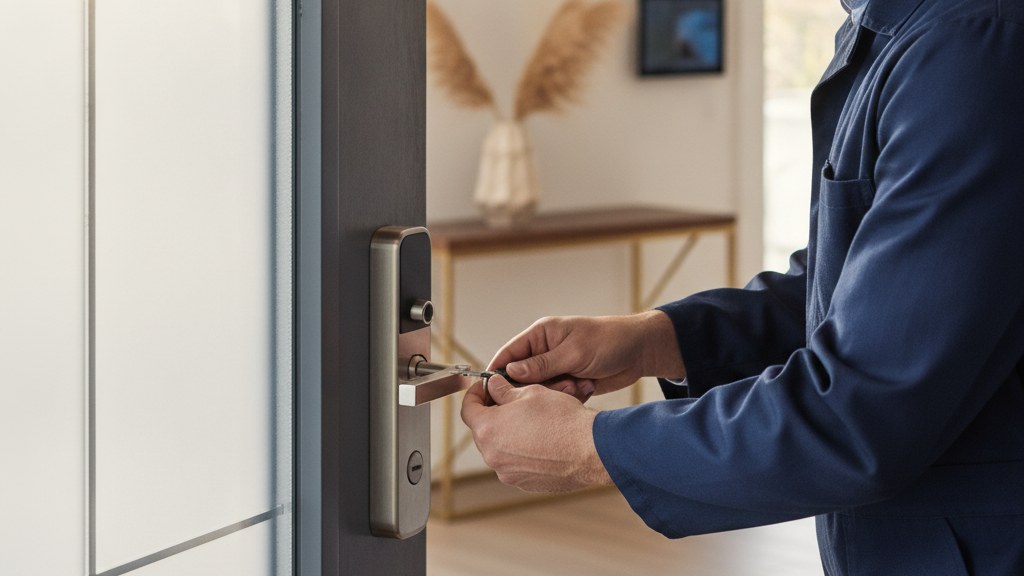
What Should You Do When a Key Gets Stuck in a Lock?
A key stuck in lock usually means the key, cylinder, or latch is binding, not that the door is doomed. Stop forcing it, keep the key steady, and avoid twisting harder. If the key will not move with light, controlled pressure, call a locksmith before the key breaks off or the lock is damaged.
What is happening when a key is stuck in the lock?
The short version: the key is not just “stuck,” it is being held by friction, misalignment, or damage inside the lock. Once you understand which part is binding, you stop guessing and start solving the real problem.
A key stuck in a lock is usually a symptom, not the whole failure. The key may be rubbing against worn pins, sitting in a cylinder that is dirty or dry, or fighting a door that has shifted and put pressure on the hardware.
If the key goes in but resists on the way out, the issue often lives in the plug or keyway. If the door itself has to be pushed, lifted, or pulled to make the key move, that points toward alignment, latch, or strike plate trouble.
This is where a lot of people make the common mistake: they assume more force equals more progress. It does not. More force usually means a bent key, a snapped key blade, or a cylinder that gets worse after the next turn.
A locksmith looks at the lock as a system. That means the key, cylinder, door position, latch, strike, and wear pattern all matter. The fix should match the failure, not the panic.
If the key is only slightly resistant, the lock may still be recoverable. If it is jammed hard or already twisting, the safest move is to stop before the key breaks off inside the lock.
- Friction inside the cylinder can hold the key in place.
- Door sag or latch pressure can create sideways binding.
- A worn key can drag even when the lock is otherwise usable.
- Dry or dirty locks often feel “stiff” before they seize.
- Forcing the key can turn a small issue into a broken-key extraction.
How do you remove a stuck key without snapping it?
The goal is not to wrestle the key free. The goal is to reduce pressure, keep the blade straight, and release the bind without turning one problem into two.
Start with a calm grip and tiny movements. Gentle in-and-out pressure, paired with a slight return to the exact position where the key felt least resistant, can sometimes free the key without drama.
If the door is openable, check whether the lock works better when the door is lifted, pushed inward, or pulled toward the frame. That tells you whether the door itself is forcing the cylinder out of alignment.
A proper lubricant can help in some cases, but not every product belongs in a lock. You want a product made for locks, not a sticky oil that attracts dirt and makes the problem worse later.
Do not stick random tools into the keyway. Paper clips, knives, and screwdrivers do more damage than good. They can scratch the keyway, jam debris deeper, or bend the key into a break point.
If the key is already flexing, stop. At that point, the safest “how-to” is to not do more DIY. A locksmith can remove the key and inspect the lock before the cylinder fails completely.
- Keep the key straight; do not torque it sideways.
- Try tiny pressure changes, not yanking.
- Test whether door position changes the binding.
- Use only a lock-safe lubricant if appropriate.
- Stop immediately if the key bends or the plug feels gritty.
Can a stuck key in a door lock mean the whole lock is failing?
Yes, and that is the part people do not want to hear. A stubborn key is often the lock telling you it is worn, dirty, or out of square before it fully locks up.
A door lock that catches the key today may be the same lock that starts sticking at certain temperatures, after rain, or when the door swells. That pattern usually means wear or alignment, not bad luck.
If the key is older or copied from a worn original, the cuts may no longer match the cylinder cleanly. That makes the lock feel like it is “getting worse,” when the real issue is the key and lock no longer agree.
Outdoor hardware and high-use entry doors wear faster. Padlocks, side doors, and older residential deadbolts are especially prone to debris, corrosion, and tiny internal failures that start as a sticky key.
The bad news is that a lock can move from annoying to unusable fast. The good news is that a locksmith can often repair or rekey the system before you need a full replacement.
When the lock has become inconsistent, the smart move is to solve the cause instead of only extracting the key. That is how you avoid a repeat problem next week.
- Repeat sticking is a sign of wear, not just inconvenience.
- A copied key can be part of the problem.
- Weather and door movement can make the issue intermittent.
- Old or exposed hardware tends to fail in stages.
- Early inspection can prevent a broken key or lockout.
Easter’s Lock & Security Solutions has served the Mid-Atlantic since 1953 – residential, commercial, automotive and emergency service.
Book Now / Get a QuoteWhy does a key get stuck in a padlock more often outdoors?
Outdoor locks take more abuse than indoor ones, and the weather does not care about convenience. Moisture, grit, corrosion, and freeze-thaw movement all make a padlock more likely to trap a key.
A key stuck in a padlock is often dealing with contamination from the outside world. Dust, rust, road grime, and moisture find their way into the body and keyway, where they gradually increase friction.
Padlocks also sit in exposed positions. That means they are more likely to see temperature swings, water intrusion, and physical stress from chains, gates, storage units, and security hasps that are not perfectly aligned.
If the padlock has been hanging with a load on it, the shackle may not be seated cleanly. That can make the key feel trapped even before the internal parts are fully corroded.
You can sometimes free an outdoor lock temporarily, but if the same padlock keeps sticking, the real answer is usually cleaning, repair, or replacement. A one-time fix does not solve a weathered mechanism.
This is where paying attention saves time. Outdoor locks often look simple, but they fail in messy, layered ways that do not respond well to brute force.
- Exposure to moisture and grit raises internal friction.
- Temperature swings can change how the lock fits and moves.
- A loaded or misseated shackle can trap the key.
- Corrosion is common in outdoor security hardware.
- Repeat problems usually mean the lock needs service.
What should you check before you call for help?
Before you call, look for the clues that tell a locksmith what kind of problem they are walking into. A little information helps, but your hands should stay off the “force it” button.
First, note whether the key is fully inserted, halfway out, or turning but not releasing. That simple detail helps separate a keyway issue from a latch or alignment issue.
Next, check the door position. If lifting the door, pushing it, or pulling it slightly changes the feel, the hardware may be binding because the door has shifted. That is useful information, not a DIY repair assignment.
Look at the key itself. A bent blade, worn cuts, or visible damage means the key may be part of the problem. If you have a spare that fits the same lock, that comparison can matter.
Do not keep testing the same move over and over. Each failed attempt adds wear and raises the chance of breaking the key off in the cylinder.
If the lock is on your main entry and you are already feeling locked out, time matters more than curiosity. That is the point where professional service stops being optional and starts being practical.
- Record whether the key is stuck in, stuck out, or stuck mid-turn.
- Notice whether door pressure changes the problem.
- Inspect the key for bending or visible wear.
- Avoid repeated twisting or pulling.
- Escalate fast if the lock is your only entry point.
The repair path that actually solves the underlying lock problem
A good repair does not just get the key out. It gets you back to a lock that works smoothly enough that this same frustration does not show up again next week.
The right fix depends on what the locksmith finds. Sometimes it is extraction and cleaning. Sometimes it is rekeying with fresh pins. Sometimes the cylinder is worn enough that replacement is the honest answer.
If the issue is alignment, the repair may involve adjusting the strike, checking the door set, or correcting the way the lock sits in the door. That is how you remove the pressure that made the key stick in the first place.
If the key itself is the weak link, a new key cut to the right pattern may solve the issue without replacing the entire lock. That is much better than forcing a bad copy to keep doing a good job it cannot do.
A seasoned locksmith also checks whether the rest of the hardware is part of the failure. Loose trim, sloppy installation, or damaged components can all create the same symptom from different causes.
This is why experience matters. You want someone who sees the pattern, not just the symptom. The cheapest visible fix is not always the correct one.
- Extraction may be enough if the lock itself is healthy.
- Rekeying helps when wear or key mismatch is the problem.
- Alignment correction matters when the door is pushing the lock out of square.
- Cylinder replacement is sometimes the cleanest option.
- A full inspection prevents the same jam from returning.
When a stuck key is a DIY nuisance and when it is a locksmith job
| Situation | What to do | Why |
|---|---|---|
| The key moves slightly and releases with almost no resistance. | Try gentle, controlled pressure and stop if the feel changes. | That suggests light binding, not a hard mechanical failure. |
| The key bends, grinds, or feels trapped halfway out. | Stop using force and call a locksmith. | That is the point where breakage and internal damage become likely. |
| The door position changes the way the key feels. | Check for alignment or door-set issues. | Side pressure from the door is often the real cause. |
| The same lock sticks again after temporary relief. | Have the cylinder, key, and hardware inspected together. | Repeat sticking usually means there is an unresolved mechanical problem. |
Doing it yourself vs bringing in Easter’s Lock & Security Solutions
| Doing it yourself | With Easter’s Lock & Security Solutions | |
|---|---|---|
| Problem diagnosis | You are guessing from the outside and may not know whether the issue is the key, cylinder, or door. | We evaluate the hardware as a system so the real cause gets fixed, not just the symptom. |
| Risk of damage | A little extra force can snap the key or scar the keyway. | We use controlled extraction methods and protect the lock from avoidable damage. |
| Repeat failure | You may free it once and still have the same jam tomorrow. | We address the binding point, alignment, or wear that caused the sticking in the first place. |
| Outcome | You might get the door open, or you might end up with a broken key and a bigger repair. | You get a professional repair path and a clear next step, whether that is service, rekeying, or replacement. |
Frequently Asked Questions
Should I keep turning a key that is stuck in the lock?
No. If the key is resisting, keep forcing it is the fastest way to bend the blade or break it off in the cylinder. Stop, check whether the door position changes the feel, and avoid repeated twisting. A locksmith can usually assess whether it is a simple binding issue or a deeper hardware problem before more damage happens.
Can lubrication fix a key stuck in a door lock?
Sometimes, but only if the lock is dry or lightly dirty and the mechanism is otherwise healthy. The wrong product can attract debris and make the problem worse. If the key is already bending or the lock feels gritty, lubrication is not a cure-all. The lock may need cleaning, adjustment, or repair instead.
How do I know if the key or the lock is the problem?
A worn key often looks rounded, bent, or damaged at the cuts. A worn lock usually feels inconsistent, gritty, or position-dependent, especially if the door has to be pushed or lifted. If a spare key works better, the original key may be the issue. If all keys stick, the lock likely needs service.
What does it usually cost to fix a stuck key?
The price depends on whether the job is simple extraction, lock repair, rekeying, or replacement. The right answer is a custom quote after a technician sees the hardware and the damage, if any. If you want a clear next step, book a call and get an estimate based on the actual lock.
Can Easter’s Lock & Security Solutions help if the key is stuck and I am locked out?
Yes. If the key is stuck in the lock and you need help at a home, apartment, or rental property, Easter’s Lock & Security Solutions can inspect the lock, remove the key, and recommend the right repair or replacement path. Book a call and get a quote for the work you actually need.
Need a locksmith in the Baltimore area?
Easter’s Lock & Security Solutions has served the Mid-Atlantic since 1953 – residential, commercial, automotive and emergency service.
Book Now / Get a QuoteCall (410) 825-3535Last updated November 6, 2026