

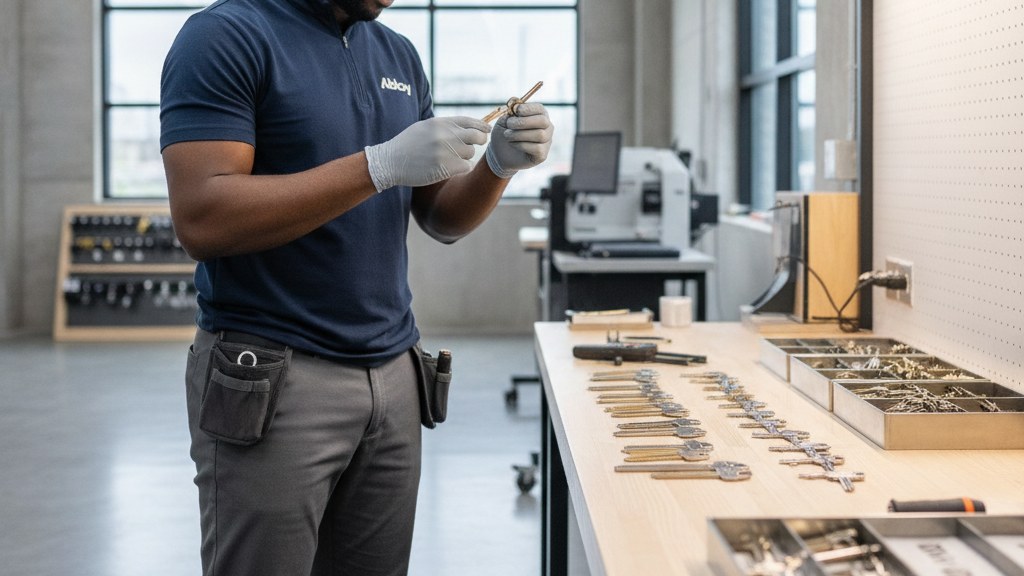
What Should You Know About Abloy Key Blanks Before Ordering One?
Abloy key blanks are specialized key blanks made for Abloy cylinders and restricted-key systems, not generic hardware-store copies. If you need one, the real fix is to confirm the exact keyway, system authorization, and cutting method before ordering or duplicating anything. That prevents wasted time, bad cuts, and incompatible keys.
What do Abloy key blanks actually fit?
An Abloy key blank is only useful if it matches the cylinder, the keyway, and the security program behind it. That sounds obvious. People still get it wrong because they assume every key blank is interchangeable, and Abloy is built specifically to punish that assumption.
Abloy is not one single blank family. It is a precision keying system with profiles that correspond to specific cylinders and security levels. If you start with the wrong blank, you are not “close.” You are out of spec, and the key may not insert, may bind, or may fail entirely.
The practical question is never just “Do you have an Abloy blank?” It is “Which Abloy system do I have, and is this blank authorized for it?” That is the difference between a real duplicate and a paperweight with grooves in it.
For homeowners and renters, this usually shows up when a move-in, rekey, or security upgrade reveals a specialty cylinder. The original key may be stamped with a code, but the blank itself still has to match the profile that the lock was built for.
If your key has a control code, a card, or dealer-only status, the blank may be part of a restricted supply chain. That means you cannot treat it like a standard residential key. You need the right source first, then the right cut.
- Match the blank to the exact cylinder model, not just the brand name.
- Check whether the key is part of a restricted or controlled system.
- Use the existing key code or cylinder information when available.
- Expect some Abloy blanks to require dealer access or authorization.
- Do not assume a visually similar blank will function correctly.
Why are Abloy key blanks treated so differently from ordinary duplicates?
Because the entire point of Abloy is controlled access. If every shop could copy the key freely, the system would lose one of its main security advantages. That is why people run into friction here, and why the cheap shortcut usually costs more later.
A standard house key is often duplicated by shape alone. Abloy systems are usually managed more tightly. The blank may be restricted, the cut may be controlled, and the code may need to be verified before anything is made.
That control is not a nuisance. It is the product. Restricted blanks reduce casual duplication and keep unauthorized copies out of circulation. For a homeowner, that can be useful when you want to know exactly who has access after a move, a tenant change, or a service visit.
The mistake is assuming “it is just a key” and then shopping by appearance or price. If you do that, you may buy the wrong blank, damage the key, or create a copy that inserts but does not function smoothly under real use.
A locksmith with real knowledge of restricted systems will look at the keyway, the code, and the authorization path before cutting anything. That is the difference between a clean result and another trip back to the store.
When you care about security, you should expect friction. If there were no friction, there would be no control.
- Restricted blanks are designed to limit unauthorized copying.
- Authorization may be required before a blank can be cut.
- Code verification matters as much as the metal profile.
- A visually similar blank can still be completely wrong.
- The security value comes from control, not convenience.
Which details should you bring before ordering an Abloy blank?
Bring the details that identify the lock, not just the key. That saves time immediately, and it keeps you from ordering a blank that looks plausible but belongs to the wrong system. This is one of those cases where a little documentation saves a lot of backtracking.
The most useful thing is the actual key or the cylinder information. If you have the key code, card, model number, or a clear photo of both sides of the key, that gives a locksmith a real starting point. Without that, people guess. Guessing is expensive here.
If you are a renter, keep in mind that the landlord or property manager may control the key program. If you are a homeowner, the original owner, installer, or service paperwork may hold the clue. The fewer assumptions you make, the faster the correct blank can be identified.
You also want to know whether the key is current, worn, or copied from an older copy. Worn keys can mislead the identification process because the shoulders, grooves, and edge details may no longer be crisp enough to trace accurately.
A good locksmith will ask for specifics because specificity is what makes the cut accurate. That is not being difficult. That is how you avoid ordering the wrong part twice.
If you only remember one thing, remember this: the blank follows the system, not the other way around.
- Bring the key code if you have it.
- Take clear photos of both sides of the key.
- Note the lock or cylinder model if visible.
- Tell the locksmith whether the key is original or copied.
- Share any authorization card or restricted-key paperwork.
Easter’s Lock & Security Solutions has served the Mid-Atlantic since 1953 – residential, commercial, automotive and emergency service.
Book Now / Get a QuoteCan Abloy key blanks be cut from a code, or do they need the original key?
Sometimes a code is enough, and sometimes it is not. That depends on the system, the blank availability, and whether the key program allows code cutting. The wrong answer is to guess. The right answer is to confirm the method before anyone starts cutting metal.
Code cutting is useful when the key code is valid and the correct blank is available. It can produce a cleaner result than tracing a worn original, especially if the old key has seen a lot of use. But it still depends on the exact Abloy system and the authorization path.
If the original key is badly worn, a code may actually be the better source. If the code is missing or unreadable, the locksmith may need to work from the cylinder, the original key, or approved ordering records. None of that is unusual in restricted systems.
This is where casual duplication falls apart. A machine can cut metal, but it cannot magically know whether the blank is correct or whether the code is valid for that profile. The process still has to follow the system’s rules.
For buyers, the practical takeaway is simple. Do not ask only whether someone can “copy the key.” Ask whether they can identify the blank, verify the code, and cut it correctly for that Abloy system.
That question gets you much closer to a working key the first time.
- Valid codes can allow precise cutting.
- Worn originals may be less reliable than a code.
- The blank must still match the correct Abloy profile.
- Restricted systems may require authorization even for code cutting.
- The right process depends on the exact cylinder and key program.
What goes wrong when the blank is close but not correct?
A near-match is not a match. The key may insert partway, drag in the cylinder, or fail to turn under load. People often assume the problem is “the cut,” when the real problem is the wrong blank profile from the start.
In Abloy systems, tiny differences matter. A blank can look close enough on a counter, but if the profile does not match, the cut will not compensate for the mismatch. That is why a key that appears right can still fail in the field.
This usually shows up as hard insertion, poor turning, sticking at certain points, or a key that only works inconsistently. Those symptoms are maddening because they make people blame the machine, the locksmith, or the cylinder before they check the blank itself.
When the blank is wrong, repeated cutting does not solve the underlying issue. In fact, it can waste time and sometimes damage the blank or the cylinder if someone keeps forcing it.
That is why identification comes first and cutting comes second. The order matters. If you reverse it, you turn a straightforward key job into a troubleshooting exercise nobody wanted.
A correct blank is boring. Boring is good. Boring means it works.
- Wrong-profile blanks can insert but still fail to operate.
- A bad fit may feel like a cutting problem when it is not.
- Forcing the key can create damage and confusion.
- Repeat cutting does not fix a profile mismatch.
- Correct identification is the real time saver.
Keep restricted keys controlled, not improvised
Once you are dealing with a restricted key system, improvisation stops being clever and starts being risky. You want traceability, proper sourcing, and a clean record of who can get a copy. That is the whole security value of the system.
Restricted systems are usually chosen because access matters. Maybe it is a front door, a storage area, a rental unit, or a location where you do not want uncontrolled copies floating around. The blank and the cut are part of that control.
If you hand the job to whoever says they can “make it work,” you may lose the very protection you paid for. A loose process can create unauthorized copies, undocumented duplicates, or keys that circulate without your knowledge.
For a homeowner, that can be a problem after contractors, roommates, tenants, or service visits. For a renter, it can become a conversation with the landlord about what is allowed and who holds the authority to order or duplicate the key.
The right approach is orderly, not dramatic. Confirm the system, confirm the blank, confirm the authorization, and keep the record. That is how you preserve the security benefit instead of eroding it.
In other words, treat the key like part of the security plan, not just a piece of metal.
- Restricted blanks support controlled access and accountability.
- Document who is authorized to request duplicates.
- Avoid informal copying that bypasses the system.
- Keep key records with the property paperwork.
- Use a locksmith who understands restricted key programs.
When the blank problem needs a locksmith, not a guess
| Situation | What to do | Why |
|---|---|---|
| The key inserts poorly or will not turn even after duplication. | Verify the blank profile against the actual Abloy cylinder before recutting or replacing anything. | A near-match blank can create symptoms that look like a bad cut but are really a wrong-keyway problem. |
| You have a key code but no idea what blank it needs. | Have the cylinder, key, or code reviewed by a locksmith familiar with restricted systems. | The system determines the blank. Guessing by appearance usually wastes time and money. |
| The key is controlled or marked as restricted. | Confirm authorization and source the blank through the proper channel. | Restricted systems depend on controlled duplication, not open-copy hardware-store service. |
| The original key is worn and hard to duplicate accurately. | Use code cutting or professional identification instead of tracing a worn copy. | Wear on the original can hide the true profile and lead to a bad duplicate. |
Doing it yourself vs bringing in Easter’s Lock & Security Solutions
| Doing it yourself | With Easter’s Lock & Security Solutions | |
|---|---|---|
| Blank identification | You may compare pictures online and still miss the exact profile, especially with restricted systems. | We identify the real cylinder and blank relationship before cutting, so you are not guessing at the counter. |
| Authorization and sourcing | You may not know whether the blank is controlled, available, or allowed for your system. | We handle restricted-key realities the right way and tell you what can be sourced and cut legally. |
| Cut accuracy | A worn key, a wrong blank, or a poor code read can produce a key that looks right and fails in use. | We use the correct process for the system, not a one-size-fits-all copy job. |
| Time and repeat visits | If the first copy fails, you are back to square one and possibly buying another blank. | We reduce the back-and-forth by confirming the path before the key is cut. |
Frequently Asked Questions
What is the main difference between an Abloy key blank and a standard house key blank?
An Abloy key blank is tied to a specific high-security cylinder profile and often a controlled key system. A standard house key blank is usually easier to duplicate and has fewer authorization rules. The main difference is control: Abloy blanks are designed to limit casual copying and require the correct profile to work.
What does a restricted Abloy key mean for a homeowner or renter?
It means duplicates may not be freely available, and the blank may need to come through an authorized channel. That protects access, but it also means you should not expect a generic key shop to handle it correctly. The right first step is to confirm the exact system and authority to order or copy it.
Can a locksmith cut Abloy key blanks from a worn original?
Sometimes yes, but a worn original is not ideal. The shape may be distorted enough to cause a bad duplicate. A professional may prefer the key code, the cylinder information, or approved system records so the cut is based on the real specification instead of wear.
What if I do not know the key code or the cylinder model?
Bring the key, photos, and any paperwork you have. That is usually enough to start identifying the blank and the system. If the information is limited, a locksmith can still often narrow it down by the keyway, the cylinder, and the security program it belongs to.
How much should I expect to pay for Abloy key blanks and cutting?
It depends on the exact blank, the authorization requirements, and whether code cutting or special sourcing is needed. Because Abloy systems vary, the honest answer is to book a call for a quote based on your specific key or cylinder. Easter’s Lock & Security Solutions can help you identify the right path before you spend money on the wrong blank.
Need a locksmith in the Baltimore area?
Easter’s Lock & Security Solutions has served the Mid-Atlantic since 1953 – residential, commercial, automotive and emergency service.
Book Now / Get a QuoteCall (410) 825-3535Last updated November 2, 2026