

Where Can I Get a Key Copy Made Without Wasting a Trip?
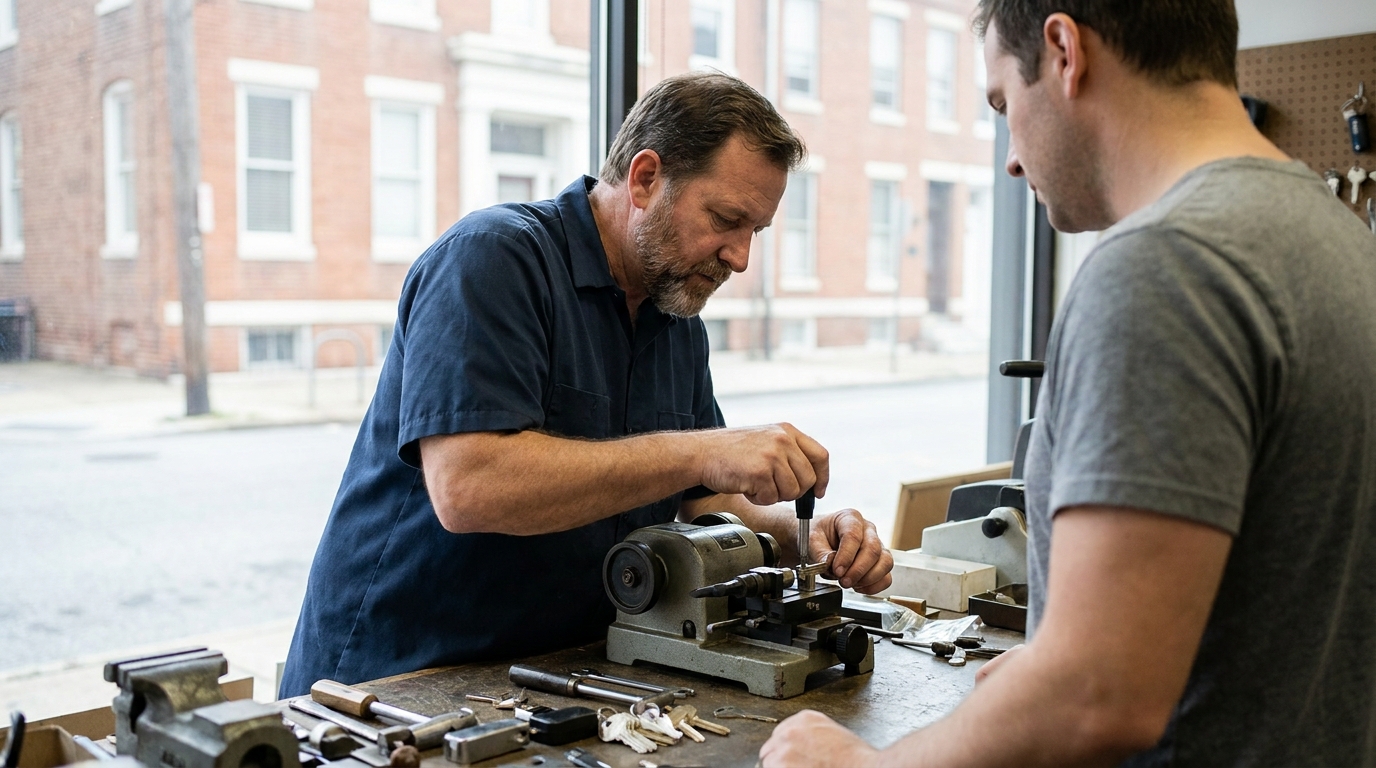
Key copy means a duplicate cut to match an existing key, or a replacement made from a code when the original is worn or missing. The real fix is choosing a locksmith or key shop that can read the blank, cut accurately, and confirm the copy works before you leave.
What does a key copy actually include?
A key copy is not just a duplicate shape. It is a cut that matches a specific lock profile, and that profile has to line up with the blank, the groove pattern, and the depth of the cuts. Miss one piece and the key becomes decorative.
People hear “copy” and assume any machine can do it. Not true. A proper duplicate starts with the right key blank, because the profile has to fit the lock family before anyone touches a cutter. If the blank is wrong, the rest is pointless.
The next issue is wear. A house key that has been used for years may still open the door, but the edges can be rounded enough to mislead a basic copier. That is how a bad duplicate gets made from a bad original.
This is why a locksmith looks at the key and the lock, not just the key itself. The goal is simple: make a spare that works smoothly now, not one that seems close and fails when you are in a hurry.
If you are searching for key copy services, the useful question is not “Can someone cut metal?” It is “Can they match this key to the right blank and verify the result?” That is the whole job.
What you want at the counter is a clean handoff: identify the key type, choose the correct blank, cut accurately, and test the copy. Anything less is gambling with your front door.
A copy should also be practical. If the original is too worn, a code cut may be the better path. If the key is restricted or unusual, the answer may be a locksmith rather than the nearest rack of blanks.
- Match the key blank to the exact key family.
- Check whether the original is worn or damaged.
- Use the right cutter for the key type.
- Test the duplicate in the lock before leaving.
- Use a code cut when the original is not reliable.
Where can I copy a key and not end up with a bad cut?
Where can I copy a key? The short answer is at a locksmith, some hardware stores, and some home centers. The useful answer is wherever they can identify the blank, cut it correctly, and test it against the lock you actually use.
This is where buyers waste time. A store may advertise key cutting, but that does not mean every key type is supported. A basic house key may be fine. A higher-security blank, a worn original, or an unusual profile is a different conversation.
The better question is location plus capability. Can they handle the blank you need? Do they have the right machine? Will someone actually look at the key instead of blindly duplicating a worn edge? That is what separates a usable spare from junk.
If you are standing in line with a key that matters, local convenience is only half the story. The other half is whether the shop is set up for the type of copy you need. That is especially true when the key controls a front door, side entrance, mailbox, or gate.
For many homeowners and renters, a locksmith is the safer choice when the key is older, unusual, or tied to security hardware. A hardware counter can be fine for the common stuff, but the common stuff is not the whole market.
If the goal is “where to make copy of key” without a second trip, ask one direct question before you go: do you cut this exact key profile, and can you test it? If the answer is vague, keep moving.
The reason this matters is simple. The cheapest path on paper can become the most expensive one in friction, time, and rework. People do not want a souvenir key. They want one that opens the door.
A local locksmith also has the advantage of context. They can tell when a copy is a copy problem and when the lock itself is the real issue, which is exactly the kind of detail chain stores usually do not give you.
- Ask whether they support your exact blank profile.
- Confirm they can cut worn or unusual keys.
- Find out if they test the copy on site.
- Use a locksmith for higher-security or tricky keys.
- Avoid the second trip by checking capability first.
When is a copy of a car key the wrong starting point?
A copy of a car key sounds like a straightforward duplicate until you remember modern vehicles do not run on metal alone. If the key includes a chip or fob, the cut is only part of the work. The rest is recognition, programming, and verification.
A plain mechanical auto key may still be copyable in the simple sense. But many vehicles use transponder technology, and that changes the job completely. The vehicle has to recognize the key, not just accept its shape in the ignition.
That is why “auto key copy” is one of those phrases that hides a lot of technical variance. Two keys can look similar and behave very differently. One may be a basic cut. The other may need programming or matching to the vehicle’s security system.
If you are dealing with a spare for a car, truck, or van, the right first step is to identify what kind of key you actually have. If it is a fob, remote, or chip key, the copy is usually a service process, not a simple cut-and-go task.
This is also where DIY thinking gets expensive. People buy the wrong blank, assume the new key will work because it fits the slot, then discover the vehicle still does not start. That is not a key problem anymore. It is a vehicle recognition problem.
A locksmith with automotive capability can sort out whether your key can be copied, cloned, programmed, or replaced. That matters more than the label on the package. Cars care about functionality, not marketing terms.
If you are searching for a spare because you only have one working key, do not wait until you are locked out or stranded. Automotive key work gets more annoying when there is no backup to compare against.
The smart move is to confirm the key type before you spend money on the wrong path. For some vehicles, a basic duplicate is enough. For others, a copy is only the beginning.
- Identify whether the key has a chip or fob.
- Expect programming for many modern vehicles.
- Do not assume a cut key will start the car.
- Choose a technician with automotive key capability.
- Make a spare before the last working key is gone.
Easter’s Lock & Security Solutions has served the Mid-Atlantic since 1953 – residential, commercial, automotive and emergency service.
Book Now / Get a QuoteWhy do some key copy services work and others fail at the door?
Key copy services fail for boring reasons: wrong blank, bad machine setup, copied wear instead of actual geometry, or no testing. That is the unglamorous truth. If the copy is off by even a little, you find out at the lock, not at the counter.
People blame the key, but the process is usually the issue. A good copy begins with selection, not cutting. If the blank is wrong or the operator does not know the profile, the cut can look fine and still not function correctly.
Another common failure is using the worn original as the only source. If the original has rounded peaks and valleys, the machine faithfully reproduces the wear. That gives you a duplicate of a tired key, not a clean working one.
Testing matters too. A key that passes a visual check but binds under real use is not solved. The right shop will verify the duplicate in the relevant lock or at least confirm the cut against the correct standard before handing it over.
This is also where speed can fool people. Fast is nice. Accurate is better. If the key is for a home, apartment, storage area, or mailbox, one bad cut can turn a quick errand into a lockout or a return trip.
For the buyer, the practical lesson is this: ask how they handle worn keys, unusual blanks, and verification. Those three things tell you far more than a sign that says “keys made.”
A good copy is boring in the best way. It works the first time, it turns easily, and you stop thinking about it. That is what you pay for, even if nobody hangs a plaque on the wall for it.
When the job is sensitive, a locksmith is often the safer bet because the process can move from simple duplication to a more accurate solution like code cutting or rekeying if the key itself is not the real problem.
- Wrong blank selection creates immediate failure.
- Worn originals can produce bad duplicates.
- Testing catches the problem before you leave.
- Speed without verification is a weak trade.
- Ask how they handle unusual or tired keys.
How should you compare key copy options before you hand over the original?
Before you surrender the only working key, compare the shop’s capability, not the nearest address. That means asking about blank availability, cutting method, testing, and whether they can handle the specific key type without guessing.
A lot of people choose the first place that says yes. That is how they end up with a copy that almost works. Better to ask a few simple questions up front and save the rework for someone else’s problem.
Start with the exact key type. House key, apartment key, mailbox key, padlock key, car key, or fob. Then ask whether they can cut that profile and whether they support duplicates from worn originals or only clean ones.
Next, ask about testing. A shop that can confirm the copy is doing more than moving metal through a machine. It is verifying that the result actually matches what your lock wants.
Also pay attention to whether they can explain the difference between a simple duplicate and a more secure solution. If the answer to a lost-key problem is a copy, that may be the wrong answer entirely.
Reputation matters, but so does relevance. A shop that is great at one type of work is not automatically right for every type of key. The better fit is the one whose process matches your problem.
If you are dealing with a spare for a primary door, vehicle, or rental unit, the cost of a weak copy is not the blank. It is the wasted time, the second trip, and the irritation of a key that should have been right the first time.
That is why “can you make a copy” is the wrong baseline question. “Can you make the right copy for this key?” is the one that saves you trouble.
- Identify the exact key type first.
- Ask if they cut from worn originals.
- Confirm on-site or shop testing.
- Separate simple duplicates from security fixes.
- Compare capability before convenience.
Key copy versus rekeying: what problem are you really solving?
Here is the assumption flip: if you are asking for a key copy, make sure you are not actually asking for control over who can enter. A duplicate solves access. Rekeying solves access and access history.
A copy gives someone another working key. That is useful when you need a spare for yourself, a family member, or a trusted renter. But it does nothing to change who may already have a copy in circulation.
Rekeying changes the lock so old keys no longer work. That matters after a move, a roommate change, a lost key, a tenant turnover, or any event where you no longer want the old key universe to matter.
For homeowners and renters, the question is not abstract. It is whether you need convenience or control. If the answer is convenience, a duplicate is fine. If the answer is control, a copy is not enough.
This distinction is where a locksmith earns their keep. A real conversation can separate “I need an extra key” from “I need to make sure the previous copy is dead.” Those are different jobs, even if the buyer uses the same words.
A lot of frustration comes from treating every key issue like a duplication issue. Sometimes the lock, not the key, is the thing asking for attention. Sometimes the old key should stop working entirely.
If you are unsure, do not guess. A short review of the situation usually tells you which path is right. That is better than making another copy of a problem you should have fixed.
The practical takeaway is simple. Duplicate when you need a spare. Rekey when you need to reset access. Mixing those up is how people buy the wrong fix for the right fear.
- Copy = more access for a known person.
- Rekey = old keys stop working.
- Use rekeying after moves or turnover.
- Do not confuse convenience with security.
- Ask which problem you are actually solving.
Should you copy the key or call a locksmith for a different fix?
| Situation | What to do | Why |
|---|---|---|
| The key is common, clean, and you just need a spare. | Use a standard duplicate from a capable shop. | This is the simplest case. Matching the right blank and cutting accurately is usually enough. |
| The original is worn, bent, or hard to read. | Bring it to a locksmith who can evaluate the cut or use a code. | A worn original can produce a bad copy if you only trace the damage. |
| You lost control of who has access after a move or turnover. | Rekey instead of making more copies. | A duplicate does not remove old keys from circulation. |
| It is a car key, chip key, or fob. | Confirm automotive capability before you buy a blank. | Many vehicles need more than a cut, and the key has to be recognized by the car. |
Doing it yourself vs bringing in Easter’s Lock & Security Solutions
| Doing it yourself | With Easter’s Lock & Security Solutions | |
|---|---|---|
| Blank selection | You are guessing at the right profile unless you already know the key family. | We identify the correct blank before cutting, which is where many bad copies start. |
| Accuracy on worn keys | A worn original can mislead a basic copier and produce another worn copy. | We look at whether the original is still a reliable source and adjust the approach. |
| Testing | You may not know the copy is off until you reach the lock or vehicle. | We verify the copy so you leave with something that actually works. |
| Time and rework | A failed copy means another trip, another wait, and more frustration. | We handle the job with the right equipment and process the first time more often than guesswork does. |
Frequently Asked Questions
What is the difference between a key copy and a spare key?
In practice, they are often the same thing: a duplicate made so you have another working key. The difference is context. A spare key is the reason you want it. A key copy is the method used to create it. If the original is worn, the method may need to change.
Where can I make a copy of key if the original is old or damaged?
A locksmith is usually the better place when the original is worn, bent, or hard to read. Some stores can duplicate a common house key just fine, but damaged keys are where accuracy drops. If the key matters, ask whether they can work from the code or another reliable source.
Can I get a copy of a car key at any hardware store?
No. Some hardware stores can handle simple metal auto keys, but many modern car keys include chips or fobs that need programming and the right equipment. If your vehicle uses transponder technology, you usually need an automotive locksmith, not just a cutter.
How much do key copy services cost?
Cost depends on the key type, the blank, and whether the key is simple, restricted, or automotive. The honest answer is that the right price is specific to the job, so book a call and get a quote based on the key you actually have.
Can Easter’s Lock & Security Solutions help me with a key copy?
Yes. If you need a straightforward duplicate, a worn-key evaluation, or help deciding whether a copy or a rekey is the better move, Easter’s Lock & Security Solutions can help you sort it out and book a call for the right fix.
Need a locksmith in the Baltimore area?
Easter’s Lock & Security Solutions has served the Mid-Atlantic since 1953 – residential, commercial, automotive and emergency service.
Book Now / Get a QuoteCall (410) 825-3535Last updated September 18, 2026