

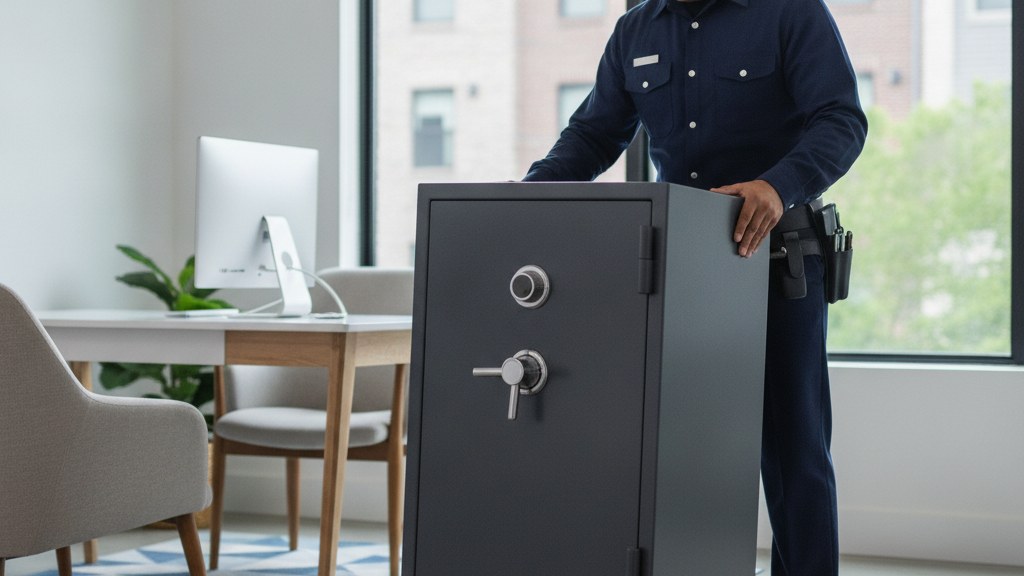
Who Can I Call for Gun Safe Movers Near Me?
Gun safe movers near me means a local safe service that can move heavy, awkward, high-value safes without damaging floors, walls, the safe, or the contents. The real fix is a licensed locksmith and safe technician with the right equipment, access planning, and secure handling, not a general mover with a dolly.
What does gun safe movers near me actually mean?
It means a local safe service that can move a high-mass, high-value item without treating it like a sofa. In this category, the details matter more than the label. Weight, access, and placement decide whether the move is smooth or expensive.
People search that phrase when they are not just looking for labor. They are looking for judgment. A gun safe is not a normal household object, and the move is not normal either. The right provider understands floor loading, narrow halls, stair geometry, and the fact that one mistake can create a security problem as well as a property problem.
The local part matters too. Near-me searches are usually about speed, convenience, and accountability. You want someone who can assess the route, show up prepared, and handle the job with the right rigging and protection. That is why search intent matters here: the buyer is not browsing, the buyer is trying to solve a physical problem.
This is also where ordinary mover language gets fuzzy. A company may say it does moving, but if it does not regularly handle safes, the risk shifts to you. In this niche, you want a team that knows the difference between transport and safe service. Those are not the same thing.
If the safe is staying in the home, or going to a new one, or needs to be repositioned after delivery, the move still has to respect the path. A good provider plans the move around the house, not around convenience for the crew.
The practical test is simple: if the provider talks first about equipment, route, protection, and placement, you are in the right conversation. If they talk only about getting it there, you are probably not.
- Heavy, awkward, and easy to damage if handled casually
- Local search usually means the buyer wants fast, accountable service
- A safe move is about route planning, not just muscle
- The contents and the property both need protection
- Specialized safe handling is different from ordinary moving
Can a regular mover handle a gun safe without damage?
Sometimes they can move it. That is not the same as handling it correctly. A gun safe is dense, top-heavy, and unforgiving, so the real question is whether the mover is equipped and trained for that kind of load.
Here is the common mistake: people assume any strong crew can move any heavy thing. That is how floors get gouged, walls get clipped, thresholds crack, and people get hurt. A safe is not just heavy. It is awkward, rigid, and hard to recover once it starts tipping or drifting off line.
The equipment matters, but so does technique. Dollies, straps, floor protection, door protection, staging, and a clear path all matter. If the crew improvises with a safe, you are now the unpaid quality-control department. That is a bad role to take on with an item that can weigh far more than a household appliance.
There is also the issue of placement. A safe often needs to end up in a specific room, corner, or closet. That means the final ten feet can be the hardest part of the entire job. Regular movers tend to think in terms of delivery. Safe specialists think in terms of final positioning and clearance.
If you are comparing options, ask what they do when a hallway turns tight or a stair landing is awkward. The answer will tell you whether they have handled safes before or are just willing to try. Willing is not the same as capable.
The safest move is the one that was planned for the property you actually have, not the one they hope will fit their standard process.
- A regular mover may have strength, but not safe handling experience
- Damage often happens at turns, thresholds, and landings
- The final placement can be harder than the transport itself
- Proper equipment protects both the safe and the home
- Capability matters more than confidence
How should you prepare the home before the safe arrives?
Preparation is where most of the hidden risk lives. If the path is blocked, the move slows down. If the path is unprotected, the house pays for it. Good preparation makes the difference between controlled placement and avoidable damage.
Start with the path. Measure doorways, hallways, stair widths, and the final location before the truck shows up. If you already know the turn is tight, tell the mover. No one benefits from discovering it halfway through the job when the safe is hanging in a doorway.
Next, clear the route completely. That means rugs, shoes, furniture, pet gates, loose decor, and anything else that creates a snag. People underestimate how much room a moving crew needs when a rigid object is being angled through a house. Clutter turns into friction, and friction turns into risk.
Think about the floor too. Hardwood, tile, carpet, and stairs all react differently under load. A safe service should bring protection, but you can help by making sure the route is ready for it. If the safe is going upstairs or into a basement, say so early. Hidden elevation changes are where moves go sideways.
Also decide where the safe is going to live. Do not make that decision while the crew is standing in the doorway. The best placement is the one that balances access, concealment, and structural reality. You want a spot that works long after the move is over.
A little preparation saves time, reduces stress, and helps the team do the work you actually hired them to do: move the safe cleanly and securely.
- Measure openings and the final location ahead of time
- Clear furniture, rugs, and loose items from the path
- Tell the mover about stairs, basements, and tight turns
- Protect floors and surfaces before the safe starts moving
- Decide the safe’s final position before arrival
Easter’s Lock & Security Solutions has served the Mid-Atlantic since 1953 – residential, commercial, automotive and emergency service.
Book Now / Get a QuoteWhat should you ask before you book a safe move?
Ask the questions that reveal process, not promises. You are not shopping for friendliness. You are checking whether the provider knows how to handle a dense, valuable object in a real house with real constraints.
The first question is simple: do you regularly move safes, or is this occasional work? Frequency matters because repetition builds judgment. A team that sees safes all the time knows what usually breaks the plan and how to keep the job controlled.
Then ask about equipment and protection. How do they handle stairs, tight turns, flooring, and doorframes? If the answer is vague, the move may be too. You want specific language about route planning, padding, and safe placement, not just a generic statement that they can lift heavy items.
It is also smart to ask whether they are a locksmith or safe service, not only a mover. That matters because the scope of the job can change. Sometimes a safe move leads to service needs, installation questions, or access concerns. A company that understands both security and handling is better positioned to help.
You should also ask how quotes are built. If access, stairs, and placement difficulty affect the job, the estimate should reflect that. A real quote comes from the route and the task, not from a guess over the phone.
The point is not to interrogate the provider. The point is to avoid discovering, too late, that they were improvising.
- Ask whether they regularly handle safes, not just heavy furniture
- Ask how they protect stairs, floors, and doorframes
- Ask whether they are a locksmith or safe service as well as a mover
- Ask how the quote is determined
- Ask what happens if the route turns tight or complicated
When does a gun safe move become a locksmith job?
As soon as security, access, or installation enters the picture, the job is no longer just transport. That is the line people miss. A safe move can quickly turn into a service call if the door, combination, anchoring, or placement needs attention.
If the safe is being relocated because the old setup no longer works, you may need more than muscle. You may need a technician who understands how the safe should be positioned, secured, and accessed after the move. The move itself is only part of the outcome. A good result is a safe that is usable after it lands.
Sometimes the move involves a change in how the safe will be anchored or where it will sit for long-term security. That is not something a general mover is built to advise on. It is exactly the sort of detail a locksmith and safe technician should understand before the safe is set down.
There is also the issue of access after placement. A safe moved into a basement, closet, or tight room may need more careful positioning than a standard delivery. If the safe is hard to access now, it is likely to stay hard to access later. That is why placement should be solved, not improvised.
If the safe was purchased used, or if there are concerns about the lock, door function, or relocation setup, it is wise to involve a specialist early. It is cheaper to plan correctly than to reposition a heavy safe after the fact.
When security is the goal, transport is only step one. The rest is making sure the safe works in the new location the way you expect it to.
- Transport and security are not the same thing
- Placement affects long-term access and usability
- Anchoring and positioning can matter after the move
- Used safes may need service before or after relocation
- A locksmith-safe technician sees the whole outcome, not just the lift
What a good safe service should do on move day
On move day, clarity beats confidence. The right team shows up with a plan, checks the route, protects the property, and handles the safe in a way that reduces risk instead of creating it.
Before the safe moves, the route should be confirmed again. Small issues change fast in real homes. A gate gets left in place, a door sticks, or a hallway is tighter than expected. The crew should notice that before the safe is halfway through the house.
Protection should be visible. Floors, thresholds, corners, and doorframes are the first places that show whether a crew is careless or disciplined. If those areas are treated as optional, the job is being done backwards. The safest move is one where the environment is protected before the load is in motion.
The team should also communicate. You should know when the move is starting, when the safe is being turned, and when placement is happening. That matters because a quiet crew is not necessarily a competent crew, but a communicated plan is easier to trust and easier to manage.
Once the safe is in place, the job is not over until the final position is checked. The orientation, clearances, and access should all make sense before the crew leaves. The goal is not just getting the safe into the house. The goal is leaving it where it belongs.
A good move feels uneventful because the hard part was handled before the safe ever left the ground.
- Confirm the route right before the move starts
- Protect floors, thresholds, corners, and doors first
- Expect clear communication during turns and placement
- Check final positioning before the crew leaves
- Uneventful is good when the plan was solid
How to decide who should move your gun safe
| Situation | What to do | Why |
|---|---|---|
| You only have a rough idea of the route and think the move will be simple. | Get an access review before you book. | Simple-looking moves are where people get surprised by stairs, turns, and narrow openings. |
| The safe has to go through a tight hallway or upstairs. | Choose a safe service with the right equipment and route planning. | These are the moves most likely to damage floors, walls, or the safe itself. |
| You are not sure whether the safe needs repositioning or service after the move. | Use a locksmith and safe technician, not just a mover. | Security and usability can matter as much as transport. |
| You need a real quote, not a guess. | Book a call and describe the safe, the path, and the destination. | Custom jobs are priced from access and difficulty, not from a generic flat assumption. |
Doing it yourself vs bringing in Easter’s Lock & Security Solutions
| Doing it yourself | With Easter’s Lock & Security Solutions | |
|---|---|---|
| Risk to floors and walls | You are relying on borrowed equipment, guesswork, and enough people willing to help. | We handle the move with the right equipment, route awareness, and protection for the home. |
| Route and access planning | You discover problems as they happen, which is the expensive moment to learn them. | We plan around doors, stairs, turns, and final placement before the safe moves. |
| Security and safe handling | The safe may end up moved, but not necessarily positioned or handled with security in mind. | We approach it as safe service, with locksmith and safe expertise built into the job. |
| Time and stress | You spend the day coordinating helpers, moving blankets, and damage control. | You get a controlled process from a team that does this work as part of a full-service security business. |
Frequently Asked Questions
Do I need to empty the safe before it is moved?
In most cases, yes, you should plan to empty the safe before moving day. That reduces weight and lowers the chance of contents shifting inside the unit. If there is any question about what should stay in place, ask the mover before the job starts so there is no last-minute confusion.
Can a gun safe be moved upstairs or downstairs?
Sometimes yes, but stairs are where the job becomes more technical. The answer depends on the safe size, the staircase layout, the landings, and the path into the home. That is why a proper access check matters before you book instead of after the safe is already at the door.
Should the safe be anchored after relocation?
That depends on the safe, the surface it sits on, and how you want it used in the new location. Many owners want the safe positioned for security and stability. A locksmith and safe technician can help you think through the placement so you are not guessing after the move.
How much does gun safe moving cost?
Cost is custom because safe size, weight, stairs, access, and placement all affect the job. The honest move is to book a call and describe the route, the location, and the safe itself. That gives you a real quote instead of a made-up number that falls apart later.
Who should I call if I want help with safe moving and security in one place?
Call a locksmith and safe service that understands both transport and security. If you want one team that can help you think through the move, placement, and related safe concerns, Easter’s Lock & Security Solutions is set up for that kind of work.
Need a locksmith in the Baltimore area?
Easter’s Lock & Security Solutions has served the Mid-Atlantic since 1953 – residential, commercial, automotive and emergency service.
Book Now / Get a QuoteCall (410) 825-3535Last updated September 22, 2026