

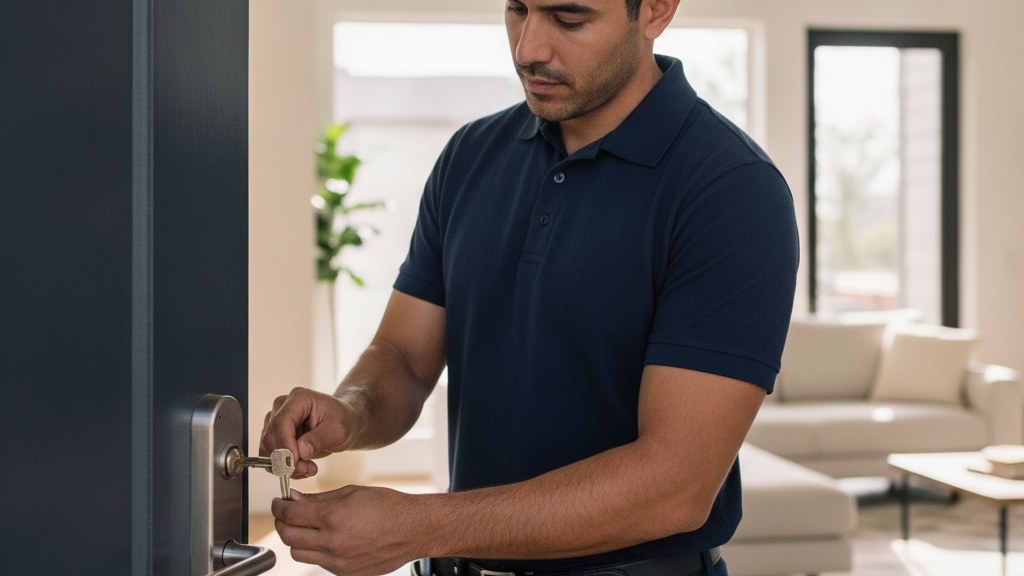
How Do You Unlock a Door with Key?
How to unlock door with key depends on whether the key, cylinder, or latch is the problem. Use the right key, turn with steady pressure, and do not force a sticking lock. If the key will not turn or the door will not open, the real fix is to diagnose the lock, not fight it.
How to unlock a key lock door without snapping the key?
If the key fits but the door resists, the first job is to stop turning it into a breakage problem. The usual mistake is force. The smarter move is to tell whether the resistance is in the key, the cylinder, or the latch before you add pressure.
Insert the key fully and turn only with steady, even pressure. If it starts to bind, stop. A key should travel through the cylinder with a smooth motion. Grinding, wobbling, or a half-turn that stalls is a warning, not an invitation.
If the door is latched but under pressure, lean or pull gently on the door while turning the key. On many residential doors, the latch is loaded by weather, frame movement, or a sagging hinge. That is why the key feels hard even when the lock is not seized.
Do not jam anything into the keyway. That is how homeowners turn a simple service call into a broken-key extraction. If the key is bent, worn, or visibly damaged, use a spare before you keep working the problem.
A little patience here saves money. If the lock is dry, dirty, or misaligned, the key may still move the mechanism after the door pressure changes. If it does not, stop before the cylinder or key fails completely.
- Use the correct key, not a copied key that already feels rough.
- Turn with steady pressure instead of a hard twist.
- Try gentle door pressure if the latch is under load.
- Stop immediately if the key bends, grinds, or sticks halfway.
- If the key keeps hanging up, the lock needs inspection, not force.
Why does the key turn but the door stays stuck?
That is the classic false clue. People think the key failed, but the door often has the real problem. When the key turns and the door still does not move, you are usually dealing with latch binding, strike misalignment, or a lock that is not retracting fully.
A deadbolt or latch can appear to turn normally while the throw is only partial. That happens when internal parts are worn or the door is pushing against the frame. The key is doing something, but not enough to release the door.
If the door is swollen from weather or the hinge side has shifted, the latch can catch inside the strike plate. In that case, the lock is not the only moving part. The door itself is fighting you.
On older residential hardware, the key cylinder can also be worn enough that the internal pins do not line up cleanly. The key turns, but the action is sluggish and incomplete. You get motion without release.
This is where many DIY attempts go sideways. The instinct is to keep turning harder. The better approach is to test whether the knob, deadbolt, or latch is actually loaded against the frame.
- Check whether the knob or deadbolt is under tension from the door frame.
- Look for rubbing, sticking, or a gap that suggests hinge sag.
- If the latch does not retract fully, the lock may be worn or misaligned.
- A key turn without door movement usually means the latch is the problem.
- Forcing it can bend the key or damage the cylinder.
How to use tools to unlock a door without wrecking the lock?
Most people reach for the wrong tool at the wrong moment. If the goal is to open the door cleanly, the only tools that should be near the lock are the ones used to diagnose pressure, not pry the hardware apart like you are opening a crate.
A flashlight is often the best first tool. It lets you inspect the keyway, the latch, and the strike area before you do anything more aggressive. A crooked strike, debris in the cylinder, or a visibly bent key changes the next step.
A graphite or lock-safe lubricant may help if the keyway feels dry or gritty, but only in the right situation. Oil-based products can attract dirt and make a problem worse later. That is why the product choice matters.
If the door is sticking, a flat palm or gentle shoulder pressure on the door edge is often more useful than any pry bar. You are trying to relieve tension, not defeat the hardware.
When the issue is a damaged key or damaged cylinder, the best tool is usually not a tool from the junk drawer. It is a locksmith’s inspection and proper repair. That is the difference between opening the door and ruining the lock.
- Use a flashlight to inspect the keyway and strike plate.
- Avoid improvised pry tools that can mar the frame or door.
- Use only lock-safe lubricant when appropriate.
- Relieve door tension before trying harder on the key.
- If the hardware looks damaged, stop and get it diagnosed.
Easter’s Lock & Security Solutions has served the Mid-Atlantic since 1953 – residential, commercial, automotive and emergency service.
Book Now / Get a QuoteHow to unlock the door when the key is worn or the copy is bad?
This is where a lot of homeowners waste time. The lock looks guilty, but the real issue may be the key itself. A worn or poorly copied key can fit the lock and still fail under pressure because the cuts are no longer precise enough.
If you have a spare key, test it first. A spare often works when the daily-use key is rounded off from years of pocket wear. That one simple swap can tell you whether the lock or the key is the weak link.
A key that has visible burrs, bends, or heavy wear on the teeth should be retired. The cylinder only needs a little mismatch before the turning action becomes inconsistent. People blame the lock because it feels dramatic, but the copy may be the real problem.
If several copies of the same key all act the same way, the issue likely moves back to the lock or the door alignment. If only one key fails, you have a much narrower diagnosis.
For a homeowner or renter, that distinction matters. You do not need to replace hardware blindly when a fresh key or rekey service may solve the problem cleanly.
- Test a spare key before assuming the lock is bad.
- Retire bent, rounded, or burr-heavy keys.
- If only one copy fails, the key is the suspect.
- If all copies fail, inspect the lock and door alignment.
- A rekey may be smarter than replacing the whole set.
How to unlock a car door when the key is the problem?
Different lock, different headache. If you came here searching for how to unlock a car door, do not treat it like a house latch problem. Automotive cylinders, keys, remotes, and fobs fail in ways that need the right diagnostic path, not guesswork.
Car doors may not respond even when the key fits because the issue is mechanical, electronic, or both. A worn key blade, a failing door cylinder, or a dead fob battery can all look like the same lockout from the outside.
The important move is not to force the door. That can damage the cylinder, bend the key, or create a second problem on top of the first. If the car is locked and the key will not cooperate, a proper automotive locksmith can identify the failure point.
If the driver’s door cylinder is worn but the trunk or another door still behaves differently, that is useful information. It suggests the problem is isolated, which helps the repair stay targeted instead of broad and expensive.
For anyone who searched how to unlock the door after a car lockout, the answer is simple: use the correct automotive method for the vehicle, not a house-door trick that was never meant for it.
- House-door tactics do not always apply to cars.
- A dead fob battery and a worn key blade can mimic a lock failure.
- Do not force a car door if the cylinder is binding.
- Tell the locksmith whether the key, fob, or door cylinder failed.
- If the vehicle is the issue, use an unlock car door service.
When a stuck lock is not a key problem at all
Here is the part people miss. Sometimes the key is fine and the lock is fine enough, but the door system is out of alignment. That means the real fault lives in the frame, hinges, strike, or door prep, not in the key ring.
A door that drags against the frame can load the latch so tightly that the key feels dead. You may still be able to turn it, but the door will not release cleanly. That is a physical fit issue, not a mystery failure.
Weather, settling, loose hinges, and previous repairs can all create this condition. Renters see it a lot because doors move over time and hardware is not always adjusted promptly. Homeowners see it after seasonal swelling or long-term wear.
If the lock is repeatedly hard to operate, that is a warning that something is off in the whole door assembly. A temporary trick may get you inside once, but it does not fix the underlying problem.
A proper locksmith does not guess at one part and hope. The work is to separate key issue, cylinder issue, and door issue so the right repair gets done the first time.
- Look for dragging, rubbing, or visible door misalignment.
- Hinge sag can make a good lock feel broken.
- Repeated stiffness usually means a system problem, not a one-time fluke.
- The fix may be adjustment, rekeying, or hardware replacement.
- Diagnosis matters more than brute force.
Quick decision guide for a stuck key lock
| Situation | What to do | Why |
|---|---|---|
| The key goes in but turns only partway | Stop forcing it and test a spare key, then inspect for tension on the door or latch. | Partial rotation often means the cylinder is binding or the door is loading the latch. |
| The key turns, but the door still will not open | Check for strike misalignment, swollen wood, or a latch that is not fully retracting. | The lock may be moving while the door hardware is still holding the door shut. |
| The key feels gritty, rough, or unusually stiff | Use a lock-safe lubricant if appropriate, then re-test with a straight, undamaged key. | Dirt, dryness, or wear in the keyway can make a working lock feel failed. |
| The key bends, sticks, or looks worn | Stop and switch to a better key or call for service before the key breaks. | A weakened key is more likely to snap inside the cylinder than solve the lockout. |
Doing it yourself vs bringing in Easter’s Lock & Security Solutions
| Doing it yourself | With Easter’s Lock & Security Solutions | |
|---|---|---|
| Diagnosing the real cause | You may guess wrong and keep turning the wrong thing. | We separate key, cylinder, latch, and door alignment before we act. |
| Protecting the hardware | It is easy to bend a key or damage the cylinder with too much force. | We work to open the door cleanly and avoid turning a small issue into a bigger repair. |
| Matching the fix to the problem | You may spend time on the key when the frame or latch is the issue. | We can repair, rekey, replace, or advise the right next step based on what the door is actually doing. |
| Getting it done without a second trip | You may get in once and still leave the underlying issue unresolved. | We help solve the opening problem and the cause behind it so the door works the way it should. |
Frequently Asked Questions
What is the safest first step when a key will not unlock a door?
Stop and check whether the key is fully inserted, straight, and undamaged. Then see if the door is under pressure from the frame or latch. The safest first move is diagnosis, not force, because force is what usually breaks the key or damages the cylinder.
What if my key turns but the door still will not open?
That usually points to latch binding, strike misalignment, or a lock that is not retracting fully. The key may be doing its job while the door hardware is still holding the door shut. At that point, a locksmith can find the exact failure instead of guessing.
Can I use household tools to unlock the door?
A flashlight can help you inspect the lock, and a lock-safe lubricant may help in some cases. But random pry tools or improvised picks are a bad idea. They often damage the frame, cylinder, or finish and make a simple service call more expensive.
How much does it cost to get help with a stuck lock?
The cost depends on whether the issue is a lockout, a broken key, a rekey, or a hardware repair. Because the right fix depends on the door and lock condition, the honest next step is to book a call for a quote based on the actual problem.
Can Easter’s Lock & Security Solutions help if the door is stuck or the key broke?
Yes. Easter’s Lock & Security Solutions handles residential locksmith service, emergency 24/7 locksmith needs, rekey service, and lock repairs across the Mid-Atlantic. If you are stuck at the door, book a call and get a quote so the problem can be diagnosed and handled correctly.
Need a locksmith in the Baltimore area?
Easter’s Lock & Security Solutions has served the Mid-Atlantic since 1953 – residential, commercial, automotive and emergency service.
Book Now / Get a QuoteCall (410) 825-3535Last updated September 20, 2026