

How Does Auto Key Copy Work for a Homeowner or Renter?
Auto key copy means duplicating a working car key, and sometimes programming a matching fob or transponder chip so the copy actually starts the vehicle. The real fix is to match the key type first, then use the right cutting and programming process, because a cut-only copy is not enough on many modern cars.
What is auto key copy, and why does your car key type matter?
Auto key copy is not one service with one method. It is the umbrella term for duplicating a basic metal key, a transponder key, or a fob-based key, and each one has a different level of cutting, coding, and testing involved.
If you are shopping for a spare, the first mistake is assuming every car key copies the same way. It does not. A plain mechanical key is a cutting job. A transponder key adds chip recognition. A smart key or fob adds electronic pairing with the vehicle.
That matters because the wrong expectation wastes time. People often bring in a working key and ask for “just a copy,” then find out the car needs more than a duplicate blade. The vehicle decides the process, not the label on the key ring.
For a homeowner or renter, the practical goal is simple: get a spare that starts the car and reduces the risk of getting stranded. If the spare is weak, unprogrammed, or cut from a worn original, it is not really a spare.
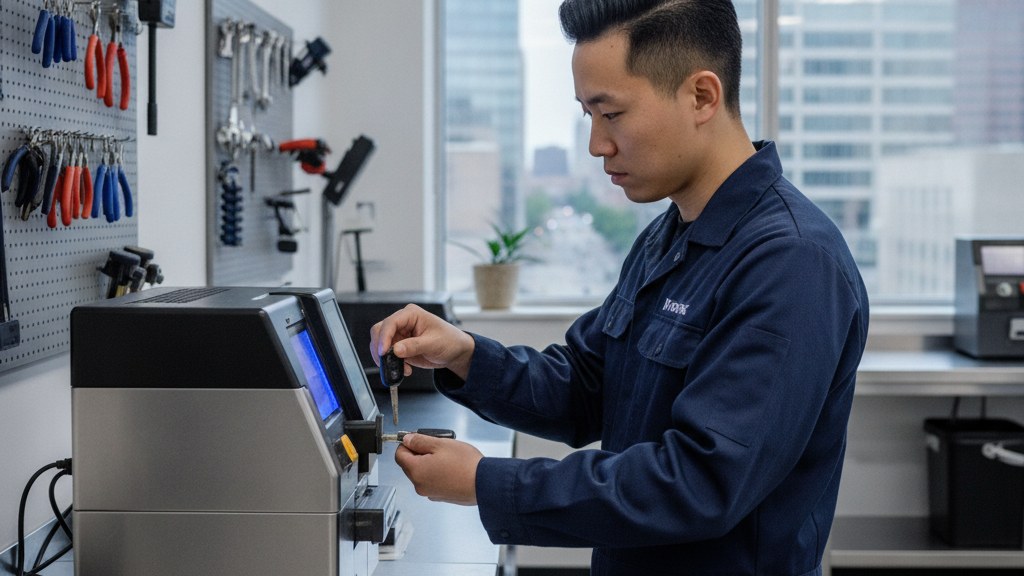
This is where a real locksmith workflow helps. The key gets identified first, then the cutting method and programming method are matched to the vehicle, not guessed from a shelf full of generic blanks.
The useful mindset is not “Can I copy this?” It is “What kind of key is this, and what has to happen for the copy to work every time?”
- Mechanical key: cut only, no chip on some older vehicles.
- Transponder key: cut plus chip recognition.
- Remote head key: blade and remote functions may both need setup.
- Smart fob: electronic pairing matters as much as the physical copy.
- Worn originals can produce sloppy duplicates if copied blindly.
Can a worn or damaged original key still be copied?
Sometimes yes, but only if the remaining cuts and chip data are still readable enough to produce a reliable duplicate. A badly worn key can make the copy look fine and still fail when you try to use it.
This is where people get burned by assumptions. They hand over the only working key, which is already rounded off, and expect a perfect duplicate. But worn metal gives the cutter bad information, and a chip that is failing can create a copy that starts today and quits being dependable later.
A damaged key can also hide a deeper issue. If the blade is bent, cracked, or poorly cut from a previous copy, duplicating that mistake just gives you two weak keys instead of one good one and one backup.
The better move is to have the key evaluated before it is copied. Sometimes the answer is simple duplication. Sometimes the answer is to decode the key or replace the shell and then program the correct blank to the vehicle.
For the customer, the real payoff is avoiding a false sense of security. A spare only helps if it works when the main key does not. That is the whole point.
If you have one fragile original, treat it like the last copy of a document you actually need. The goal is accuracy, not speed for its own sake.
- A worn blade can produce an inaccurate cut.
- A cracked shell can interfere with reliable use.
- A failing chip can make the copy seem fine until start-up.
- A copy made from a bad copy often repeats the problem.
- Testing the duplicate matters as much as cutting it.
Does your spare need chip cloning or key fob programming?
If your vehicle uses a transponder key, remote head key, or smart fob, then yes, the copy usually needs programming or cloning, not just cutting. The key must be recognized by the car’s immobilizer or security system.
This is the part that trips up most buyers. A key can look right in your hand and still do nothing for the vehicle. Modern cars are built to reject unapproved starts, so the electronics inside the key matter as much as the grooves on the blade.
Cloning and programming are not the same thing, and that distinction matters. Cloning copies the electronic identity of an existing chip in certain cases. Programming teaches the vehicle to accept a new key or fob through its own security process.
Which method applies depends on the car, the key system, and what the vehicle allows. That is why a blanket promise is useless. The right process is always vehicle specific.
If you are buying a spare for peace of mind, ask one direct question: will this duplicate actually start the car, or will it only unlock the door? That answer saves a lot of wasted motion.
The right copy should be tested in the ignition or start system, not just admired on the counter.
- Transponder keys need chip recognition.
- Some keys can be cloned, but not every vehicle allows the same method.
- Remote functions may be separate from start authorization.
- Smart keys often require a more involved programming step.
- A finished copy should be tested, not assumed.
Easter’s Lock & Security Solutions has served the Mid-Atlantic since 1953 – residential, commercial, automotive and emergency service.
Book Now / Get a QuoteWhat should you bring when you book an auto key copy?
Bring the vehicle, the working key if you have one, and the key type information if you know it. That gives the locksmith the fastest path to the right blank, the right cut, and the right programming method.
The common mistake is arriving with only a vague request and expecting the rest to be solved by magic. Better input means a better outcome. If you know the year, make, and model, that helps. If you have the original key, that helps more.
If the key has a fob, remote buttons, or a visible chip, say so. If the original is damaged, mention that too. Those details change whether the duplicate should be cut from code, copied from the original, or paired electronically to the vehicle.
You should also bring proof of ownership or control of the vehicle when required. That is not bureaucracy for fun. It is part of responsible locksmith practice and protects both the customer and the technician.
If you are dealing with a spare for a rental, a household vehicle, or a family car, be clear about which key should be matched and whether you need full functionality or just a backup for door and ignition use.
The more specific the request, the fewer surprises when the key is tested.
- Year, make, and model help identify the key system.
- Bring the existing key if one still works.
- Tell the locksmith if the key has buttons or a chip.
- Proof of ownership or authorization may be required.
- State whether you need full remote function or just a working backup.
Why a cheap duplicate can fail when you need it most
A cheap copy is only cheap until it does not work, and then you pay for the mistake in time, towing, or another replacement. The problem is usually poor cutting, wrong blank selection, or missing programming, not the price tag itself.
People naturally want to save money on a spare. Fair enough. But with auto key copy, the actual bargain is the key that works the first time you need it, not the one that looked inexpensive on the estimate.
The failure points are predictable. The cut may be off by a hair. The blank may not match the vehicle correctly. The chip may not be recognized. The remote may function intermittently. Each of those issues turns a spare into clutter.
There is also the hidden cost of delay. If you only realize the copy is bad when you are standing in a parking lot or trying to leave for work, the inconvenience becomes the expense. That is the part people hate because it was avoidable.
A proper duplicate should be checked for fit, function, and start-up behavior. That sounds basic because it is basic. Yet basic is exactly what gets skipped when people treat every key like a generic hardware-store item.
The smarter move is to price the full working result, not the blank plastic shell in isolation.
- An incorrect cut can prevent smooth turning.
- A wrong blank can fit poorly or fail electronically.
- Missing programming can leave you with a dead spare.
- A working test matters more than a low sticker price.
- The real value is reliability when the primary key is lost or damaged.
Get the duplicate tested before you leave the driveway
The last step is not handing over payment. It is verifying that the duplicate opens, starts, and communicates with the vehicle the way it should. If that test is skipped, you do not really know whether the copy is usable.
This sounds obvious, which is why it is often ignored. Someone gets a fresh key, it looks fine, and everyone assumes the job is done. Then the failure shows up later, usually at the worst possible time.
Testing should match the key’s function. For a blade key, that means the lock and ignition feel right. For a transponder or smart key, that means the vehicle recognizes it and the remote features work as expected.
If something is off, you want to catch it immediately while the cut blank, the programming tool, and the vehicle are all still part of the same job. That is how you avoid a second appointment for the same issue.
A proper test also protects you from false confidence. The key may fit the door but not the ignition. It may start once and then fail. It may work on the remote but not the chip. Those are not minor details. They are the entire point of the copy.
A spare is only useful if it is boringly dependable. That is the standard.
- Check the door function first.
- Confirm start-up or immobilizer recognition.
- Verify any remote buttons or fob features.
- Catch defects before leaving the site.
- Demand the working result, not just the physical copy.
When the key problem is a copy, not a lockout
| Situation | What to do | Why |
|---|---|---|
| The spare turns the door but will not start the car. | Match the key type and add chip programming or cloning. | The blade alone is not enough on vehicles with immobilizer systems. |
| The original key is worn, bent, or cracked. | Use the best available source or decode the key before duplicating it. | A damaged original can pass its errors into the copy. |
| The remote buttons work inconsistently. | Check whether the fob needs battery service, programming, or replacement. | Remote function and start authorization are not always the same system. |
| You need a spare before losing the only working key. | Book a proper duplicate now and test it before you need it in a rush. | Waiting turns a simple copy into an emergency with fewer options. |
Doing it yourself vs bringing in Easter’s Lock & Security Solutions
| Doing it yourself | With Easter’s Lock & Security Solutions | |
|---|---|---|
| Key identification | You have to guess whether it is a blade key, transponder, remote head key, or smart fob. | We identify the key type first so the cutting and programming method matches the vehicle. |
| Equipment and blanks | You may buy the wrong blank or use a cut that fits poorly. | We use the right automotive key equipment and match the blank to the vehicle’s security system. |
| Programming and testing | If the key needs electronic pairing, a basic copy is not enough. | We handle the cut, programming, and function check so the duplicate is usable, not theoretical. |
| Risk of a bad spare | You may not find out it failed until you are already stuck. | We verify the key before you leave so you have a real backup, not a hopeful one. |
Frequently Asked Questions
What is the difference between a car key copy and a replacement key?
A copy is made from an existing working key. A replacement key is used when the original is missing, damaged beyond use, or no longer reliable. Replacements can require more identification, more programming, and sometimes more vehicle-specific setup than a straightforward duplicate.
Can a basic hardware-store copy work on a newer car?
Sometimes a blade may turn the lock, but newer cars often need a chip or fob programmed to the vehicle. If the electronic part is missing, the copy may not start the car. The key has to match the vehicle’s security system, not just the door cylinder.
Why does my spare key fit but still not start the car?
That usually means the blade cut is acceptable but the transponder or fob is not recognized. The vehicle sees the electronic mismatch and blocks starting. The fix is usually programming, cloning, or using the correct blank for that model.
How much should I expect to pay for auto key copy?
There is no honest flat answer because the cost depends on the vehicle and key type. A simple blade copy is different from a transponder key or a smart fob. For a real quote, book a call and have the vehicle details ready.
Can Easter’s Lock & Security Solutions help if my only key is worn out?
Yes, and that is exactly the kind of job where the details matter. If the original is worn, we can evaluate the key, match the right blank, and make sure the duplicate is usable before you are stuck with a bad spare. Book a call and get a quote.
Need a locksmith in the Baltimore area?
Easter’s Lock & Security Solutions has served the Mid-Atlantic since 1953 – residential, commercial, automotive and emergency service.
Book Now / Get a QuoteCall (410) 825-3535Last updated November 2, 2026