

Rekeying vs Lock Replacement: Which Fits?
A lost key after a move, a former employee who never returned credentials, a lock that sticks every morning – these are the moments when the question gets practical fast. In most cases, rekeying vs lock replacement comes down to what changed, what condition the hardware is in, and how much control you need over who can get in.
Both options can improve security, but they solve different problems. Rekeying changes how an existing lock works with a key. Lock replacement removes the old hardware and installs new hardware. One is often faster and more cost-effective. The other may be the better long-term move if the lock is worn out, outdated, or no longer fits the level of security the property requires.
Rekeying vs lock replacement: the basic difference
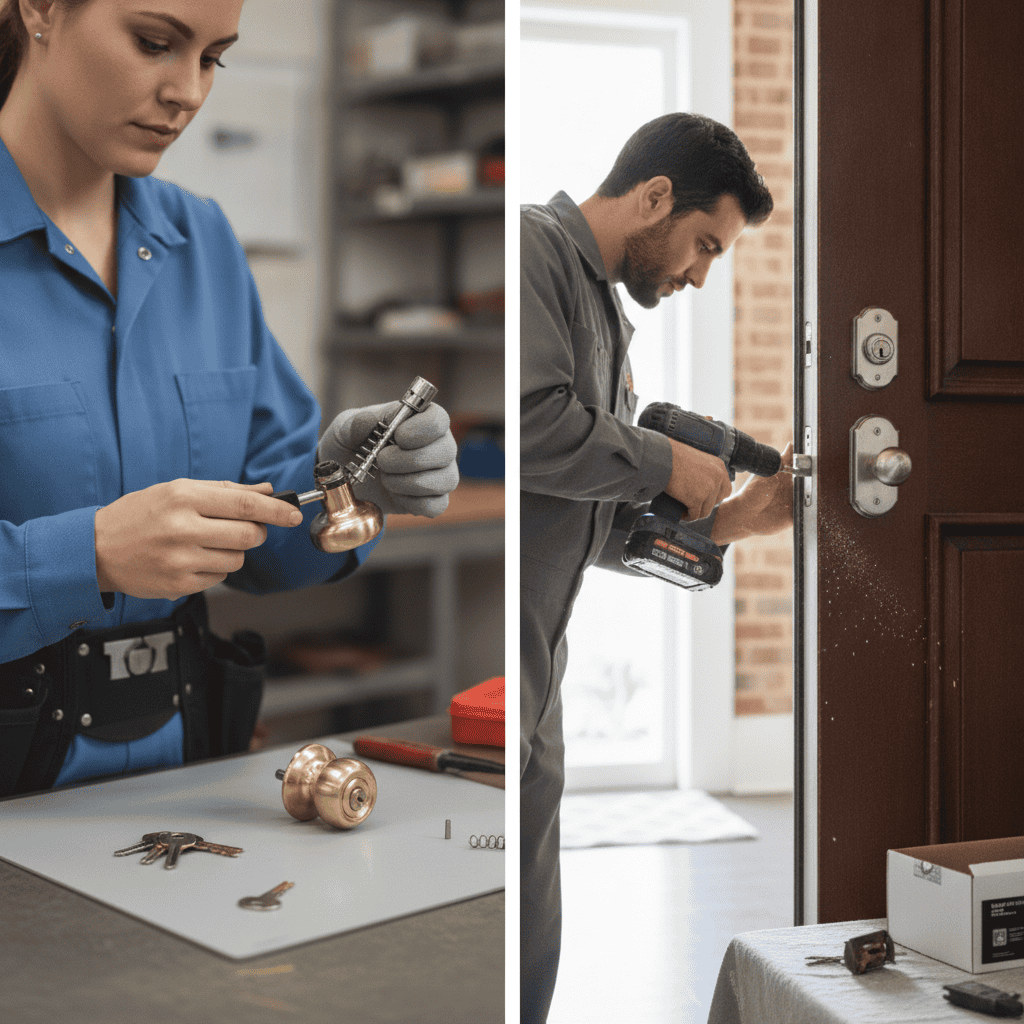
Rekeying keeps the lock body in place but changes the internal pin configuration so the old key no longer works. A locksmith adjusts the cylinder and provides a new key that matches the new setup. From the outside, the lock may look exactly the same, but prior keys are disabled.
Lock replacement means removing the current lock or lockset and installing a new one. That could mean swapping a deadbolt, replacing commercial lever hardware, upgrading to a restricted keyway, or moving from standard mechanical locks to smart or electronic hardware.
For homeowners, the distinction often starts with cost and convenience. For businesses, property managers, healthcare facilities, and government environments, the decision usually goes deeper. Key control, code compliance, door function, credential management, and hardware durability all matter.
When rekeying is the right move
Rekeying is usually the smart choice when the existing lock is in good condition and the main goal is to cut off access tied to old keys. This is common after buying a home, after tenant turnover, after staffing changes, or after a key is lost and there is a real chance it could be traced back to the property.
If the hardware is solid, properly installed, and meets your current needs, rekeying is often the quickest path to restored control. In many residential situations, it is the first recommendation because it changes access without forcing the customer to buy all new hardware.
For commercial properties, rekeying can also make sense when a business wants to maintain existing door hardware but needs to update who has access. In offices, retail spaces, and multi-tenant facilities, this can be an efficient way to address turnover without changing every lock body on the door.
Another advantage is key consolidation. A locksmith may be able to rekey multiple compatible locks to work on one key, which simplifies access for homeowners and facility staff. That is especially useful when a property has accumulated mismatched keys over time.
Good candidates for rekeying
Rekeying is generally worth considering when the lock hardware is functioning well, the finish and style still fit the property, and there is no need to upgrade the security level. It is also useful when speed matters. If the issue is unauthorized key access rather than hardware failure, rekeying often resolves the immediate concern without a larger installation project.
When lock replacement makes more sense
Lock replacement is usually the better option when the hardware itself is the problem. If a lock is worn, damaged, corroded, loose, difficult to turn, or no longer latches properly, changing only the key pins will not fix the real issue.
Replacement is also the right move when the current hardware is outdated or below the security standard the property needs. A homeowner may want a stronger deadbolt. A business may need commercial-grade hardware that stands up to heavy traffic. A facility may need code-compliant panic hardware, door closers, electrified trim, or cylinders tied into broader access control.
Sometimes the issue is not just security but functionality. If a property is changing from keyed entry to keypad access, from standalone locks to credentialed systems, or from standard cylinders to restricted key systems, replacement is necessary because the hardware platform itself is changing.
Aesthetic consistency can matter too. During renovations, many customers replace locks so all entry hardware matches in finish, style, and function. That is not the main reason to replace a lock, but it can be part of a larger property improvement plan.
Signs replacement is overdue
If keys are hard to insert, the lock binds regularly, parts are visibly worn, or the door hardware has already been repaired multiple times, replacement may save money over repeated service calls. The same applies when the lock no longer reflects the risk profile of the site. A front office, medicine room, equipment storage area, or government workspace may require more than a standard residential-grade solution.
Cost matters, but it is not the whole decision
Rekeying is usually less expensive than full lock replacement because it reuses the existing hardware. That makes it attractive for homes, apartment turnovers, and offices where the lock bodies are still in good shape.
But lower upfront cost does not always mean better value. If the hardware is near the end of its service life, rekeying may simply delay a replacement that is already coming. In that case, replacing the lock once can be more practical than paying for service now and new hardware later.
For commercial and institutional properties, cost should also be weighed against operational risk. If poor key control, noncompliant hardware, or failing door security could interrupt business or create liability, replacement may be the more responsible investment.
Security level and key control
This is where rekeying vs lock replacement often becomes less about price and more about exposure.
Rekeying removes the threat tied to old keys, but it does not automatically upgrade the lock’s resistance to picking, drilling, bumping, or unauthorized duplication. If you are satisfied with the lock model and only need to invalidate previous keys, rekeying can be enough.
If you need stronger key control, replacement may be the better answer. That could mean moving to patented or restricted keyways, higher-security cylinders, smart locks, or access control systems that let you add and remove users without physically changing the lock every time.
Businesses with employee turnover, multiple departments, after-hours cleaning crews, or sensitive storage areas often benefit from stepping back and looking beyond the lock itself. A rekey solves one access event. A hardware upgrade can solve an ongoing access management problem.
Residential and commercial decisions are not always the same
For a homeowner, the question is often straightforward. If you just moved in and the deadbolts are quality hardware in good condition, rekeying is usually a sound first step. If the locks are builder-grade, visibly worn, or you want smart lock capability, replacement may be the better move.
For a property manager, the answer depends on turnover frequency, standardization, and maintenance history. Rekeying can keep units moving efficiently, but recurring hardware issues may point to the need for replacement across the portfolio.
For commercial and regulated settings, there are more variables. Door ratings, egress requirements, traffic volume, audit expectations, and system compatibility all matter. A lock on a back office door is not the same as hardware protecting controlled areas in healthcare, defense, or government environments. Those decisions should be made with the full door opening in mind, not just the cylinder.
Why professional assessment matters
Two locks can look almost identical and require very different recommendations. A trained locksmith or security professional can tell whether the issue is key control, hardware wear, door alignment, code compliance, or a larger physical security gap.
That matters because replacing the wrong component wastes money, while keeping the wrong component creates risk. A proper assessment looks at the lock, the door, the frame, the use case, and who needs access. It also identifies whether the existing hardware can be rekeyed at all. Not every lock is a good candidate, especially if parts are damaged, obsolete, or part of a specialized system.
At Easter’s Lock & Security Solutions, this is where experience makes a difference. Since 1953, customers across Baltimore, Washington D.C., Annapolis, and the Mid-Atlantic have relied on fast locksmith service backed by broader physical security expertise. That means the recommendation is not just about changing a key. It is about choosing the right fix for the opening, the risk, and the property.
So which should you choose?
If your locks are in good working order and your main concern is that old keys may still be out there, rekeying is often the right answer. If the hardware is worn, outdated, damaged, or no longer meets your security needs, replacement is usually the better investment.
The key is not choosing the cheaper option by default. It is choosing the option that actually solves the problem the first time. A good lock should do more than turn with a new key. It should match the demands of the people, property, and operations it is there to protect.
When you are not sure, start with the question behind the question: are you trying to change access, or are you trying to improve security? The right answer usually becomes clear from there.