

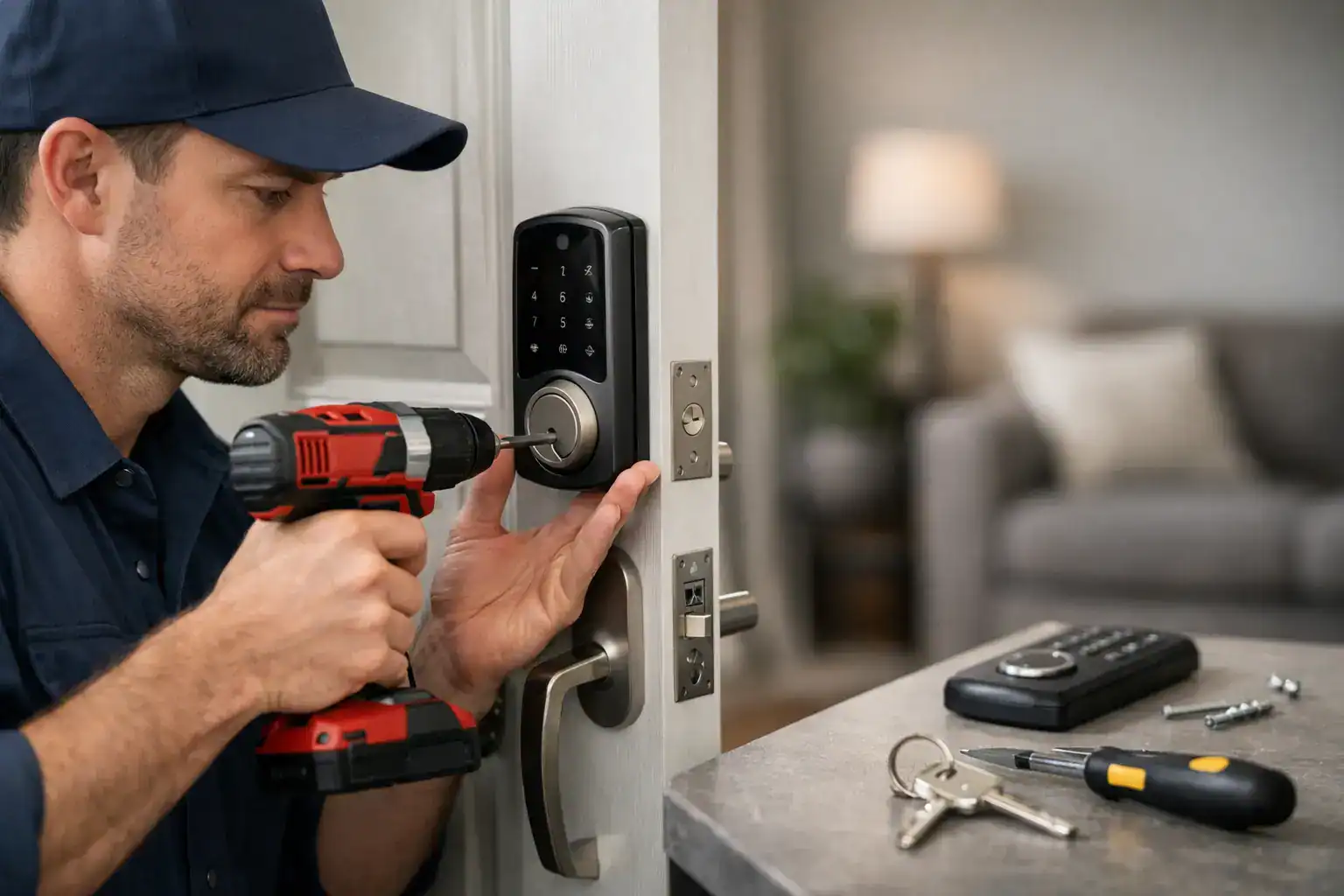
Smart Lock Installation Service Done Right
A smart lock should make access easier, not create a new point of failure at your front door. That is why choosing the right smart lock installation service matters. The lock itself is only part of the equation. The hardware has to fit the door correctly, the strike has to align, the handing has to match, and the software side has to be set up in a way that supports daily use without compromising security.
For homeowners, that usually means dependable keyless entry, remote management, and fewer worries about lost keys. For property managers and business owners, it can also mean user permissions, audit trails, and cleaner control over who comes and goes. In both cases, the difference between a convenient upgrade and a recurring service call often comes down to installation quality.
What a smart lock installation service should actually include
A professional smart lock installation service is not just a technician swapping out one lock for another. It starts with evaluating the opening itself. Door thickness, backset, latch style, frame condition, weather exposure, and existing hardware all affect what will work well and what will not.
Older doors can present alignment issues that a retail package never mentions. A lock may technically fit, but still bind because the door has shifted or the strike is worn. In commercial settings, the stakes are even higher. The hardware may need to work with panic devices, closers, fire-rated assemblies, or existing credential systems. That is where experience matters.
A complete installation should include proper mounting, testing, programming, and user setup. If the lock uses Wi-Fi, Bluetooth, Z-Wave, or another protocol, that needs to be configured with the environment in mind. A front entry with weak signal strength may need a different solution than an interior office or managed apartment unit. Good service also means explaining how the lock works after installation, not leaving the customer to figure it out from an app screen.
Smart lock installation service for homes and businesses
Residential and commercial jobs may look similar at first glance, but they are not the same. A homeowner may want app control, temporary guest codes, and auto-locking for a primary residence. A landlord may need a practical way to change access between tenants without replacing hardware every time. A business may need staff scheduling, restricted access by role, and hardware that holds up to heavy daily traffic.
That is why the right recommendation depends on the opening, the users, and the level of control required. A battery-powered deadbolt can be a solid fit for a single-family home. It may not be the right answer for a busy rear commercial entrance that sees frequent use. Likewise, a feature-rich smart lock with every available integration is not always the best choice for a homeowner who mainly wants reliable keypad entry and a backup key.
There is also the issue of code compliance and life safety. On some commercial doors, hardware changes are not simple upgrades. Fire-rated openings, egress requirements, and ADA considerations can limit what can be installed. That is one reason many businesses are better served by working with a provider that understands both locksmith work and broader physical security requirements.
Choosing the right lock is not just about features
Most people start with features. Remote unlock, app control, camera integration, PIN codes, geofencing, and voice assistant compatibility all sound useful. Some of them are useful. But the first question should be whether the lock is appropriate for the door and the way that opening is used.
Battery life, mechanical durability, weather resistance, and the quality of the latch or deadbolt mechanism often matter more than the longest feature list. A front door exposed to rain and direct sun demands more from electronics and finishes than an interior office suite. A rental property may benefit from simpler code management rather than a complex ecosystem that requires frequent owner oversight.
There is also a trade-off between convenience and system dependence. Some customers want cloud-based access from anywhere. Others prefer a local solution with fewer moving parts. Neither is automatically better. It depends on how much remote control is needed, how many users must be managed, and how comfortable the customer is with app-based administration.
Why installation problems happen
Many smart lock issues are blamed on the product when the real problem is the door. If the deadbolt does not extend cleanly into the strike, the motor works harder than it should. That can shorten battery life, create intermittent locking problems, and lead users to think the electronics are failing.
Improper bore sizing, weak mounting points, warped doors, and misaligned frames are all common causes of trouble. So is skipping the setup process. A lock may install physically, but if user codes, master credentials, app permissions, and firmware settings are not handled correctly, the customer is left with a device that is only half operational.
For business customers, installation issues can become operational issues fast. If employees cannot access the building consistently, or if permissions are not assigned correctly, productivity and security both suffer. That is why professional setup and testing are part of the service, not an extra.
When a smart lock makes sense – and when it may not
Smart locks are a strong fit when access changes regularly, when convenience matters, or when the customer wants better visibility into entry events. They are especially useful for busy households, managed properties, offices with changing staffing needs, and locations where key control has become a recurring problem.
They are not the right answer for every opening. High-abuse doors, certain exterior gates, some rated openings, and environments with limited connectivity may call for a different hardware strategy. In some facilities, a standalone smart lock may be less effective than a fully integrated access control solution. In others, a traditional mechanical lock with good key control still makes the most sense.
The right provider should say that plainly. Security decisions should match the use case, not just the newest product category.
What to expect from a professional installation visit
A well-run appointment is straightforward. The technician confirms the door condition, verifies hardware compatibility, installs or retrofits the lock, tests operation from both sides, and completes the programming. If the lock connects to a mobile app or management platform, setup should happen on site whenever possible.
Customers should also expect practical guidance. That includes how to manage codes, what to do if batteries run low, how backup entry works, and when service may be needed. For commercial customers, it may also include credential planning, user hierarchy, and recommendations for future integration.
At Easter’s Lock & Security Solutions, that service approach reflects the same standard applied across residential locksmith work, commercial door hardware, and advanced security systems. The goal is not to install a device and move on. The goal is to make sure the opening works reliably and supports the way the property actually operates.
The value of working with an established local provider
A smart lock is not a one-time decision. Batteries need replacement. Users change. Doors settle. Software updates happen. Sometimes a lock that worked well for months starts showing signs of alignment stress or connectivity issues. When that happens, local support matters.
An established provider brings more than product familiarity. They bring field experience across door conditions, hardware types, occupancy requirements, and service environments. That matters in a private home, and it matters even more in commercial, healthcare, and government settings where security failures can create serious disruption.
It also means customers are not left choosing between a basic locksmith and a separate systems contractor. When a company understands both mechanical security and electronic access, recommendations tend to be more practical and more durable.
If you are considering a smart lock, start with the opening, not the app. The right installation should leave you with a door that works smoothly, a system you can actually manage, and confidence that your security upgrade is doing its job every day.