

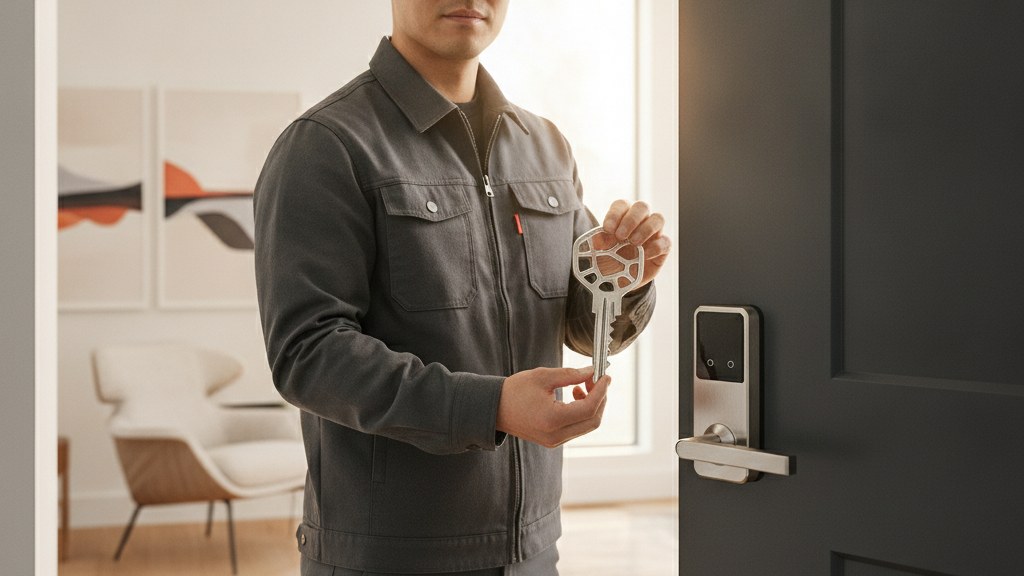
What Does Printing Key Mean for a Homeowner?
Printing key usually refers to making a copy from an existing key, not “printing” it like paper. For a homeowner or renter, the real fix is matching the right key blank and cutting method to the lock, then testing the copy before you leave. If the key is restricted or worn, book a call with a locksmith.
What does printing a key actually mean?
In this topic, printing a key means producing a functional copy from an existing key, not sending a file to a printer. That distinction matters because the lock does not care about the label. It cares about the cut, the blank, and whether the copy matches the cylinder it has to move.
Most homeowners use the phrase loosely because they are really asking for a spare. But a spare key is only useful if the duplication process respects the original profile and the lock family behind it. If the blank is wrong, the copy may slide in and still fail when it reaches the pins or wafers.
There is also a difference between copying a basic house key and copying a key tied to a more controlled system. Some keys are simple edge-cut blanks. Others are restricted by design, by ownership rules, or by the need to keep the security level intact. That is where casual duplication turns into a bad idea.
A good copy starts with the right reference. If the original key is worn, bent, or already a copy of a copy, the result can drift further off target. The fix is not guesswork. It is checking the key profile, the blank, and the condition of the original before anyone cuts metal.
The practical goal is simple: a spare that turns smoothly and does not fight the lock. If a copy needs force, wiggling, or repeated tries, it is already failing at the part that matters most.
- The term usually means key duplication, not document printing.
- The blank must match the lock family before cutting begins.
- A worn original can produce a poor copy even if the cut looks close.
- Restricted keys may need authorization or a locksmith process.
- A good spare should work smoothly without forcing the cylinder.
Which keys can be copied, and which ones should not be treated casually?
Some keys are straightforward copies. Others are tied to security controls, authorization, or wear issues that make casual duplication a poor move. The mistake people make is assuming every shiny metal key is fair game, when the real issue is how much control the original system is supposed to keep.
A basic residential key is often the simplest case. Even then, the blank has to match, and the cut has to follow the original closely enough to function in a real lock, not just in the copier jaws. If the source key is worn, the copier may reproduce the wear instead of the correct geometry.
Restricted and high-security keys are different. These are not just about making another copy fast. They are about preserving access control. Some systems require proof of ownership or authorization because a bad copy is not a convenience problem. It is a security problem.
Renter situations can be tricky too. A tenant may want a spare for convenience, but the original key may belong to the property system, not to the person holding it. That is why a locksmith asks more questions than a convenience counter. They are trying to keep the lock system intact.
If the key has unusual markings, a protected profile, or a complex edge shape, treat it as a controlled item until proven otherwise. The cost of being casual is usually a key that does not work, or worse, a copy that creates an access issue later.
- Basic residential keys are often copyable if the blank matches.
- Worn keys can copy the wear, not the intended geometry.
- Restricted keys may require authorization or proof of ownership.
- Property or master-key systems should not be handled casually.
- Unusual profiles deserve identification before anyone cuts metal.
Why does a copied key fail even when it looks right?
Because a key is judged by tolerances, not by appearance. A copy can look clean and still bind, skip, or refuse to turn if the blank is wrong, the cut is shallow or deep in the wrong place, or the original key was already compromised by wear.
This is the part people hate because it feels arbitrary. It is not arbitrary. A lock is a mechanical system with small tolerances. A copy that is slightly off may still enter the keyway, which tricks people into thinking it is fine. Then it stops at the point where actual movement is required.
The original key matters more than most people realize. If the source key is rounded from years of use, a copier can faithfully reproduce the rounding. That gives you a key that is a copy of a problem. The lock then exposes the problem immediately.
Blank selection matters as much as the cut. A close-looking blank can still have the wrong shoulder, profile, or depth relationship. That means the key may seem almost right while still failing in the cylinder. A near miss is not a working spare.
When a copy fails, the wrong response is usually “make another one at a different store.” The better response is to check whether the original is still a reliable pattern and whether the blank matches the lock family in the first place.
- Locks care about tolerances, not visual similarity.
- A worn original can reproduce its own wear in the copy.
- Wrong blank selection causes many near-miss failures.
- A key may enter the lock but still fail under turning pressure.
- Repeated bad copies usually signal a source problem, not bad luck.
Easter’s Lock & Security Solutions has served the Mid-Atlantic since 1953 – residential, commercial, automotive and emergency service.
Book Now / Get a QuoteHow do key blanks, key codes, and the original key fit together?
A working copy depends on three things lining up: the blank, the source pattern, and the cut. Miss one, and the spare becomes a decoration. That is why a lot of key-copy frustration starts before the cutter even touches metal.
The blank is the foundation. It has to fit the lock type and the intended profile. Then the source key has to provide a reliable pattern. If a code is available, it can help verify the cut, but many homeowners only have the physical key, so the original becomes the reference point.
Key code work is useful because it can bypass some of the uncertainty that comes from a worn original. But not every household has a code card, and not every key is intended to be cut by code at a retail counter. That is where a locksmith can assess the most reliable path instead of forcing a generic process.
In practice, the copy should be checked against the actual lock family, not just against the blade shape. The shoulder, depth, and groove relationship have to align. The wrong blank can pass a casual glance and still be wrong in the hand.
If you are trying to get a spare made from an older or heavily used key, the safest path is to verify the original first. When the original is questionable, cut quality becomes less important than source quality. You cannot compensate for a bad pattern with optimism.
- Blank selection comes before cutting.
- A code can help, but many homes rely on the physical original.
- The original key may be worn and need evaluation first.
- Shoulder and groove alignment matter, not just the blade shape.
- A bad source pattern creates bad copies no matter who cuts it.
When a spare key is a convenience and when it is a security decision
A spare key sounds like a simple convenience until the wrong person has access or the wrong copy keeps floating around. Then it becomes a security decision, which is why homeowners should think about who can use the spare, where it lives, and whether the lock system should be rekeyed instead.
If the goal is just to avoid getting locked out, a spare may be enough. But if a key has been lost, shared too widely, or copied for someone who no longer needs access, the real issue is not making more copies. It is controlling who can open the door.
For renters and homeowners alike, there is a difference between convenience access and permanent access. A spare handed to a neighbor is not the same as leaving a key under a mat or in a weak hiding spot. One is a planned backup. The other is an open invitation.
Sometimes the smartest move is not another duplicate at all. If the original key chain is messy, if too many people have had access, or if the key history is unknown, rekeying is often the cleaner answer. That resets the key relationship to the lock without changing the hardware.
This is where casual copying can become expensive in the wrong way. Cheap copies are only cheap if they actually solve the problem. If they create access drift, you have bought convenience and lost control.
- A spare key can be either backup access or a security risk.
- Lost or widely shared keys may call for rekeying, not copying.
- A planned spare is different from a poorly hidden emergency key.
- Too many copies can weaken access control.
- The right fix depends on key history, not just the immediate need.
What a locksmith checks before making a key copy
A careful locksmith is not just feeding metal into a machine. They are checking whether the source key is reliable, whether the blank matches, and whether the copy should be made at all. That is the part people skip when they want speed and then blame the lock later.
The first check is the original key itself. If it is bent, worn, or inconsistent, the locksmith may need to evaluate whether the copy will be accurate enough to trust. That step alone can save a homeowner from paying for a spare that only works on good days.
Next comes the blank match. The cutter needs the right profile for the lock family. The wrong blank wastes time and often creates the exact kind of almost-right key that frustrates people most because it looks finished but behaves badly.
A locksmith also thinks about the broader system. Is this a standard residential key, a protected keyway, or a key tied to a larger master or access-control environment? The answer changes the process. Good work starts with the system, not the tool.
The final check is the real one: does the new key work in the actual lock without force? If not, the job is not done. That is the difference between a copy and a solution.
- Original key condition can determine copy quality.
- Blank matching is essential before cutting starts.
- The lock system type changes the process.
- A copied key should be tested in the real lock.
- A finished-looking key is not the same as a working key.
When to fix the key problem yourself and when to book a call
| Situation | What to do | Why |
|---|---|---|
| The key is a standard house key and the original is clean, straight, and easy to read. | You may be able to get a simple duplicate made, as long as the blank matches and the copy is tested. | A straightforward pattern reduces the chance of a bad cut or a misleading result. |
| The key is worn, bent, or already hard to turn. | Book a call and have the original assessed before another copy is cut. | A bad source key often creates a bad spare, which wastes time and still leaves you stuck. |
| The key seems restricted, unusual, or tied to a controlled access system. | Use a locksmith who can verify the key type and the proper duplication path. | Security-controlled keys are not just a metal shape problem. They are an authorization problem too. |
| You need more than one copy or the key history is unclear. | Ask about rekeying or a broader access review before making more duplicates. | Sometimes the real issue is who has access, not how many copies you can produce. |
Doing it yourself vs bringing in Easter’s Lock & Security Solutions
| Doing it yourself | With Easter’s Lock & Security Solutions | |
|---|---|---|
| Source key quality | You rely on whatever condition the original is in, even if it is worn or bent. | We check whether the original is a trustworthy pattern before making a copy. |
| Blank and cut matching | You are limited by the blanks on hand and the cutter’s simple fit tests. | We match the blank to the lock family and verify the result against the actual key needs. |
| Restricted or unusual keys | You may not know whether the key is controlled, protected, or part of a larger system. | We can identify the key type and advise the correct path without guesswork. |
| Outcome | You may get a key that looks right but still sticks or fails. | You get a copy that is checked with function in mind, not just appearance. |
Frequently Asked Questions
What is printing key in plain English?
It usually means getting a working copy made from an existing key. For a homeowner or renter, the important part is not the wording. It is whether the original key is readable, the blank matches the lock, and the finished copy actually turns the cylinder without force.
Can a very worn key still be copied?
Sometimes, but worn keys are risky because the copier may reproduce the wear instead of the original shape. That can lead to a spare that almost works but binds in the lock. If the source key is visibly worn, it is smarter to have it evaluated before cutting another copy.
Do I need the original key to make a copy?
In most residential situations, yes, the original is the starting point. Without it, the locksmith has fewer clues about the correct blank and cut. If the original is missing, a locksmith can often discuss other paths, but the answer depends on the lock type and security level.
How much does a key copy cost?
It depends on the key type, the blank, and whether the key is standard or controlled. Because the right answer depends on the specific lock and the condition of the original, the cleanest next step is to book a call and get a quote for the exact key you need.
Can Easter’s Lock & Security Solutions help if my copy does not work?
Yes. If a copied key sticks, fails, or seems tied to a restricted system, we can help assess the original, identify the correct blank, and recommend the right fix. If you want it handled by a locksmith with real residential and security experience, book a call and get a quote.
Need a locksmith in the Baltimore area?
Easter’s Lock & Security Solutions has served the Mid-Atlantic since 1953 – residential, commercial, automotive and emergency service.
Book Now / Get a QuoteCall (410) 825-3535Last updated September 30, 2026