

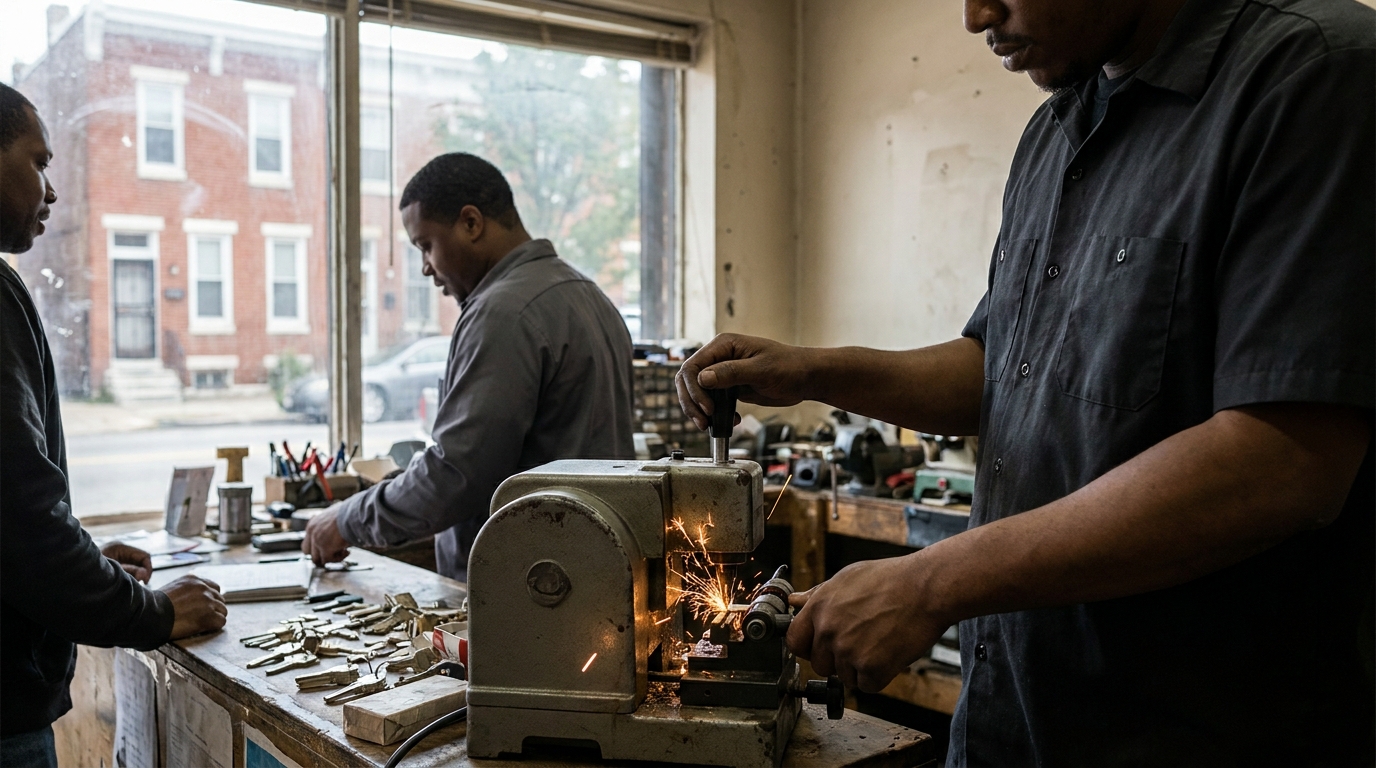
Where Can I Get a Key Copied for My Home?
Where to get a key copied depends on the key type, not just the nearest store. Basic house keys can often be duplicated quickly, but worn, restricted, or high-security keys need the right blank, the right cutter, and sometimes proof of authorization. A locksmith is the safer call when you want a key that works the first time.
What does where to get a key copied actually mean?
The phrase sounds simple, but in practice it means choosing between speed, control, and cut quality. For a homeowner or renter, the real question is whether you need a basic duplicate, a controlled key copy, or a locksmith who can check the original before making another one.
A key copy is only useful if it matches the lock it is meant to open. That sounds obvious, yet people keep treating every duplicate as if it were the same. It is not. A standard residential key, a mailbox key, and a restricted key live in very different worlds.
If you are searching where to get a key copied, you are really deciding how much risk you can tolerate. A quick counter copy may be enough for a fresh, common key. A worn key, though, can copy its wear right along with it, which is how you end up with a duplicate that binds or fails.
The better filter is the lock system, not the location. Near-me searches, map pack results, and review stars can help you narrow options, but they do not tell you whether the shop can handle the right blank, the right machine, and the right level of control.
This is why a locksmith matters for more than emergencies. The right shop can tell you whether duplication is appropriate at all, or whether you actually need a rekey, a fresh key code, or a better access plan for the doors you use every day.
- A standard duplicate copies the shape of an existing key
- A worn key can produce a worn duplicate
- Restricted keys may require authorization to copy
- The best source depends on lock type, not convenience alone
- A locksmith can tell you when copying is the wrong fix
Where can I get keys copied without wasting a trip?
The shortest answer is anywhere that can cut the right blank cleanly and actually stock the key you need. The practical answer is better: use a place that can look at the key, tell you if it is copyable, and avoid the usual false start.
Big-box stores, hardware counters, kiosks, and locksmith shops all show up in the same search results, which is why people get misled. They assume the closest option is the fastest. Then the blank is wrong, the machine is off, or the key type is not supported, and the trip goes nowhere.
When you need a spare for a residence, speed is only one variable. The duplicate has to turn smoothly, catch the pins correctly, and survive everyday use. That is hard to judge from a search listing, but easy for an experienced locksmith to verify on sight.
This is where reviews, business profile details, and service categories matter. The map pack can tell you who is nearby. The service list tells you who actually does residential key duplication, not just general retail cutting. Those are different things.
If you are searching where can i get keys copied, do not stop at the first pin on the map. Look for a provider that says residential locksmith, mobile locksmith, or key duplication in plain language, then confirm they can handle your key type before you leave the house.
- Check whether the provider lists residential key duplication
- Confirm they stock the blank before making the trip
- Use the map pack for proximity, not the final decision
- Read recent reviews for fit, not just star count
- Ask whether they can handle worn or specialty keys
What if I need where to get keys copied near me after hours?
Late-day key needs are usually not about convenience. They are about getting back into your home or getting a spare made before a small problem turns into a lockout. That is when the word nearby matters less than whether the provider actually answers and can move.
After-hours requests are where people discover the difference between a storefront and a mobile locksmith. A storefront closes. A mobile locksmith can come to you, which matters if the key is lost, the lock is hard to reach, or the spare must be made on site.
The search phrase where to get keys copied near me often hides an urgency problem. You are not really looking for geography. You are looking for the fastest path to a working key without a second errand, another wait, or a failed duplicate that sends you back out again.
For renters, this can get awkward fast. You may need to copy a key for a room, a common entrance, or a storage area, and you still have to respect the rules of the property. A locksmith can help you sort out what is appropriate before anything gets cut.
The cleaner move is simple: if the situation is time-sensitive, use a locksmith that offers mobile service and can verify the key on site. That reduces guesswork and keeps you from buying a copy that only looks right.
- After-hours needs often call for mobile service
- A storefront may not help if the issue is time-sensitive
- On-site cutting reduces repeat trips
- Renters may need to confirm permission first
- A locksmith can verify fit before you leave
Easter’s Lock & Security Solutions has served the Mid-Atlantic since 1953 – residential, commercial, automotive and emergency service.
Book Now / Get a QuoteWhich key copies are easy and which ones are not?
This is where most people get tripped up. They assume every key is the same kind of job, then wonder why one copy is effortless and another needs verification, special blanks, or a locksmith who understands the system.
Basic residential keys are usually the easiest category. If the original is clean, common, and not badly worn, duplication can be straightforward. That is the bread-and-butter case people mean when they ask where do i get keys copied.
Once you move into restricted, high-security, or specialty keys, the rules change. Some keys are not meant to be duplicated freely. Others need a blank that a general counter may not stock. A few require proof that you are authorized to have the copy made.
Mailbox keys, padlock keys, apartment-related keys, and older house keys can all be simple or annoying depending on the exact cut. That is why the key itself matters more than the category name. Two keys that look similar to a homeowner can be completely different jobs behind the counter.
The smart move is to bring the original in and ask before cutting. A locksmith can tell you whether the key can be copied cleanly, whether the blank exists, and whether the better answer is duplication or something else entirely.
- Standard residential keys are usually straightforward
- Restricted keys may require authorization
- Specialty blanks are not always stocked everywhere
- A worn original can make the copy unreliable
- Some keys are better rekeyed than duplicated
How do you know a copied key will actually work?
You do not know from the receipt alone. You know from the fit, the cut, and whether the duplicate was made from a healthy original. That is why the cheap answer is often the expensive one after you try it at the door.
A decent duplicate should enter smoothly, turn without fight, and feel consistent in the lock. If it needs jiggle, pressure, or repeated tries, the issue may be the copy, the original, or the lock itself. You want to separate those before you blame the wrong part.
The original key matters more than people think. If the original is rounded, bent, or heavily worn, a machine can copy its flaws. Then you have two keys that are both technically cut, and neither is truly reliable. That is how a quick errand becomes a return trip.
The lock matters too. A sticky cylinder can make a good copy seem bad. That is one reason locksmiths do not just cut keys in a vacuum. They look at how the key and lock interact, because that is the real test, not whether the new key looks pretty.
If you want confidence, ask the cutter to test the duplicate before you leave. Better yet, have the original inspected first. That small step saves a lot of frustration later, especially on the main entry you use every day.
- A good copy should turn smoothly
- A worn original can create a bad duplicate
- A sticky lock can masquerade as a bad key
- Testing before you leave reduces returns
- Inspection first is better than guessing
The parts that matter before you hand over the key
Here is the boring truth people skip: the result depends on the blank, the machine, the original, and the person doing the cut. Ignore any one of those, and you are gambling on a door that needs to work every single day.
The blank has to match the key system. The machine has to cut cleanly. The original has to be in decent shape. And the person doing the job has to know when to stop and say the key should not be copied as-is.
This is also where local reputation helps more than generic ads. Search result positions can be influenced by proximity, service categories, and review signals, but the actual outcome still depends on whether the shop works on the type of key you have. That is not something a generic listing can prove.
For homeowners and renters, the decision usually comes down to convenience versus certainty. If you need a simple spare for an ordinary lock, the near option may be enough. If you need a copy you can depend on, the right locksmith is worth the extra step.
And if the key is part of a wider security issue, you may be looking at the wrong solution entirely. Sometimes the real answer is a rekey, a fresh key control plan, or a lock upgrade, not another copy of a weak original.
- Blank choice affects whether the copy fits
- Machine quality affects the cut
- Original key wear can ruin the duplicate
- A trained locksmith knows when not to copy
- Sometimes rekeying beats copying
When to copy, when to rekey, and when to stop guessing
| Situation | What to do | Why |
|---|---|---|
| You need one or two extra house keys and the original works cleanly | Get a straightforward duplicate from a locksmith or other qualified cutter | A clean, common key is usually the easiest and least disruptive job |
| The original key is bent, worn, or inconsistent in the lock | Have the key and lock checked before making more copies | Copying a damaged original just creates more unreliable keys |
| The key is marked, controlled, or tied to a restricted system | Confirm authorization and use a qualified locksmith | Some keys are not meant for casual duplication |
| You are already worried about access control or missing keys | Consider rekeying instead of duplicating | A fresh key set can be a cleaner security move than more copies |
Doing it yourself vs bringing in Easter’s Lock & Security Solutions
| Doing it yourself | With Easter’s Lock & Security Solutions | |
|---|---|---|
| Finding the right place | You have to sort through hardware stores, kiosks, and search results and hope they support your key type | We identify the key type, cut path, and whether duplication is actually the right answer |
| Cut quality | A cheap copy can be made from a worn original or with the wrong blank | We use professional equipment and trained eyes to check the original before cutting |
| Time and repeat trips | You may make one or more trips if the copy fails or the blank is wrong | We reduce the guesswork by handling the key properly the first time |
| Security judgment | You may duplicate a key when rekeying would have been the smarter move | We can tell you when copying, rekeying, or a different fix makes more sense |
Frequently Asked Questions
What is the fastest way to get a house key copied?
The fastest path is usually a locksmith or a retailer that already stocks the right blank and can cut standard residential keys on the spot. If your original is worn or the key is restricted, speed matters less than whether the duplicate will actually work the first time.
Can I get keys copied from a worn original?
Sometimes, but that is exactly where problems start. A worn original can transfer its wear to the duplicate, which makes the copy inconsistent. If the key is your main entry key, have a locksmith inspect it first so you are not copying a bad pattern.
Where do i get keys copied if my key says Do Not Duplicate?
That warning does not always mean duplication is impossible, but it does mean you should not assume a retail counter can or should do it. Ask a locksmith whether the key is restricted and whether authorization is required before any copy is made.
How much does key copying cost?
Cost depends on the key type, blank availability, and whether the original is simple or specialty. Because every situation is different, the cleanest answer is to book a call or request a quote so the locksmith can give you the right guidance for your key.
Can Easter’s Lock & Security Solutions help me copy a key?
Yes. If you want a straightforward duplicate or you are not sure whether your key should even be copied, Easter’s Lock & Security Solutions can help you sort it out and book a call for the right next step.
Need a locksmith in the Baltimore area?
Easter’s Lock & Security Solutions has served the Mid-Atlantic since 1953 – residential, commercial, automotive and emergency service.
Book Now / Get a QuoteCall (410) 825-3535Last updated September 21, 2026