

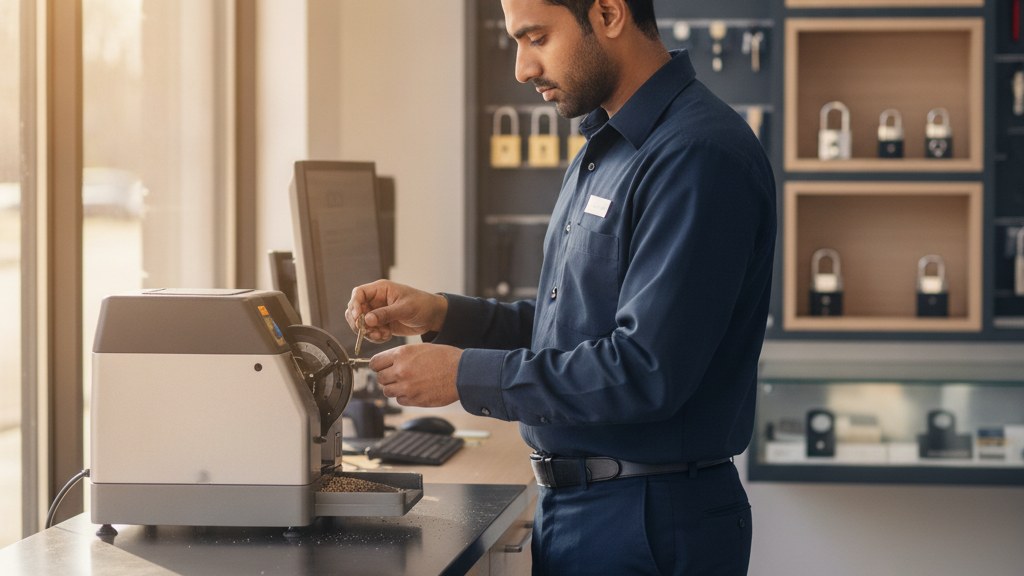
Where Can I Get Copies of Keys Made?
Where can I get copies of keys made? The short answer is a locksmith, hardware store, or mobile locksmith, but the real answer is whoever can cut the right blank and match the key accurately. For house keys, rekeyed locks, restricted blanks, or fobs, a locksmith is usually the safer choice.
What kind of key copy do you actually need?
The first question is not where to go. It is what you are copying, because “key copies” can mean a basic house key, a worn duplicate that no longer works, or a restricted key that requires authorization.
If you are searching for where can i get copies of keys made, you are probably trying to solve a very ordinary problem: you need another working key and you need it to work the first time. That is the part people skip. They ask the shop for a copy, but the real issue is whether the original key, the blank, and the cutting method all match the lock.
A standard residential key is easy when the original is clean and not too worn. But if the original key has rounded edges, bends, or obvious wear, the copy can inherit those problems. That is why one copy from one bad original often turns into two bad keys.
If the lock uses a restricted blank, a higher security cylinder, or a smart lock accessory, the process changes. The phrase “copy a key” stops being simple and starts meaning authorization, correct blank selection, and sometimes special ordering or programming.
This is why the first useful move is to identify the type of key before you chase the nearest counter. Otherwise you are just gambling on convenience.
A basic house key and a restricted key are not the same job.
A worn original can make a bad duplicate even when the machine is fine.
Some keys need blank matching before any cutting happens.
Fobs and smart lock keys may require programming, not just cutting.
Authorization matters for restricted key systems.
- Check whether the key is standard, high-security, or electronic.
- Look for visible wear, bends, chips, or heavy use.
- Bring the best working original you have, not the worst one.
- Ask whether the shop has the right blank before they cut.
- If it is a controlled key, expect authorization steps.
Where can you get copies of keys made near me?
Near-me searches sound simple, but the map pack rewards proximity, category fit, and business signals, not just whoever is closest. That is why the nearest place is not always the right place for a copy that actually works.
People type “where to get copies of keys made” and expect a clean answer. Usually they want the fastest option nearby. Fair enough. But the store down the street only helps if it cuts the right kind of key and does it accurately. Distance does not fix a bad blank or a sloppy cut.
For residential buyers, the common options are locksmith shops, hardware stores, big-box home centers, and mobile locksmiths. Each has a different strength. Hardware counters may handle simple house keys. A locksmith is more likely to handle worn originals, restricted blanks, or anything that needs a second look.
The practical filter is not “who is closest.” It is “who can identify my key, match the blank, and cut it correctly without making me come back.” That is the whole game. Search results rarely say this out loud, but your time is worth more than a cheap duplicate that fails in the lock.
If you need copies for multiple doors, a mailbox, or a key that already feels sticky, do not treat the task as a quick errand. It is a lock fit problem, not a shopping problem.
Nearby is useful only when the service matches the key type.
The map pack can surface hardware stores, locksmiths, and mobile providers.
A locksmith is usually better for worn or unusual residential keys.
A mobile locksmith helps when you do not want to leave home.
The best location is the one that can make a working copy, not just a fast one.
- Use local search, but judge by services, not just distance.
- Pick a provider that cuts your exact key family.
- If the original is worn, choose someone who can inspect it.
- For multi-key needs, ask whether they can duplicate several at once.
- If convenience matters, ask about mobile service.
Can a hardware store copy every house key?
No. That is the annoying answer, but it is the right one. Hardware stores can often handle basic residential keys, yet they are not a universal answer for worn, restricted, or higher-security keys.
If you are wondering where can i get copies of keys made for a plain house key, a hardware store may be fine. If the key is common, readable, and the blank is stocked, the process can be quick. The problem is that “common” is doing a lot of work there.
Stores vary in the blanks they carry and the tools they use. Some rely on simple duplication machines that are fine for standard cuts but less helpful when the original key is worn or the profile is unusual. If the key needs deeper diagnosis, that is where a locksmith has the advantage.
The second issue is quality control. A key that feels almost right is still a bad key. Homeowners discover this the hard way when the copy works once, then fails because the cut is shallow, the blank is wrong, or the original was already drifting out of spec.
That is why the store option is best thought of as a narrow solution, not the default answer for every door in your home.
Basic residential keys are the easiest fit for store counters.
Restricted keys may not be available there at all.
Worn originals increase the risk of a bad duplicate.
Not every location stocks the same key blanks.
If the copy has to work on the first try, accuracy beats convenience.
- Good for common house keys with clear, unworn originals.
- Less reliable for worn, bent, or older keys.
- May not handle restricted or special-order blanks.
- Tools and blank stock vary by location.
- If the lock is finicky, choose a locksmith instead.
Easter’s Lock & Security Solutions has served the Mid-Atlantic since 1953 – residential, commercial, automotive and emergency service.
Book Now / Get a QuoteWhen does a locksmith make more sense than a kiosk?
When the key is part of a lock problem, not just a duplication task, a locksmith is the better answer. Kiosks are fine for a simple duplicate. They are not built for judgment, and that is where homeowners get burned.
A kiosk is built for speed. A locksmith is built for fit. That distinction matters more than people think. If the key is worn, if the lock is old, or if the original has already been copied badly a few times, a copy made without inspection can waste your afternoon.
A locksmith can look at the key, the blank, and the lock family as a system. That matters for residential buyers because the goal is not a shiny extra key. The goal is access when you need it, no drama, no callbacks, no fiddling at the door.
This is also where search intent splits. Someone looking for where to get copies of keys made may only need a basic duplicate. Someone else actually needs a correct replacement because the original is too worn to trust. Those are not the same task, even if the search query is the same.
If you are dealing with a smart lock, a restricted key, or a house key that was copied elsewhere and never quite worked, the locksmith path usually saves time in the real world.
Kiosks are transactional, not diagnostic.
A locksmith can assess wear and key profile before cutting.
The copy should work at the lock, not just pass visual inspection.
Re-copies from a bad duplicate often keep the same problem.
Residential access is too important for guesswork.
- Choose a locksmith when the key or lock is not straightforward.
- Use a kiosk only for simple, common keys.
- Ask whether the original key looks worn before copying.
- If a previous copy failed, do not duplicate that bad copy again.
- For better fit, have the lock evaluated along with the key.
How do you spot a bad duplicate before it becomes a headache?
Look for the warning signs early. A bad copy often gives itself away before it fails completely, and catching that saves you from forcing the lock, bending the key, or calling for help later.
If your question is where can i get copies of keys made, you probably do not want a second chore after the first one. You want one key that works cleanly. The trouble is that bad duplicates can look fine in your hand and still fail in the lock.
A copy that drags, sticks, or only turns with extra force is telling you something. So is a key that feels too loose in the keyway, or a duplicate that only works in one door and not another. That usually means the cut, the blank, or the source key was off.
This matters more for renters and homeowners than they realize. A copy that sort of works is not a convenience. It is a future lockout or a broken key waiting to happen. And once a key snaps in a cylinder, the errand is no longer simple.
The fix is not to keep jiggling and hoping. The fix is to stop using the bad copy and have the key checked against the lock or compared against a better original.
Resistance is a warning, not a quirk.
A too-loose or too-tight fit often means the cut is off.
One working door does not prove the copy is good for all locks.
Do not force a key that feels wrong.
A bad duplicate is cheaper than a broken key, until it is not.
- Test the copy in the lock gently, not aggressively.
- Compare the duplicate to the original for obvious differences.
- Stop using the copy if it binds or sticks.
- Make sure the key works in every door it should.
- If it feels wrong, have it checked before it breaks.
Get the blank, the cut, and the lock all aligned
The best key copy happens when the blank matches the lock family, the cut matches the original, and the original itself is trustworthy. Miss any one of those and you get a problem that looks minor until you are locked out.
There is a reason the same key can be copied at one place and fail at another. The blank is not universal. The cut is not magic. And the original key is not always a perfect master. In residential work, those three pieces have to line up or the copy is just metal with a shape on it.
This is especially true when the original key has been in use for years. Everyday wear changes the shape just enough that a duplicate may reflect the damage instead of the intended cut. A careful locksmith can usually spot that. A machine cannot think for itself.
For homeowners, renters, and property managers, the practical move is simple: choose the place that treats the key as part of the lock system, not a souvenir from the front desk. That mindset saves you from repeated trips and false confidence.
If your goal is a working duplicate, the process should be as boring as possible. Correct blank. Correct cut. Verified fit.
The blank has to match the key family first.
An old original may be more distorted than it looks.
A good copy is measured by function, not appearance.
The lock itself is the final test.
The fewer assumptions you make, the better the result.
- Verify the blank type before cutting starts.
- Use the best preserved original available.
- Ask for fit confirmation if the key is unusual.
- Treat the lock as the final test, not the machine.
- Choose boring accuracy over fast guessing.
When you should stop guessing and call a locksmith
| Situation | What to do | Why |
|---|---|---|
| The key is worn, bent, or already copied a few times. | Have a locksmith inspect the original and choose the correct blank before cutting a new copy. | Copies made from a bad original often repeat the same flaw. |
| The key turns only with force or sticks in one door. | Bring the key and the lock context to a locksmith instead of making another quick duplicate. | The issue may be fit, wear, or lock condition, not just the key itself. |
| You are dealing with a restricted, high-security, or smart-lock related key. | Check authorization and cut method with a locksmith who handles controlled key systems. | These keys are not always available everywhere, and the wrong process can waste time. |
| You need copies that actually work for multiple doors or family members. | Use a locksmith who can verify the duplicate against the original and the lock family. | Consistency matters more than speed when more than one person needs access. |
Doing it yourself vs bringing in Easter’s Lock & Security Solutions
| Doing it yourself | With Easter’s Lock & Security Solutions | |
|---|---|---|
| Speed | Fast only if the key is simple and the first copy works. If it fails, the errand doubles. | You get a direct assessment of the key type so the cut is done with less trial and error. |
| Accuracy | Accuracy depends on the blank, the machine, and whether the original key is still trustworthy. | A locksmith can identify wear, match the blank, and cut with the lock in mind. |
| Convenience | Convenient until you make a bad copy and have to start over somewhere else. | Mobile and full-service support can reduce repeat trips when the key is not straightforward. |
| Peace of mind | You are guessing if the original, the blank, or the cut is the real problem. | You get a professional evaluation from a company with long residential locksmith experience. |
Frequently Asked Questions
Where can I get copies of keys made for a standard house key?
A standard house key can often be copied at a locksmith, some hardware stores, and some home centers. The key is choosing a place that stocks the right blank and cuts accurately. If the original is worn or the lock is fussy, a locksmith is usually the better starting point.
What is the safest place to get copies of keys made if I just moved in?
The safest option is usually a locksmith who can look at the key, the lock, and the rest of the access setup before making duplicates. That matters because a move-in is often the moment you learn whether the original key is worn, missing, or part of a larger rekeying decision.
Can I get copies of keys made from a worn original?
Sometimes, but that is where bad duplicates start. A worn original can pass its flaws into the copy, so the better move is to have a locksmith inspect the key first. If the wear is significant, rekeying or replacing the key may make more sense than duplicating it.
How do I know if a key copy is good before I leave?
The key should slide and turn smoothly in the correct lock without forcing it. It should not catch, grind, or need extra pressure. If it feels off during the first test, do not assume it will improve later. Have it checked before it becomes a broken key or a lockout.
Can Easter’s Lock & Security Solutions help if my key is unusual or the copy failed elsewhere?
Yes. If the key is unusual, worn, or part of a more complicated home access setup, Easter’s Lock & Security Solutions can help identify the right blank, check the fit, and make a proper duplicate. Book a call / Get a Quote is the right next step when you want the copy done correctly.
Need a locksmith in the Baltimore area?
Easter’s Lock & Security Solutions has served the Mid-Atlantic since 1953 – residential, commercial, automotive and emergency service.
Book Now / Get a QuoteCall (410) 825-3535Last updated October 3, 2026